

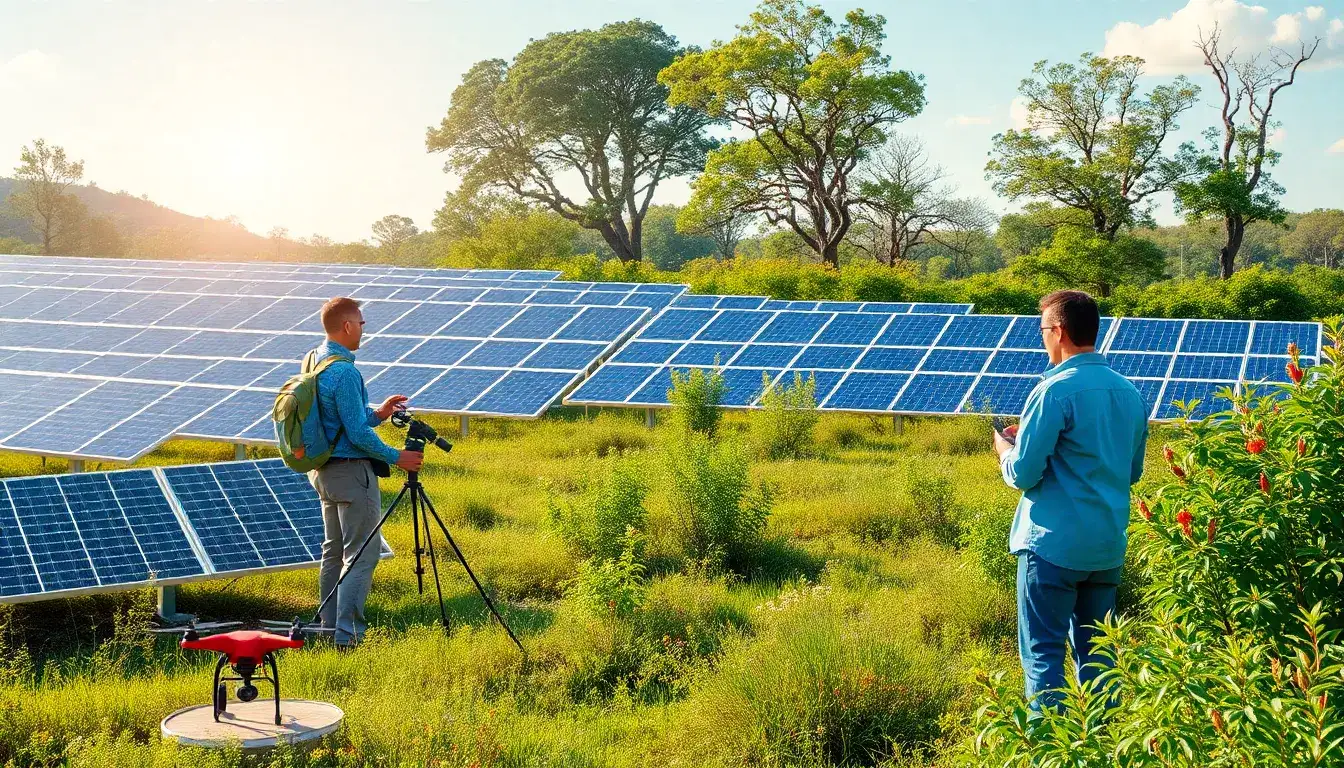
Biologists play a critical role in the conservation efforts associated with solar energy projects, ensuring that renewable energy development coexists sustainably with local wildlife and biodiversity.
Roles of Biologists in Solar Project Conservation
-
Wildlife and Habitat Surveys
Biologists conduct early site assessments and ongoing wildlife surveys to identify the presence of sensitive, endangered, or threatened species in and around proposed solar project areas. This data helps inform project siting decisions to avoid or minimize impacts on critical habitats or biodiversity hotspots. -
Habitat Creation and Restoration
Biologists collaborate with solar developers to design and implement habitat-friendly solar sites by planting native grasses and wildflowers, which support pollinators such as bees and butterflies. These habitats have shown rapid increases in insect biodiversity, including a 20-fold increase in native bee populations and tripling of insect abundance within five years of implementation. Such efforts also provide ecosystem services that benefit nearby agriculture through improved pollination. -
Species Protection and Mitigation Measures
Biologists help develop and enforce protective measures to prevent harm to wildlife during construction and operation. For example, they may advise on installing wildlife fencing, creating wildlife crossings, and restricting activities during sensitive periods like nesting seasons. In California’s Mojave Desert, for instance, biologists played an integral role in protecting the threatened desert tortoise by guiding habitat restoration, fencing, and monitoring efforts at solar projects. -
Monitoring and Adaptive Management
After project implementation, biologists conduct monitoring to track the health and movement of wildlife populations and habitat conditions. This real-time monitoring informs necessary management adjustments to enhance conservation outcomes and mitigate unforeseen impacts. -
Collaboration and Planning
Biologists work closely with project developers, conservation organizations, and regulatory bodies to balance renewable energy goals with biodiversity conservation. Their ecological expertise helps prioritize areas for solar development that avoid high biodiversity regions and sensitive ecosystems, reducing land-use conflicts and enhancing the overall sustainability of solar infrastructure.
Summary Table of Biologists’ Roles in Solar Project Conservation
| Role | Description | Example Outcome/Benefit |
|---|---|---|
| Wildlife and Habitat Surveys | Identify species and sensitive habitats to inform siting | Avoidance of biodiversity hotspots and endangered species areas |
| Habitat Creation | Design and plant native vegetation around solar arrays | Increased pollinator populations; enhanced biodiversity |
| Species Protection | Implement measures (fencing, crossing, timing restrictions) | Reduced mortality and habitat disturbance of species like desert tortoise |
| Monitoring and Management | Track wildlife health and habitat, adjust measures as needed | Improved long-term conservation success |
| Collaboration and Planning | Coordinate with stakeholders for sustainable solar development | Minimized ecological impacts, balanced renewable energy and conservation |
Biologists thus serve as essential partners in ensuring solar energy projects not only provide clean energy but also contribute positively to conservation goals, creating habitat-friendly solar installations that sustain wildlife and ecosystems alongside renewable energy development.
Original article by NenPower, If reposted, please credit the source: https://nenpower.com/blog/what-role-do-biologists-play-in-the-conservation-efforts-of-solar-projects/

