

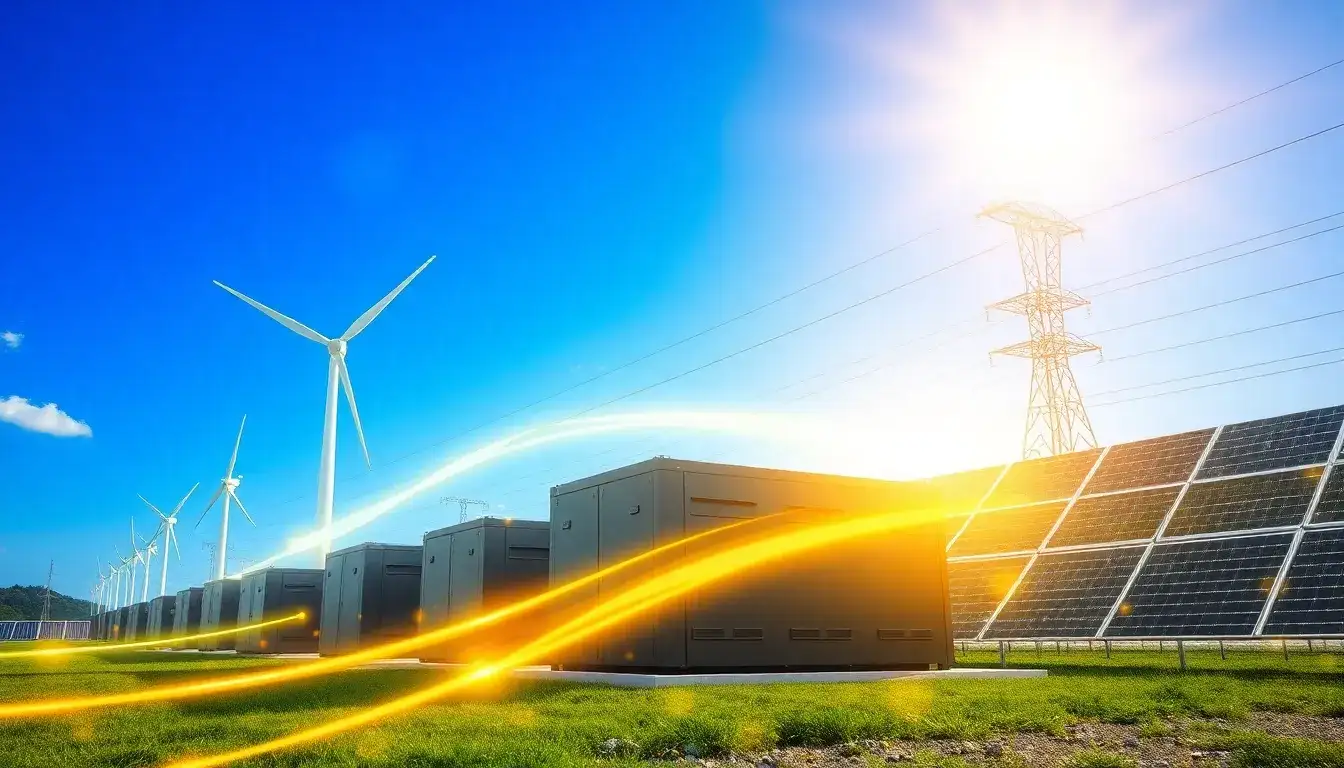
Battery Energy Storage Systems (BESS)
Battery Energy Storage Systems (BESS) play a critical role in integrating renewable energy sources like solar and wind into the power grid by addressing the inherent variability and intermittency of these sources. Their main functions and benefits in this integration include:
Managing Variability and Intermittency
- Renewable sources such as solar and wind produce power variably depending on weather and time of day. BESS can store excess electricity generated during periods of high production and discharge it during low production or peak demand periods. This helps smooth out fluctuations in power supply, ensuring a reliable flow of electricity to the grid.
- For example, solar energy produced during daylight hours can be stored in batteries and then released at night when solar generation stops, allowing the grid to rely more heavily on renewables and optimize their use.
Enhancing Grid Stability and Reliability
- BESS provide fast-response services like frequency regulation, load following, and firm frequency response which help maintain grid stability as renewable penetration increases.
- Battery storage systems can rapidly inject or withdraw power to respond to sudden disruptions or emergencies on the grid, improving resilience.
- They can partially replace traditional fossil-fuel peaking power plants by managing demand peaks and troughs, which supports a cleaner energy mix and reduces carbon emissions.
Deferring Infrastructure Upgrades and Reducing Costs
- In some regions, BESS installations help avoid costly grid upgrades by managing local demand and supporting distributed energy resources.
- Battery storage enables energy cost savings by peak shaving and optimizing self-consumption of on-site renewables, which is beneficial for commercial, industrial, and residential users.
- The UK government, for instance, projects that battery storage technologies supporting renewables integration could save the energy system billions of dollars by 2050.
Supporting Distributed Energy and Smart Grid Technologies
- BESS enable integration of distributed renewable generation, such as rooftop solar and electric vehicle charging infrastructure, facilitating localized energy storage and grid services.
- Advanced software and connectivity in BESS allow for smart coordination with grid networks and participation in virtual power plants (VPPs), which aggregate distributed storage and generation to improve overall grid efficiency and reliability.
- Emerging technologies like blockchain can enhance decentralized energy trading enabled by battery storage, promoting a more resilient and democratized energy ecosystem.
Summary Table
| Role of Battery Energy Storage Systems | Description |
|---|---|
| Manage Renewable Variability | Store excess energy during production peaks; discharge during low production or high demand |
| Enhance Grid Stability | Provide frequency regulation, load following, and fast response to disruptions |
| Reduce Fossil Fuel Dependency | Replace peaking power plants, lower carbon emissions |
| Optimize Grid Infrastructure | Avoid costly grid upgrades, enable peak shaving and cost savings |
| Enable Distributed Energy Resources | Support rooftop solar, EV charging, smart grid functions, virtual power plants |
| Increase Grid Resilience | Supply backup power during outages and disasters |
In essence, BESS are essential enablers for renewable energy to make a steady and reliable contribution to global energy needs, supporting the transition to a low-carbon, resilient, and efficient electricity grid.
Original article by NenPower, If reposted, please credit the source: https://nenpower.com/blog/what-role-do-battery-energy-storage-systems-play-in-integrating-renewable-energy-sources-into-the-grid/

