

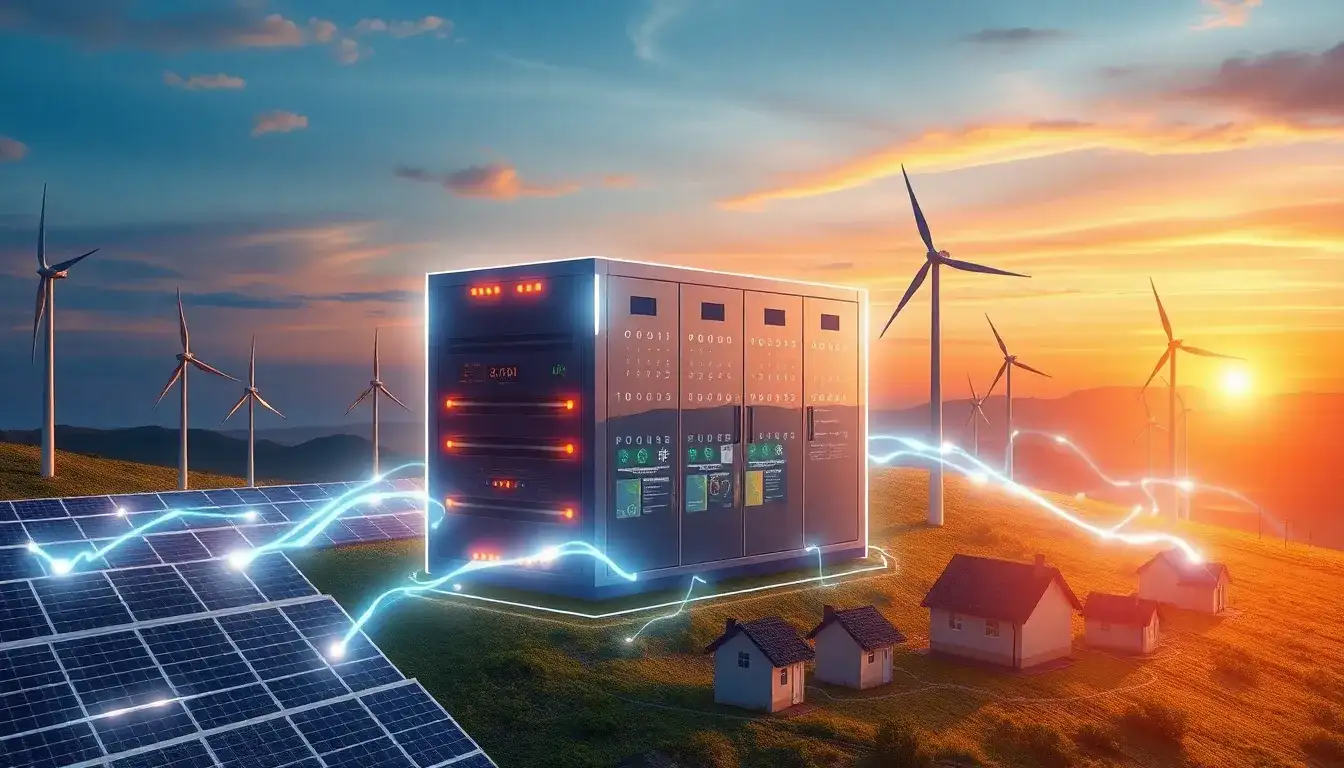
Battery energy storage systems (BESS) play a critical role in integrating renewable energy sources like solar and wind into power grids, addressing the challenges posed by the intermittent and variable nature of these energy sources.
Key Roles of Battery Energy Storage Systems in Renewable Integration
1. Managing Intermittency and Variability
Renewable energy sources such as wind and solar are inherently intermittent, generating electricity only when the wind blows or the sun shines. BESS store excess energy produced during peak generation periods and release it during times when production is low or demand is high, ensuring a steady and reliable supply of electricity. This energy shifting mitigates fluctuations and helps maintain grid stability and reliability.
2. Enhancing Grid Stability and Ancillary Services
BESS provide critical grid services such as frequency regulation, load following, and fast response to disturbances. These capabilities allow them to quickly inject or withdraw energy to balance supply and demand, helping to prevent blackouts and maintain power quality. This is especially important as renewable penetration increases and traditional fossil fuel plants that previously handled these fluctuations are phased out.
3. Enabling Peak Shaving and Demand Management
Battery storage can reduce peak electricity demand by discharging power during high-demand periods, thus lowering energy costs for consumers and reducing strain on the grid. Applications like self-consumption optimization of onsite renewable generation (e.g., solar roofs) and peak shaving help commercial, industrial, and residential users improve energy efficiency and cost-effectiveness.
4. Facilitating the Transition to Low-Emission Energy Systems
BESS help reduce reliance on fossil fuel backup generators (like diesel gensets), replacing them with cleaner, more sustainable solutions. This is critical for decarbonizing power generation and supporting environmental regulations and net-zero goals.
5. Scalability and Flexibility Across Sectors
BESS are scalable and adaptable, suitable for use in residential homes, commercial buildings, industrial sites, and large utility-scale grids. This flexibility allows for tailored solutions that meet diverse energy needs and promotes wider adoption of renewable technologies across sectors.
Market and Future Outlook
- The BESS market is rapidly growing, with investments reaching over $5 billion in 2022 and projected to expand to $120–150 billion by 2030. Falling battery costs and technological advances are driving this growth.
- Emerging battery technologies, such as solid-state and flow batteries, promise improvements in energy density, lifespan, and safety, further supporting renewable integration.
- Policy incentives and evolving market structures are encouraging the deployment of battery storage to achieve sustainability and energy resilience goals globally.
Summary
Battery energy storage systems are essential enablers of renewable energy integration. By storing excess renewable power and releasing it when needed, providing grid stability services, managing demand peaks, and reducing fossil fuel dependency, BESS facilitate a resilient, efficient, and low-carbon energy system. Their scalable and flexible nature makes them applicable across various sectors, contributing significantly to the global transition toward sustainable energy.
Original article by NenPower, If reposted, please credit the source: https://nenpower.com/blog/what-role-do-battery-energy-storage-systems-play-in-integrating-renewable-energy-sources/

