

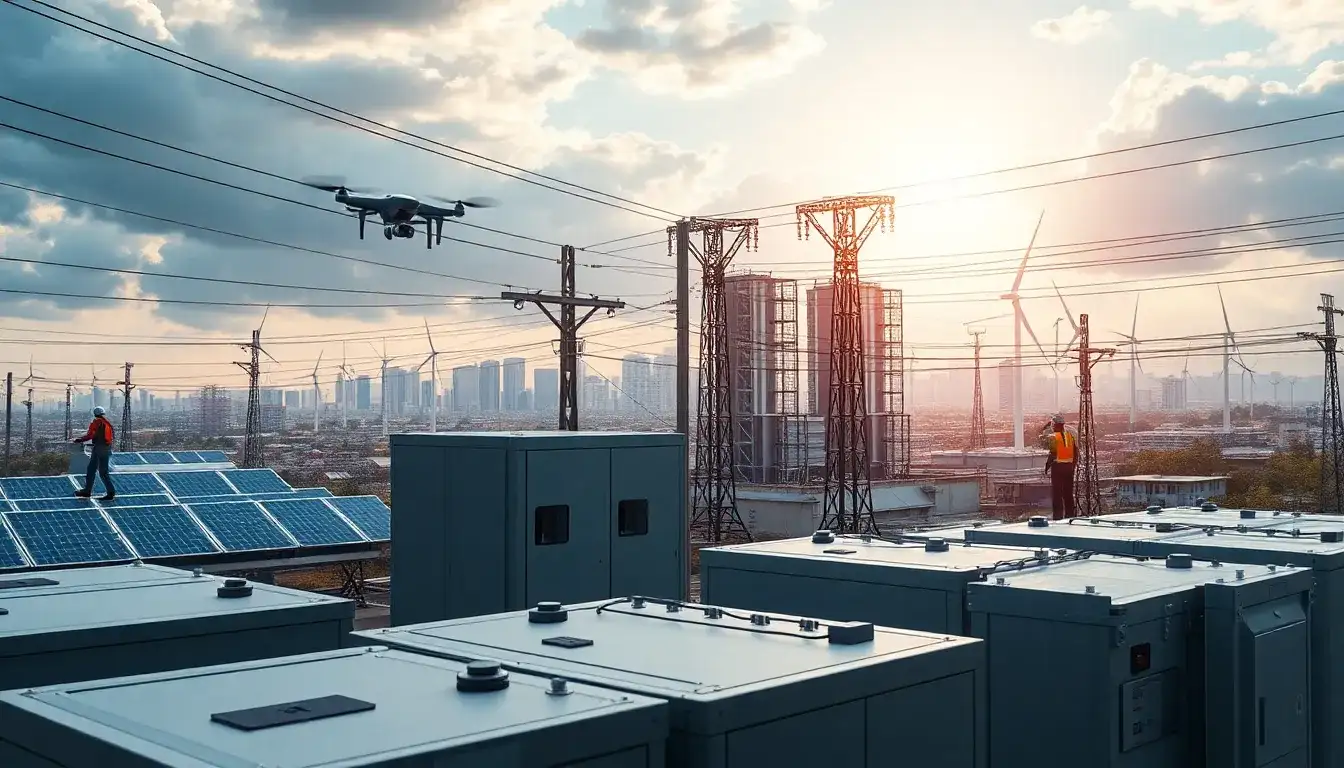
Batteries play a crucial role in disaster recovery for the grid by providing several key benefits:
Key Roles of Batteries in Disaster Recovery
1. Backup Power
- Immediate Availability: Batteries can supply power immediately when the grid fails, unlike traditional generators that require startup time.
- Critical Services Support: They ensure that critical infrastructure such as hospitals, emergency services, and communication networks remain operational during outages.
2. Grid Stabilization
- Batteries help stabilize the grid by providing frequency regulation and voltage support, crucial in preventing cascading failures during grid disturbances.
- This capability ensures consistent and reliable power delivery.
3. Renewable Energy Integration
- Reduced Reliance on Fossil Fuels: Batteries enable the integration of renewable energy sources (like solar and wind) into the grid, making the power supply more resilient to disruptions in fuel supply chains and reducing environmental impact.
- Sustainability: This integration supports sustainable energy goals by providing a cleaner alternative to traditional fossil fuels.
4. Microgrid Support
- Localized Energy Supply: Batteries support microgrids, which are localized energy networks that can operate autonomously or in conjunction with a larger grid, ensuring power supply to specific areas during widespread outages.
5. Cost and Efficiency Benefits
- Reduced Operating Costs: By storing energy during off-peak hours and releasing it during peak hours, batteries can help reduce energy purchases and demand charges, thereby lowering overall operating costs.
- Revenue Generation: Advanced battery systems can participate in energy markets, providing revenue streams through actions like frequency regulation and energy arbitrage.
6. Technological Advancements
- New Technologies: Advanced battery technologies, such as solid-state and lithium-ion batteries, offer enhanced safety, longer lifespans, and improved performance in varied environmental conditions.
- Portability and Scalability: Systems like the POWRBANK offer rapid deployment and scalability, making them adaptable to various disaster scenarios.
In summary, batteries are essential for maintaining grid resilience during disasters by offering backup power, stabilizing the grid, integrating renewable energy, supporting microgrids, and providing economic benefits through efficient energy management.
Original article by NenPower, If reposted, please credit the source: https://nenpower.com/blog/what-role-do-batteries-play-in-disaster-recovery-for-the-grid/

