

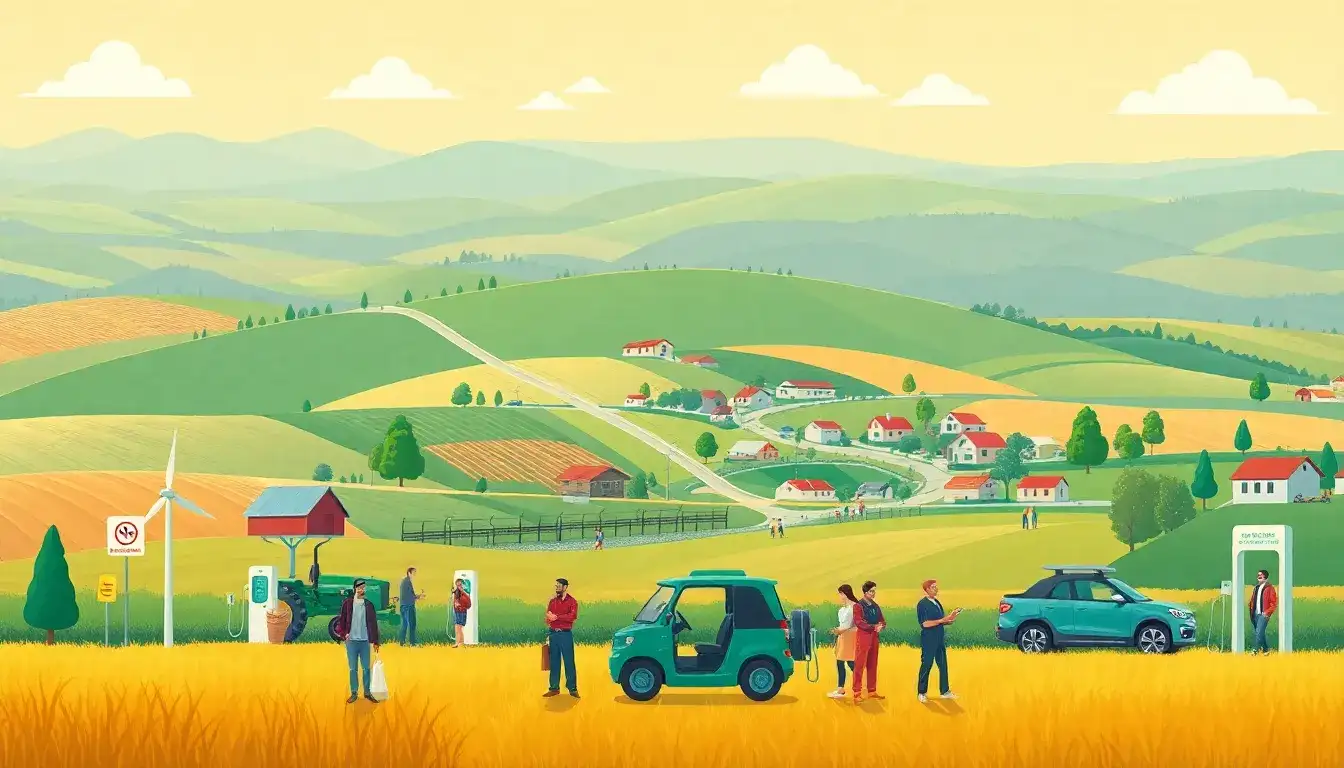
Government policies can play a transformative role in accelerating EV adoption in rural areas through targeted strategies:
Financial Incentives
Purchase rebates with income-eligibility criteria and point-of-sale discounts address upfront cost barriers, while used EV incentives and scrap-and-replace programs expand access to low-income households. Federal programs like the bipartisan infrastructure bill’s $7.5 billion allocation prioritize rural charging infrastructure, though initial proposals sought double that amount.
Infrastructure Development
Policies can mandate electrical panel upgrade subsidies and EV-ready building codes to streamline home charging access, particularly for older housing common in rural regions. Increasing charger deployment improves feasibility for long-distance travel and residents without home-charging options.
Market Transformation
Federal targets like the 50% zero-emission vehicle sales goal by 2030 signal long-term commitment, encouraging private investment. Utility partnerships and dealer training programs enhance sales networks and consumer confidence, while Drive Electric Coalitions foster collaboration among stakeholders.
Education & Outreach
Centralized information hubs and winter-driving education address rural-specific concerns like range anxiety in cold climates. Policies supporting localized marketing campaigns leverage community trust to counter misinformation.
Original article by NenPower, If reposted, please credit the source: https://nenpower.com/blog/what-role-can-government-policies-play-in-supporting-ev-adoption-in-rural-areas/

