

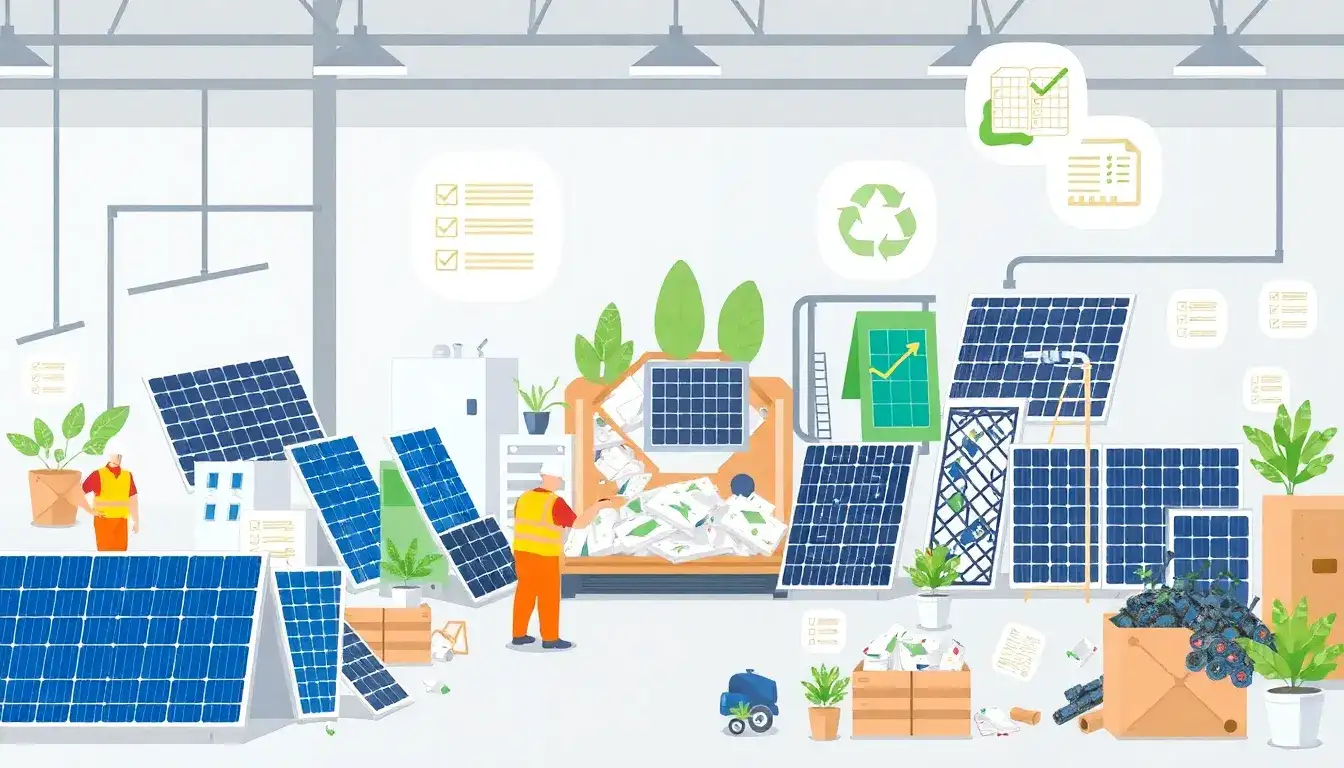
Federal regulations for solar panel disposal primarily fall under the Resource Conservation and Recovery Act (RCRA), with state-specific policies and international examples shaping broader practices:
U.S. Federal Regulations
- Solid Waste Classification: Discarded solar panels are classified as solid waste under RCRA Subtitle D.
- Hazardous Waste Determination: Panels are tested using the Toxicity Characteristic Leaching Procedure (TCLP). Those failing due to heavy metals (e.g., cadmium, lead) are regulated as hazardous waste under RCRA Subtitle C.
- Conditional Exemptions: Panels containing hazardous components like circuit boards may be exempt from hazardous waste rules if recycled.
- Universal Waste: Recent EPA considerations (as of 2025) suggest some panels may qualify for streamlined universal waste rules if non-hazardous.
State-Level Policies
States can impose stricter requirements. For example:
- Massachusetts allows conditional exemptions for panels recycled as scrap metal.
- California and others often enforce additional hazardous waste testing mandates.
International Practices
The European Union mandates manufacturer-funded recycling programs for solar panels under the Waste Electrical and Electronic Equipment (WEEE) Directive.
Key Compliance Steps
- TCLP Testing: Required to determine hazardous waste status.
- Recycling Partnerships: Non-hazardous panels often follow municipal or state recycling guidelines.
- Documentation: Maintain records of disposal methods to meet RCRA tracking requirements.
Solar panel waste regulations are evolving as recycling infrastructure and legislation develop globally.
Original article by NenPower, If reposted, please credit the source: https://nenpower.com/blog/what-regulations-exist-for-the-disposal-of-solar-panels/

