

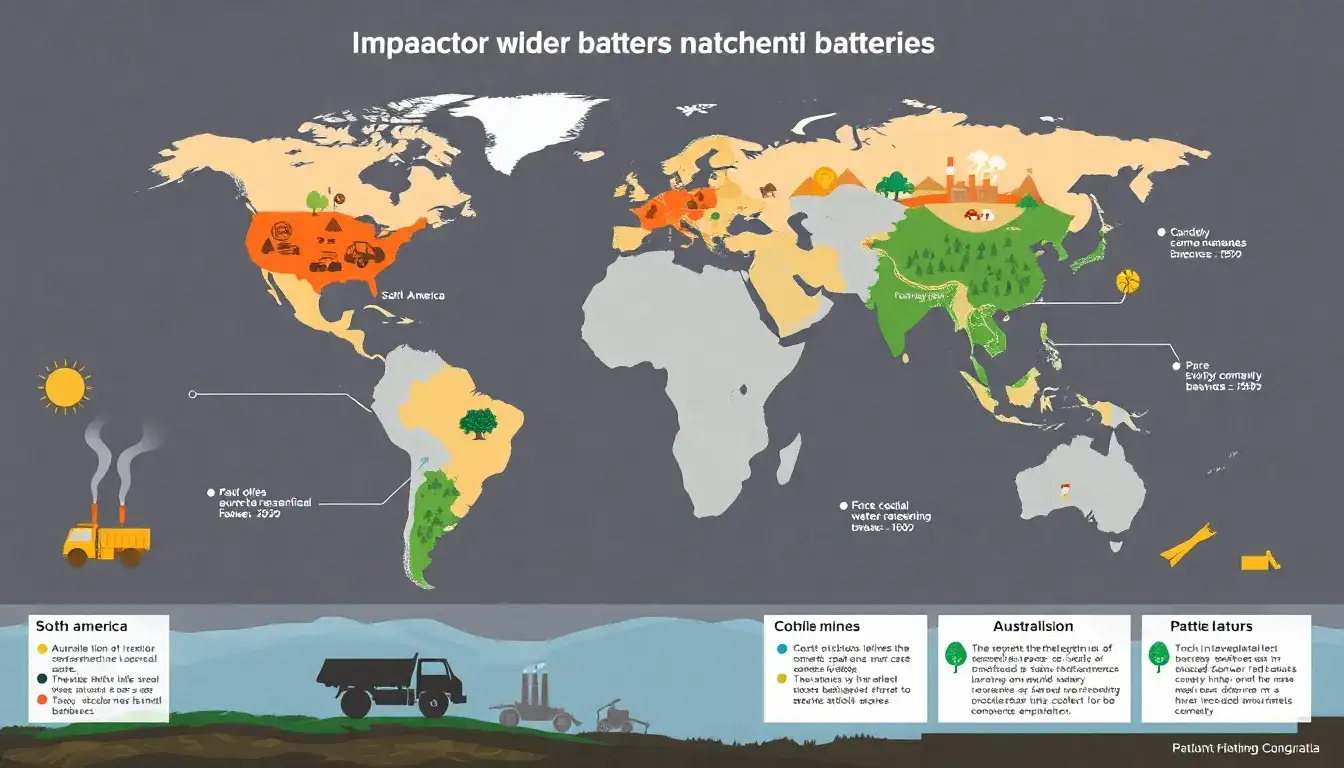
The mining of materials for EV batteries significantly impacts several key regions globally, driven by their roles in extraction, refining, and battery manufacturing:
1. Lithium-producing regions
Australia (largest lithium producer), Chile (second-largest lithium reserves), and the U.S. (emerging producer with new mines proposed in Nevada and Arkansas) face environmental and social challenges, including water use and land degradation.
2. Cobalt and copper hotspots
The Democratic Republic of Congo (DRC), though not explicitly listed here, is widely recognized as the leader in cobalt production, which is critical for many battery chemistries. The absence of specific Congo data in these results suggests regional focus variations across studies.
3. Refining and processing hubs
China dominates midstream processing, refining over half of global lithium, cobalt, and graphite. South Korea and Japan also play major roles in battery component manufacturing.
4. Battery production centers
Europe’s largest facilities are in Poland (60% of regional output) and Hungary (30%). China remains the global leader in battery cell manufacturing, supported by its control of critical mineral supply chains.
5. Emerging mining frontiers
The U.S. and Canada are expanding domestic projects to reduce reliance on foreign supplies, while Indonesia is becoming a nickel-processing powerhouse (implied by broader industry trends, though not detailed here).
Original article by NenPower, If reposted, please credit the source: https://nenpower.com/blog/what-regions-are-most-affected-by-the-mining-of-materials-for-ev-batteries/

