

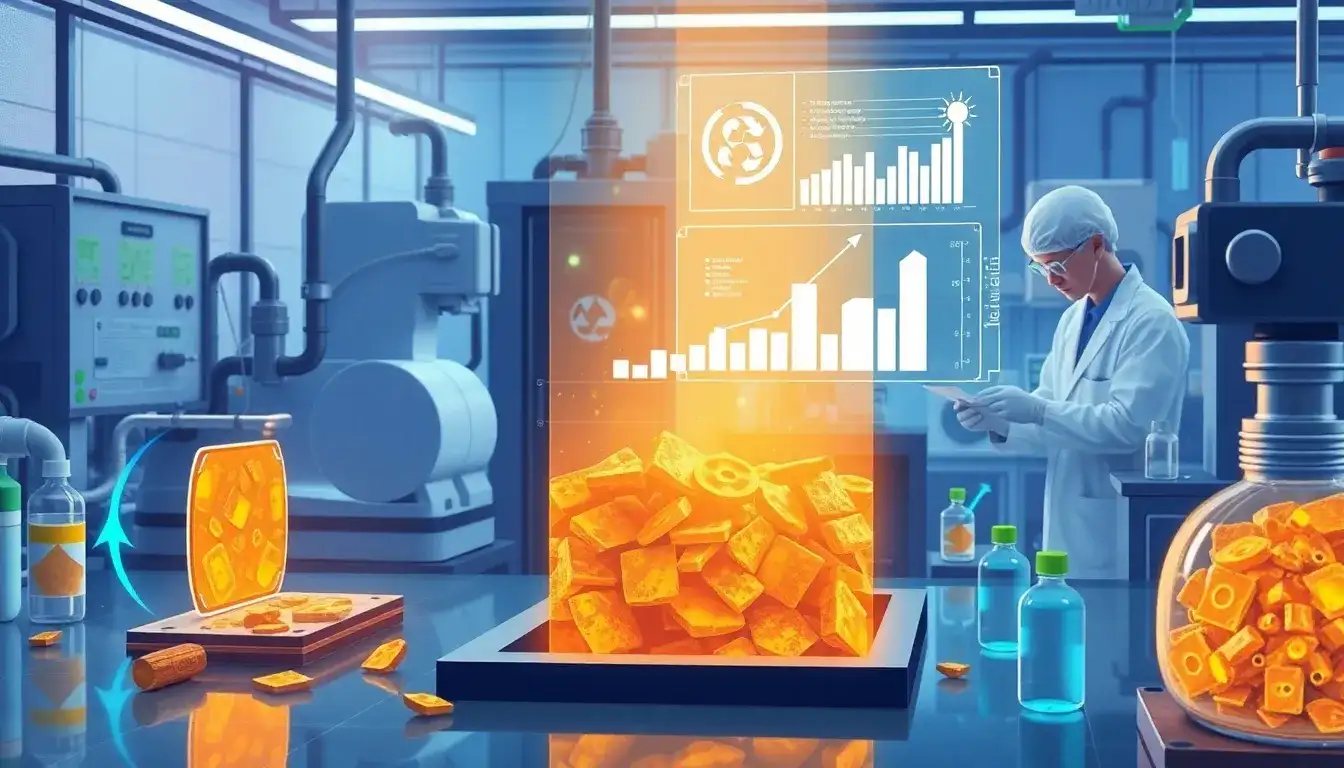
Recycling methods for perovskite solar cells (PSCs) are currently being developed with a strong focus on sustainability, environmental friendliness, and economic viability. Several recent advances emphasize aqueous and benign solvent-based processes that enable efficient recovery and reuse of nearly all constituent materials of perovskite solar cells with minimal performance loss.
Key Recycling Methods Being Developed
1. Aqueous-Based Recycling with Green Solvents
- Researchers from Linköping University, Cornell University, and others have developed a scalable, water-based recycling technique for PSCs built on glass substrates. This method uses water containing low-cost additives such as sodium acetate, sodium iodide, and hypophosphorous acid to dissolve and recover perovskite crystals and other components in a controlled and environmentally benign way.
- The process includes two thermal steps: softening encapsulation glue at 150°C to delaminate the glass covers, then heating the aqueous solution containing dissolved perovskite at 80°C to precipitate high-purity perovskite crystals as the solution cools.
- This aqueous recycling recovers the perovskite, spiro-OMeTAD (hole transport layer), tin oxide, indium tin oxide electrodes, and gold contacts, allowing near-complete material reuse. Devices reconstructed from recycled materials retain power conversion efficiencies (PCE) comparable to those made from fresh materials, even after five recycling cycles (average PCE ~21.9-23.5%) and show good stability under testing conditions.
- Environmental and economic analysis indicates significant benefits, including up to 96.6% reduction in resource depletion, 68.8% reduction in human toxicity, and a decrease in levelized cost of electricity by 18.8-20.9%.
- This approach is considered low-cost, scalable, and a promising step towards sustainable commercialization of perovskite solar technology.
2. Layer-by-Layer Solvent Extraction for Component Recovery
- Researchers at Helmholtz Institute Erlangen-Nuremberg have demonstrated a highly efficient recycling process using a sequential solvent extraction method. This technique separates and recovers nearly 99.97% of the materials from perovskite solar cells, including the perovskite layer, charge transport layers, metal contacts, and glass substrates.
- The recovered materials are purified and reused to fabricate new solar cells with performance comparable to the originals.
- This method has potential for industrial scalability and can significantly reduce material costs by up to 61-64% in production.
- The closed-loop recycling strategy not only conserves resources but also reduces waste and production costs, offering an advantage over silicon solar cells, which are difficult to disassemble and recycle due to their integrated module structure.
3. Use of Benign Organic Solvents for Specific Layer Recovery
- Some approaches combine water-based dissolution of perovskite crystals with mild organic solvents like ethyl acetate and ethanol to remove and recover layers such as spiro-OMeTAD and gold electrodes. This integrated solvent strategy allows separation and reuse of all functional layers in the PSC stack economically and safely, without relying on toxic solvents typically used in earlier methods.
Summary Table of Recycling Approaches
| Feature | Water-Based Recycling (Linköping/Cornell) | Layer-by-Layer Solvent Extraction (Helmholtz Institute) | Combined Benign Solvents Approach (Cornell/Linköping) |
|---|---|---|---|
| Solvent Type | Water + additives (sodium acetate, iodide, acid) | Sequential solvents, environmentally friendly | Water + ethyl acetate, ethanol |
| Materials Recycled | Perovskite crystals, transport layers, electrodes, glass | >99.9% materials including perovskite, layers, contacts | Perovskite, spiro-OMeTAD, gold electrodes, glass substrate |
| Efficiency of Recycled Devices | ~21.9%-23.5% PCE, stable after 5+ cycles | Comparable efficiency to original cells | Comparable efficiency, near 100% material recovery |
| Environmental Impact | Resource depletion −96.6%, human toxicity −68.8% | Significant reduction of waste and resource use | Avoids hazardous solvent use |
| Economic Benefits | Lowers levelized cost of electricity by ~19-21% | Material cost reduction up to ~61-64%, scalable | Enables cost-effective, safe recycling |
| Scalability and Industrial Viability | Demonstrated scalable, simple process | Lab-demonstrated with strong industrial potential | Potential for large-scale deployment |
Conclusion
The state-of-the-art recycling methods for perovskite solar cells involve water-based and benign solvent techniques that efficiently dissolve and recover the perovskite layer and all other cell components. These methods enable the fabrication of new solar cells with nearly the same efficiency as fresh ones even after multiple recycling cycles. This development addresses the environmental concerns related to toxic lead content and short lifespan of perovskite solar cells, aiming to create a sustainable closed-loop lifecycle for this promising photovoltaic technology. Such technologies also enhance the economic feasibility of perovskite solar panels by reducing material costs and energy input during recycling.
Original article by NenPower, If reposted, please credit the source: https://nenpower.com/blog/what-recycling-methods-are-being-developed-for-perovskite-solar-cells/

