

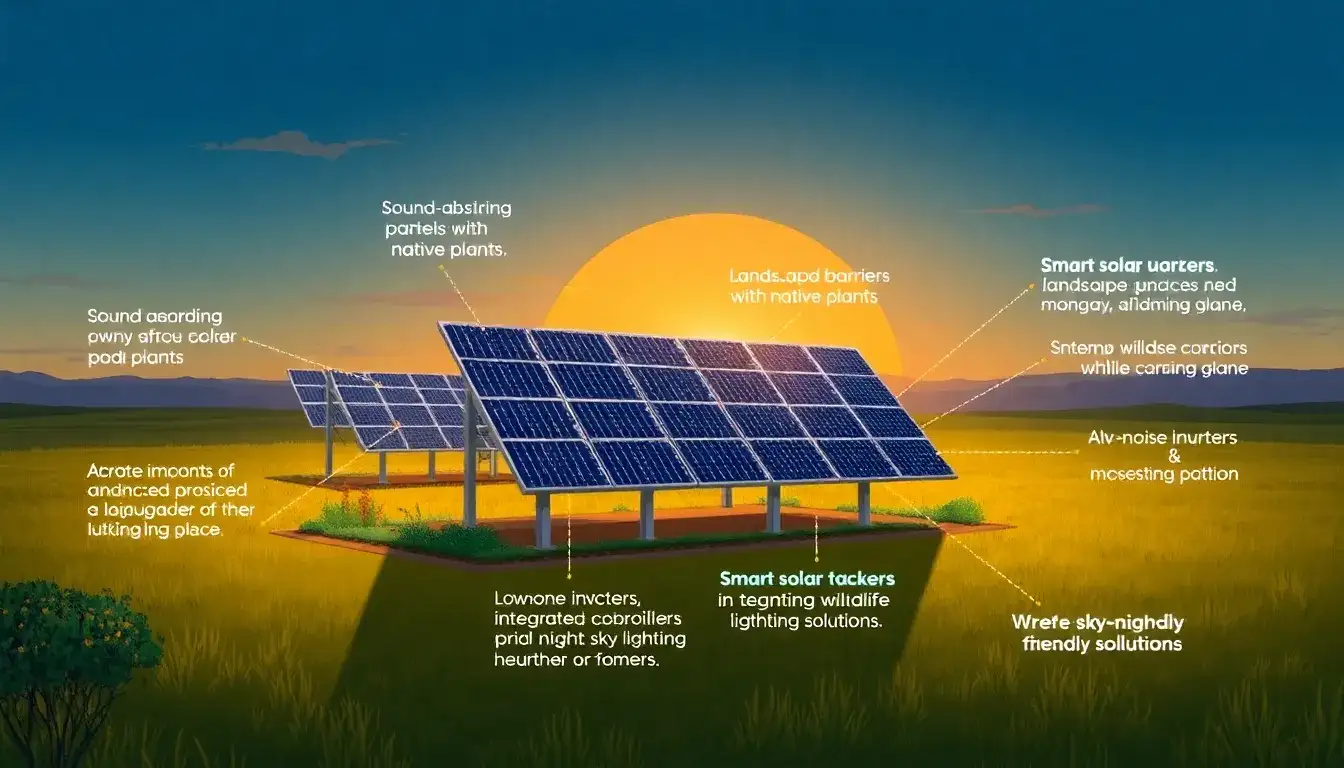
Measures to reduce noise and light pollution from solar facilities
Measures to reduce noise and light pollution from solar facilities focus on equipment design, placement, physical barriers, maintenance, and monitoring. Here are effective strategies based on current industry knowledge and practice:
Noise Pollution Reduction Measures
-
Acoustic Enclosures
Encasing noisy equipment such as inverters and transformers in acoustic enclosures made with sound-absorbing materials can significantly reduce noise emissions by containing and absorbing sound before it escapes into the environment. -
Strategic Equipment Placement
Positioning noisy machines away from residential or sensitive areas reduces noise impact. Locating equipment in enclosed rooms or soundproofed areas helps control noise levels. -
Vegetative and Physical Sound Barriers
Planting trees and shrubs around the facility serves as a natural sound barrier that absorbs and deflects sound waves. Meanwhile, engineered sound barriers (walls or berms) made from sound-absorbing materials can attenuate noise by 15-20 decibels or more, providing durable and effective noise reduction. Materials used should ideally absorb rather than merely reflect sound to avoid long-term degradation. -
Low-Noise Equipment and Operational Controls
Selecting equipment with inherently low noise output, such as quieter fans and pumps, and operating fans at lower speeds, especially at night, minimizes noise generation. Silencers on fan stacks are another useful option. Compliance with noise limits is monitored and adaptive management strategies are used to respond to noise issues during operation. -
Routine Maintenance
Regular servicing of mechanical components, including cooling fans, transformers, and inverters, prevents noise from malfunction or wear. Well-maintained equipment operates more quietly and efficiently. -
Noise Monitoring Systems
Continuous noise level monitoring with real-time alerts helps ensure noise stays within acceptable limits, enabling prompt corrective actions if needed.
Light Pollution Reduction Measures
While the search results did not provide detailed approaches for light pollution, common industry practices include:
- Using downward-facing, shielded lighting fixtures to prevent light spill outside the facility boundaries.
- Employing motion-activated or dimmable lighting to minimize unnecessary illumination.
- Selecting lighting with wavelengths less disruptive to wildlife and nearby residents.
- Limiting lighting hours to only when necessary for safety and operations.
Summary Table of Noise Reduction Measures
| Measure | Description | Effectiveness/Notes |
|---|---|---|
| Acoustic Enclosures | Sound-absorbing enclosures around noisy equipment | Substantial noise containment |
| Strategic Equipment Placement | Locating equipment away from sensitive receptors | Reduces noise exposure to nearby areas |
| Vegetative Barriers | Trees/shrubs planted around facility | Natural sound absorption and deflection |
| Engineered Sound Barriers | Absorptive walls/berms around equipment | 15-20 dB noise reduction, durable |
| Low-Noise Equipment | Use of quiet fans, pumps, silencers | Reduces baseline noise levels |
| Routine Maintenance | Regular servicing to prevent abnormal noise | Maintains quiet operation |
| Noise Monitoring | Continuous sound level measurement and alerts | Ensures compliance and adaptive response |
These integrated measures can effectively mitigate noise and light pollution, improving environmental compatibility and community acceptance of solar facilities.
Original article by NenPower, If reposted, please credit the source: https://nenpower.com/blog/what-measures-can-be-taken-to-reduce-noise-and-light-pollution-from-solar-facilities/

