

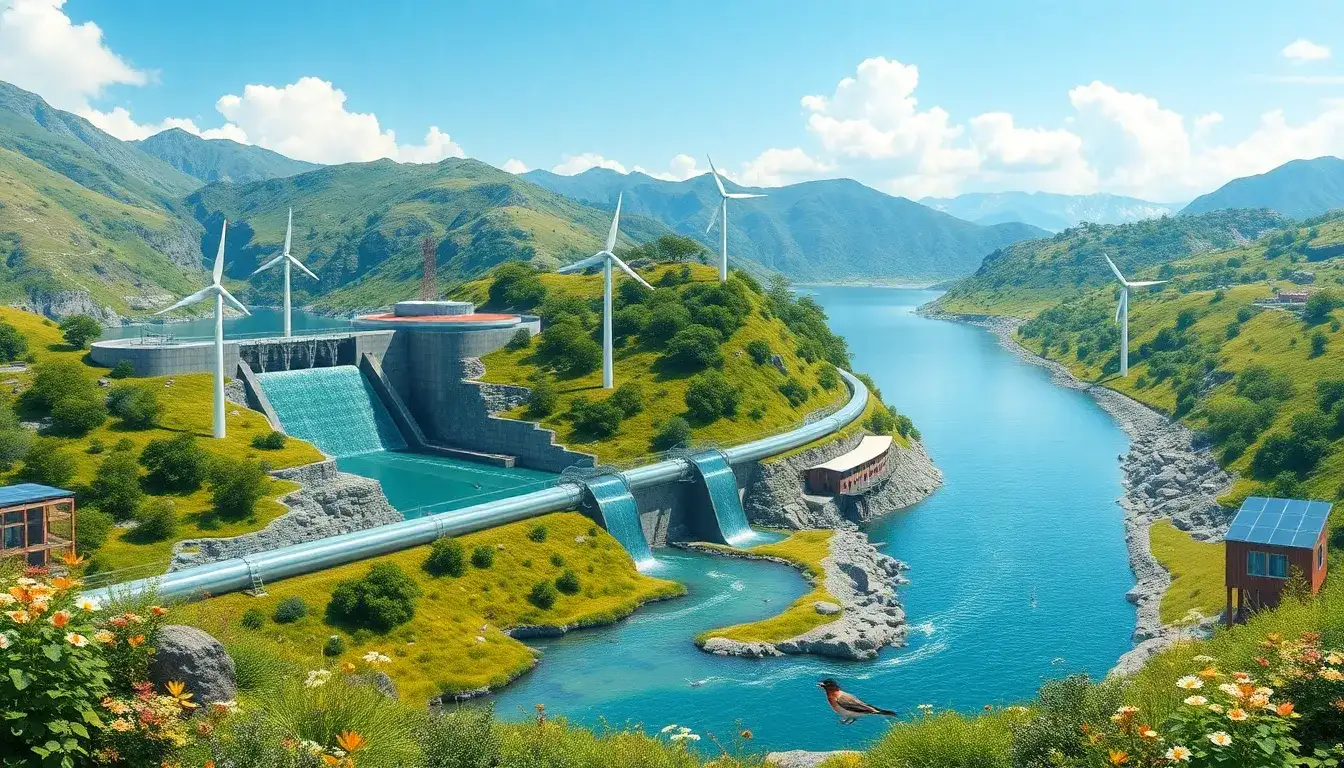
To mitigate the environmental impacts of pumped storage hydropower (PSH) systems, several measures can be implemented based on current research and practices:
1. Preference for Closed-Loop PSH Systems
- Closed-loop configurations are not continuously connected to naturally flowing water bodies, unlike traditional open-loop systems. This design helps to minimize impacts on aquatic ecosystems by isolating the reservoirs from natural rivers or streams. Closed-loop systems generally have more localized and shorter-duration environmental effects, reducing disruption to water flow and river ecology.
- Such systems also have greater siting flexibility, allowing placement in locations that avoid sensitive habitats.
2. Careful Site Selection and Design
- Effective site identification algorithms that consider topography, elevation, and existing water bodies can help select locations that minimize landscape alteration and ecological disruption.
- By choosing sites with suitable natural elevation differences and minimizing the need for large-scale dam construction, the physical and ecological impact on the environment can be reduced.
3. Minimizing Construction and Operational Impacts
- Proper environmental impact assessments before construction can identify and address potential issues related to water flow changes and wildlife habitats.
- Construction techniques and reservoir design can be optimized to limit habitat fragmentation and preserve upstream and downstream ecosystems.
- Managing reservoir water levels and flow regulation carefully to mimic natural hydrological cycles can reduce stress on aquatic species.
4. Managing Groundwater and Geological Considerations
- For underground or groundwater-using closed-loop projects, monitoring and mitigating impacts on soil stability and groundwater resources is important, as these impacts might be higher than open-loop projects.
5. Long-term Environmental Monitoring and Adaptive Management
- Continuous monitoring of water quality, aquatic life, and sediment transport can help detect and mitigate unforeseen environmental impacts over time.
- Adaptive management approaches allow operators to adjust reservoir operations based on environmental monitoring, ensuring sustainable ecosystem health.
Summary
| Mitigation Measure | Impact Addressed |
|---|---|
| Use of closed-loop PSH systems | Minimize aquatic ecosystem disruption |
| Careful site selection and design | Reduce landscape alteration and habitat loss |
| Optimized construction practices | Limit physical and ecological disturbance |
| Groundwater impact management | Protect geology, soil, and groundwater |
| Environmental monitoring and management | Ensure long-term ecosystem sustainability |
These strategies collectively help address the primary environmental concerns of pumped storage hydropower—water flow alteration, habitat disruption, and ecosystem changes—while maintaining the benefits of this renewable energy storage technology.
Original article by NenPower, If reposted, please credit the source: https://nenpower.com/blog/what-measures-can-be-taken-to-mitigate-the-environmental-impacts-of-pumped-storage-hydropower-systems/

