

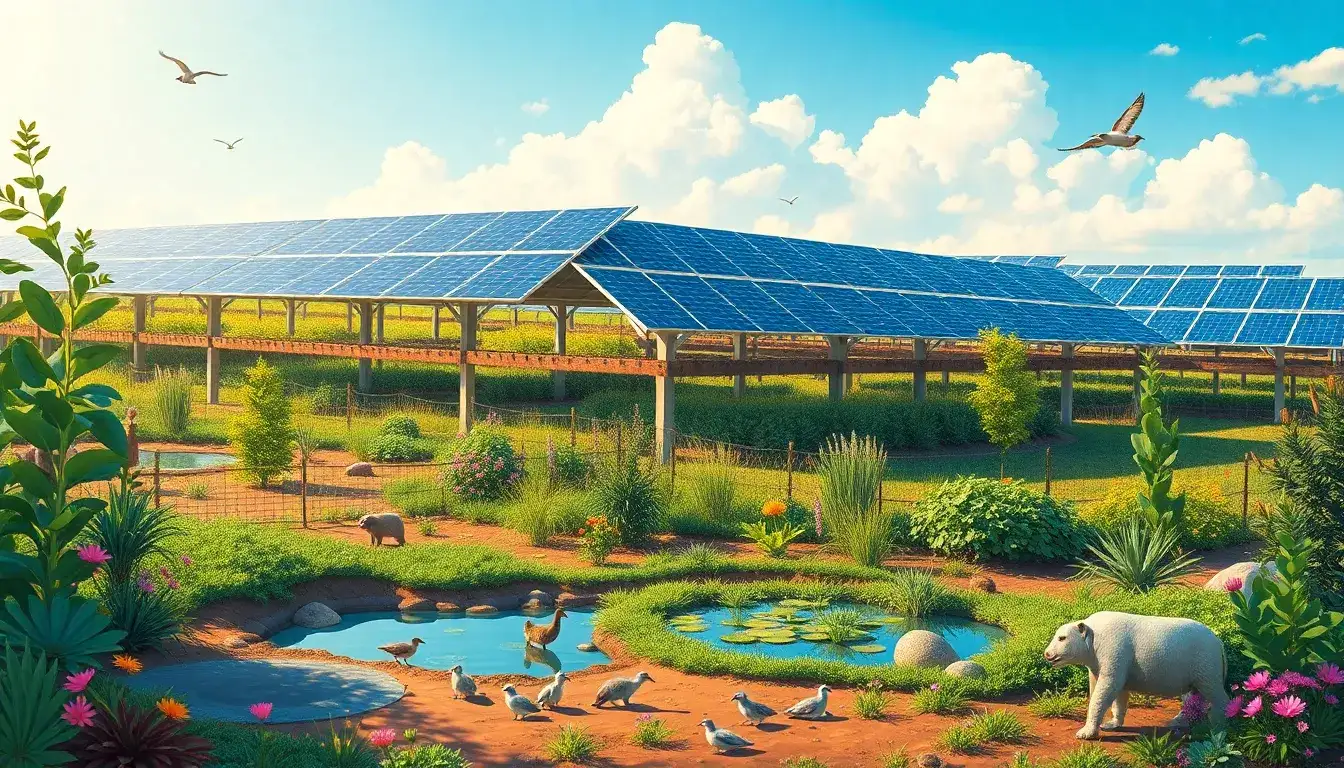
Measures to minimize the impact of solar farms on endangered species focus on careful planning, habitat protection, and operational practices that consider wildlife needs. Key strategies include:
- Pre-construction surveys and assessments: Developers conduct detailed surveys to identify endangered species and sensitive habitats present at potential solar farm sites. This helps in planning to avoid or minimize impacts on these species.
- Designing projects with wildlife connectivity in mind: Solar projects are arranged to include wildlife corridors and pathways that maintain connectivity between fragmented habitats, allowing movement and reducing isolation of species.
- Maintaining or restoring natural vegetation buffers: Preserving or re-establishing native vegetation around solar installations provides habitat, nesting areas, and improves resilience for wildlife.
- Setting exclusion zones and setbacks: Buffer zones around critical habitats and breeding sites of sensitive species are established to minimize direct disturbances.
- Timing and construction management: Construction activities are scheduled to avoid sensitive breeding or nesting seasons, and steps are taken to reduce noise, vibration, and human disturbance to wildlife during construction phases.
- Using wildlife-friendly solar panel designs: Panels with non-reflective surfaces or bird-friendly features help reduce risks of bird collisions and other wildlife impacts.
- Limiting chemical use: Minimizing or carefully managing the use of pesticides, herbicides, or other chemicals prevents unintended harm to local ecosystems and wildlife.
- Monitoring and adaptive management: Post-construction monitoring of endangered species presence and ecosystem health is conducted to inform adjustments in management practices.
These approaches are driven by understanding that solar farm construction and operation can cause habitat disturbance, fragmentation, and mortality risks. Coordinated efforts between developers, wildlife agencies like the U.S. Fish & Wildlife Service, and researchers aim to make solar energy expansion compatible with conservation goals.
Nevertheless, challenges remain, as some studies warn that unchecked renewable energy growth can still accelerate habitat loss for species like the Joshua tree and San Joaquin kit fox if shifting ranges and biodiversity hotspots are not properly considered. Therefore, integrating conservation science with renewable energy planning is crucial to balancing climate goals with endangered species protection.
Original article by NenPower, If reposted, please credit the source: https://nenpower.com/blog/what-measures-are-taken-to-minimize-the-impact-of-solar-farms-on-endangered-species/

