

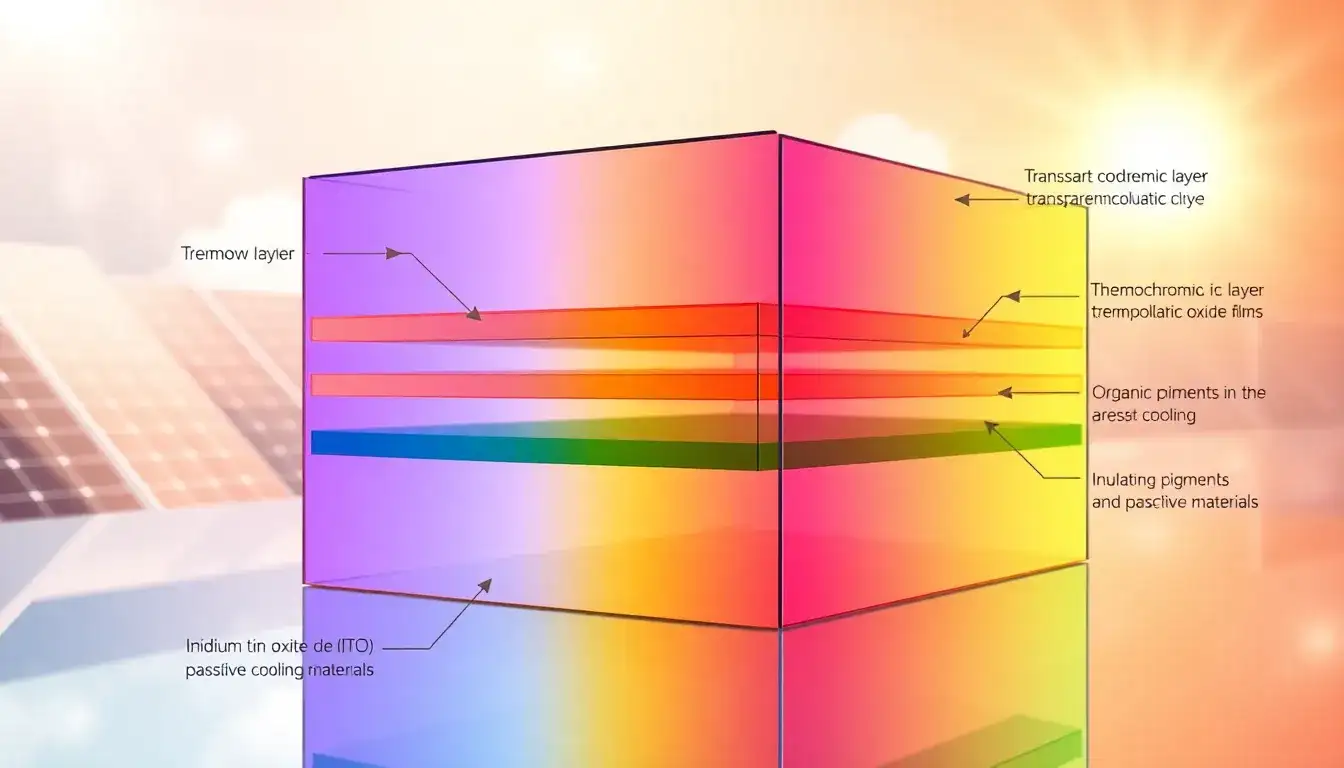
Thermochromic Photovoltaic Glass
Thermochromic photovoltaic glass uses specialized materials to enhance its energy efficiency by dynamically controlling solar heat gain and simultaneously generating electricity. Key materials employed include:
1. Vanadium Dioxide (VO2)
- Vanadium dioxide is a widely used thermochromic material for smart windows due to its reversible metal-to-insulator transition near 68°C.
- At lower temperatures, VO2 is infrared-transparent, but at higher temperatures, it becomes infrared-translucent, which helps block solar heat.
- VO2 is typically deposited as a thin film on glass or laminated within a polyvinyl butyl (PVB) film in insulated glass units.
- Challenges with VO2 include relatively high transition temperature and lower visible light transmittance during phase change.
2. Perovskite Materials
- Perovskites are crystalline compounds with excellent solar energy conversion efficiency, making them ideal for integrating photovoltaic functionality into thermochromic glass.
- In thermochromic photovoltaic windows, perovskites embedded within the glass change structure and color in response to temperature changes (around 95 to 115°F, i.e., 35 to 46°C), which darkens the glass and reduces glare and solar heating.
- The phase transition alters the perovskite structure (e.g., from chain to sheet to cube shapes), causing color changes and enabling electricity generation simultaneously.
- Latest research shows rapid color transformation within seconds and a broader range of colors and operating temperatures to improve energy efficiency and aesthetic flexibility.
- Moisture or vapor can be used to trigger reversions back to the transparent state, enabling reversible cycling of the glass’s thermochromic and photovoltaic properties.
3. Other Glass Types
- The base glass used often includes silicate, borosilicate, and phosphosilicate glasses that provide structural and optical properties conducive to integrating thermochromic and photovoltaic layers.
- Low-emissivity (low-e) coatings on inner glass surfaces help retain heat and enhance thermal insulation, complementing thermochromic effects.
Summary Table of Key Materials
| Material | Role | Key Properties & Benefits |
|---|---|---|
| Vanadium Dioxide | Thermochromic layer | Infrared modulation, reversible phase change near 68°C |
| Perovskites | Thermochromic + Photovoltaic active layer | Color-changing, solar energy conversion, reversible phase transitions at ~35-46°C |
| Silicate/Borosilicate/Phosphosilicate Glass | Structural glass substrate | Optical clarity, compatibility with thin film coatings |
| Low-E Coatings | Thermal insulation layer | Reduces re-radiation of heat inward |
Conclusion
The efficiency enhancement in thermochromic photovoltaic glass primarily comes from combining thermochromic transition metal oxides such as vanadium dioxide with high-efficiency photovoltaic materials like perovskites embedded within specialized glass substrates. This combination allows the glass to reduce solar heat gain dynamically while generating electricity, contributing significantly to building energy savings and sustainability.
Original article by NenPower, If reposted, please credit the source: https://nenpower.com/blog/what-materials-are-used-in-thermochromic-photovoltaic-glass-to-enhance-its-efficiency/

