

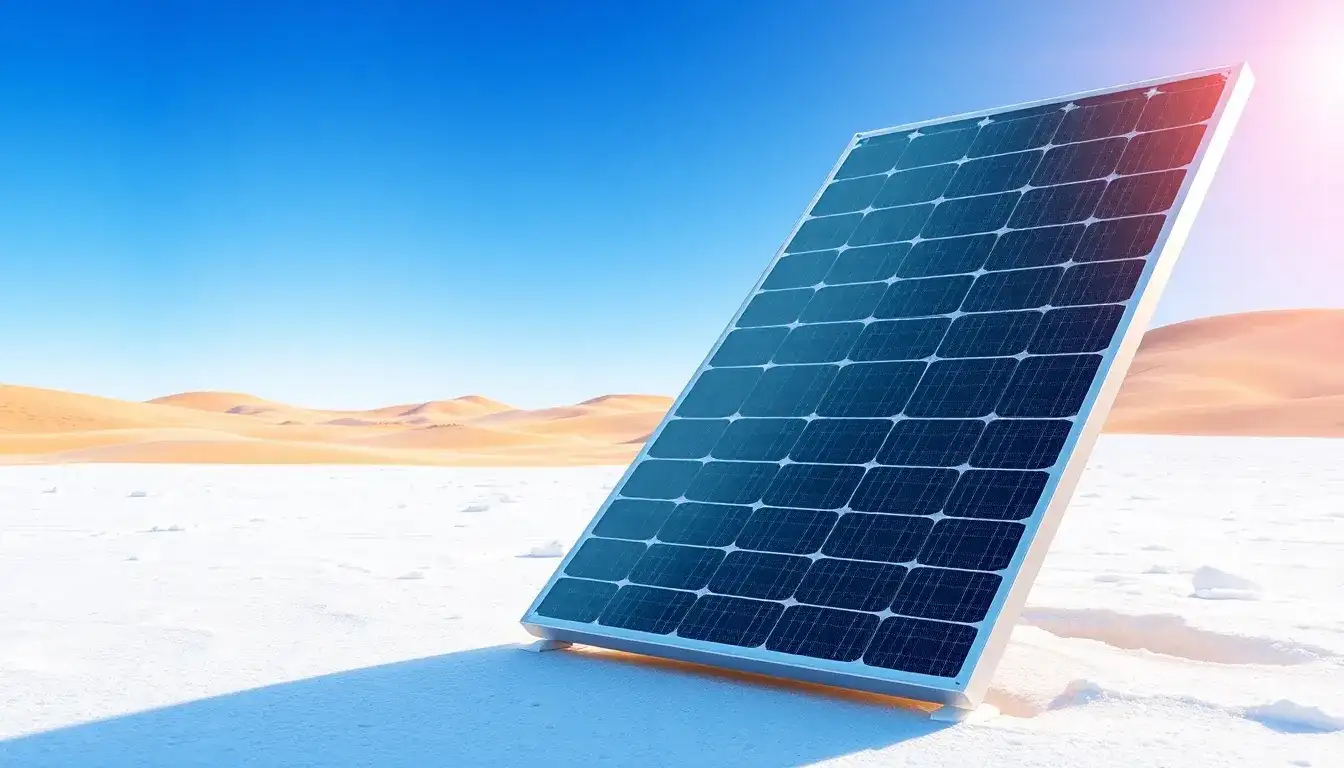
Solar panels are engineered with a variety of specialized materials designed to withstand extreme temperatures and harsh environmental conditions while maintaining durability and efficiency over decades.
Key Materials in Solar Panels for Extreme Temperature Resistance
1. Photovoltaic (PV) Cells
- Typically made from silicon (monocrystalline or polycrystalline), these are the core components converting sunlight into electricity. Monocrystalline cells generally tolerate heat better than polycrystalline cells.
- Thin-film solar cells, often made from materials like cadmium telluride or amorphous silicon, have inherently better heat tolerance and a lower temperature coefficient, making them advantageous in hot climates.
2. Encapsulation Layers
- These layers protect PV cells from moisture and mechanical stress while maintaining transparency for sunlight.
- Conventional encapsulants like ethylene-vinyl acetate (EVA) can degrade under extreme heat, so newer materials such as thermoplastic polyolefin (TPO) and thermoplastic elastomers (TPE) are now used to improve heat resistance and reduce risks like delamination.
3. Backsheet
- The backsheet acts as an insulating barrier protecting cells from moisture, humidity, and UV exposure. It also provides electrical insulation.
- Backsheets are often made from durable polymers designed to resist thermal expansion and contraction caused by temperature fluctuations.
4. Tempered Glass
- The front layer is made of tempered glass, which is strong and resistant to hail, wind, and debris impacts.
- Tempered glass also provides thermal resistance and allows optimal light transmission while shielding internal components.
5. Frames
- Panels use sturdy aluminum or sometimes steel frames which provide structural integrity and protect against physical stress such as wind and snow loads.
- Aluminum frames also aid in heat dissipation due to their thermal conductivity, helping manage panel temperature.
Design and Material Innovations for Heat Tolerance
- Bifacial Panels: These can absorb sunlight from both sides, increasing energy output and improving heat dissipation, thus reducing overheating risks.
- Advanced Encapsulants: Modern encapsulation materials like TPO and TPE offer improved protection against heat-induced degradation and moisture ingress.
- Cooling Systems: Some newer solar modules incorporate active or passive cooling systems (air or water-based) to regulate temperature and maintain peak efficiency.
- Nanomaterials and Coatings: Research is ongoing into nanocoatings and heat-absorbing materials that can enhance panels’ ability to withstand extreme heat.
- Solar Trackers: These adjust panel orientation to optimize sunlight capture and reduce heat accumulation by preventing direct continuous exposure.
Impact of Extreme Temperatures and Material Roles
- Solar panels experience efficiency loss as operating temperature rises due to the semiconductor properties of PV cells shifting under heat, generally measured by a temperature coefficient (around -0.2% to -0.5% power loss per °C above 25°C).
- Materials like tempered glass, aluminum frames, and advanced encapsulants help protect against thermal stresses—expansion and contraction—that cause wear in soldered connections and other components.
- Durable backsheets and encapsulation prevent moisture and UV damage which can be exacerbated by heat, preserving module lifespan often beyond 25 years even in harsh climates.
- Thin-film and monocrystalline technologies are preferred for hot environments due to better heat handling and lower temperature coefficients.
In summary, solar panels use a combination of silicon-based PV cells, heat-resistant encapsulating materials (such as TPO and TPE), UV and moisture-proof backsheets, tempered glass covers, and sturdy aluminum frames engineered to manage and withstand extreme heat and environmental stress. Advances in module design including bifacial cells, cooling technologies, and innovative materials further enhance panels’ durability and efficiency in hot climates, enabling reliable solar energy production even under extreme temperatures.
Original article by NenPower, If reposted, please credit the source: https://nenpower.com/blog/what-materials-are-used-in-solar-panels-to-withstand-extreme-temperatures/

