

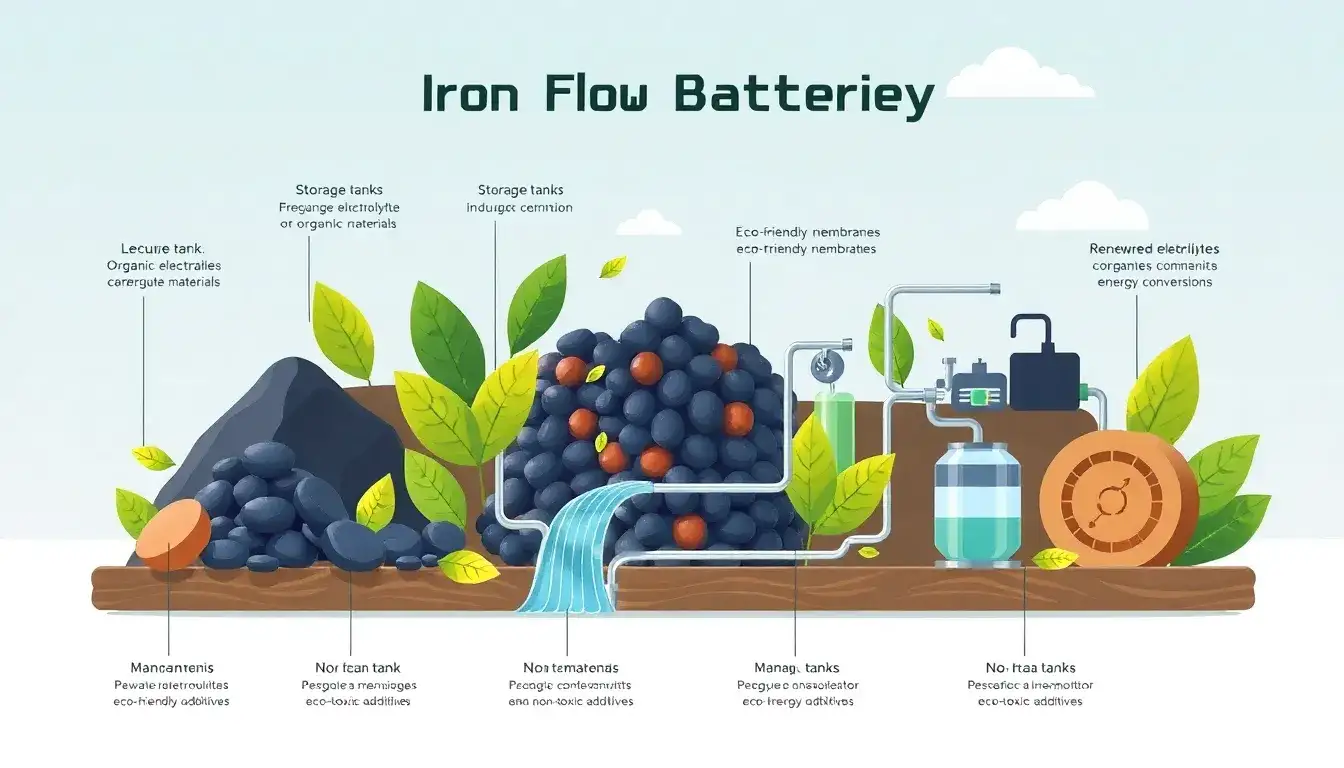
Iron flow batteries are considered environmentally friendly due to the materials used in their construction. The primary components include:
- Iron: This is the active material in iron flow batteries, used in the form of iron salts dissolved in water. Iron is earth-abundant and non-toxic, reducing environmental and health risks associated with mining and processing.
- Salt: Used as part of the electrolyte, salt is another common and environmentally benign component.
- Water: The electrolyte is typically an aqueous solution, which is safe and non-hazardous. This eliminates the risk of toxic leaks or fires associated with some other battery types.
- Carbon-based materials: The electrodes and bipolar plates are often made from carbon-based materials, which are generally less harmful than metals required for other battery systems.
These materials contribute to the sustainability and environmental safety of iron flow batteries in several ways:
- Low Environmental Impact: The production process for iron flow batteries has a lower environmental impact compared to lithium-ion batteries, partly due to the use of abundant materials like iron and salt.
- Non-toxic and Non-flammable: Iron flow batteries do not contain hazardous materials, reducing risks to personnel and eliminating the need for complex safety measures.
- Easy Recycling and Reuse: At the end of their life, the electrolytes can be readily recycled or reused, minimizing waste and further reducing environmental impact.
Original article by NenPower, If reposted, please credit the source: https://nenpower.com/blog/what-materials-are-used-in-iron-flow-batteries-that-make-them-more-environmentally-friendly/

