

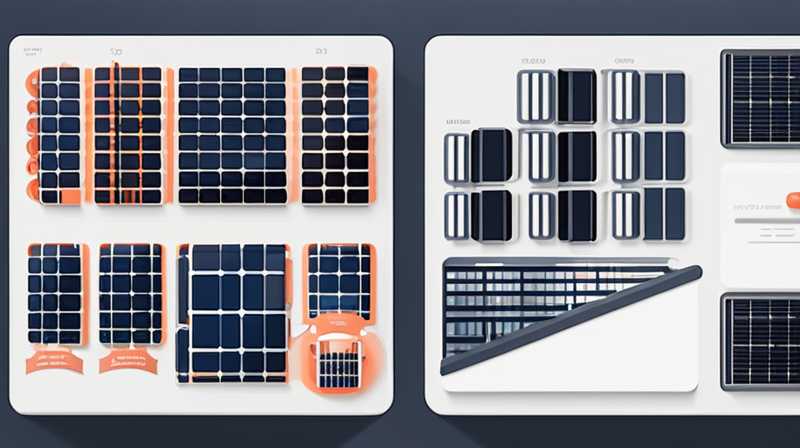
1. Introduction of Materials in Flat Panel Solar Panels – Flat panel solar panels contain various materials essential for their functionality, including 1. silicon, 2. metals, 3. glass, and 4. polymer layers. The dominant material used is silicon, primarily employed in two types: monocrystalline and polycrystalline. Silicon is significant because it serves as the substrate for solar cells, which convert sunlight into electricity. This crucial component’s crystalline structure directly influences energy conversion efficiency, making it imperative for panel performance.
2. METALS IN SOLAR PANELS – Metals play an indispensable role in the construction and functionality of flat panel solar modules. Copper and aluminum are the most prevalent metals utilized in the photovoltaic cells. Copper is primarily used for wiring due to its excellent conductivity, facilitating the efficient transfer of electric current generated by the solar cells. Additionally, copper connections minimize energy losses, thereby enhancing overall efficiency.
Aluminum, on the other hand, serves as a robust frame supporting the solar panels. Its lightweight and durable nature make it ideal for external mounting systems. The aluminum frame not only protects the internal components from environmental factors but also provides structural integrity, allowing the panels to withstand heavy winds and other harsh conditions. Together, copper and aluminum create a synergy that maximizes energy capture and ensures longevity of the solar panels, showcasing the intricacies of material application in renewable energy technologies.
3. SILICON TYPES AND THEIR PROPERTIES – Silicon, categorized broadly into monocrystalline and polycrystalline types, is a critical material in flat panel solar panels. Monocrystalline silicon is known for its high efficiency, achieving energy conversion rates of over 20%. This efficiency is a result of its uniform crystal structure, which facilitates greater movement of electrons within the solar cells when exposed to sunlight. Moreover, monocrystalline panels tend to have a longer lifespan, often exceeding 25 years, which makes them an attractive option for homeowners seeking sustainable energy solutions.
Conversely, polycrystalline silicon has a more complex structure composed of multiple silicon crystals. While polcrystalline panels are generally less efficient— typically in the 15-20% range—they are often more cost-effective to produce. Their manufacturing process involves melting raw silicon and allowing it to solidify, which is simpler than the process required for monocrystalline production. Although polycrystalline panels can be regarded as slightly less efficient, they offer an optimal balance of cost and performance for users with adequate roof space, suggesting that both types cater to different market needs based on economic and practical user considerations.
4. GLASS COMPONENTS OF SOLAR PANELS – The protective layering made of glass is another vital material featured in flat panel solar panels. Tempered glass is commonly employed due to its formidable strength and durability. This type of glass not only protects the solar cells from environmental elements such as hail, dust, and debris but also enhances light transmission, thus maximizing solar energy capture. Moreover, its insulating properties contribute to the overall thermal efficiency, helping the panels maintain optimal operating temperatures during varying weather conditions.
In addition to durability, the coatings on the glass surface play an integral role in performance. Anti-reflective coatings applied to the glass reduce light reflection, allowing more sunlight to enter the solar cells. This innovation directly impacts the efficiency of light-to-electricity conversion, making it crucial for solar panel design. Through consistent improvements, manufacturers continuously seek to enhance these coatings, thus promising higher efficiency rates and fostering innovations in solar technology that can keep pace with increasing energy needs.
5. POLYMER LAYERS AND BINDING MATERIALS – The bonding agents and protective polymers also deserve attention in understanding the makeup of flat panel solar panels. Ethylene-vinyl acetate (EVA) is frequently used as an encapsulant that interlinks the solar cells with the glass. This binding ensures that the solar cells are protected from moisture and dirt, which could dramatically degrade performance over time. By creating a barrier, EVA facilitates durability while maintaining transparency, allowing solar energy to penetrate effectively.
Moreover, the back layer often consists of a polymer, typically polyvinyl fluoride (PVF) or other weather-resistant materials. This protective layer ensures the solar panel’s longevity and effectiveness by guarding against harmful ultraviolet radiation and harsh weather conditions. The application of these polymers is critical in a solar panel’s lifecycle, as they contribute significantly to encapsulating sensitive materials and improving overall energy generation efficacy, thus highlighting the importance of polymer consideration alongside more conventional materials.
6. INTEGRATION OF MATERIALS IN SOLAR PANEL BEHAVIOR – The interaction of these diverse materials is pivotal in determining the efficacy and operational longevity of flat panel solar panels. The synergy between silicon, metals, glass, and polymers creates a cohesive system designed to optimize energy conversion from sunlight to electricity. For instance, the interplay between the glass layer and solar cells, along with effective encapsulation via EVA, directly contributes to the panels’ resilience to environmental stresses while significantly impacting energy output.
Furthermore, innovations in material science have yielded more efficient designs, reducing costs associated with solar panel installation and maintenance. Ongoing research into alternative materials and hybrid systems continues to shape the renewable energy landscape. New developments in nanomaterials and alternative semiconductors promise possibilities beyond traditional silicon, potentially enhancing efficiency and lowering production costs even further. This ongoing evolution underscores the significance of the materials used in flat panel solar panels as a determinant of future advancements in sustainable energy solutions.
7. SUSTAINABILITY AND RECYCLED MATERIALS – As environmental concerns escalate, the focus on sustainable materials in the production of solar panels has gained traction. Integrating recycled materials into the manufacturing process can reduce waste and the need for raw resources. Some manufacturers are exploring the possibilities of utilizing reclaimed silicon for new panels, ultimately benefiting the industry by minimizing resource extraction’s ecological footprint.
Moreover, innovations in recycling technologies have been developed to recover valuable materials from decommissioned panels. Effective recycling processes can reclaim metals like silver and aluminum, further enhancing the sustainability of the solar industry. By adopting circular economy principles, manufacturers are likely to reduce both waste and the carbon footprint of panel production, thereby aligning the industry’s growth with global sustainability goals.
8. FUTURE OF FLAT PANEL SOLAR MATERIALS – The future of materials in flat panel solar panels is poised for remarkable advancements as technology progresses. Graphene and other conductive polymers may emerge as substitutes for traditional silicon, potentially offering even higher efficiencies and reduced production costs. Research into thin-film solar technologies also suggests exciting prospects, as these materials promise lightweight, flexible solar solutions suitable for diverse applications.
Next-generation solar panels may also benefit from biophotonic materials, designed to mimic the natural photosynthesis process found in plants. These innovations aim to enhance energy absorption capabilities while minimizing material use. As the demand for renewable energy escalates, the solar industry must remain at the forefront of material advancements, ensuring that future developments continue to align with environmental and economic objectives.
COMMON INQUIRIES
WHAT TYPES OF SILICON ARE USED IN SOLAR PANELS?
Within the realm of solar panel construction, two primary categories of silicon are prevalent: monocrystalline and polycrystalline silicon. Monocrystalline silicon is recognized for its remarkable efficiency rates, often exceeding 20%. This type of silicon is derived from a single crystal structure, enabling electrons to flow more freely when exposed to solar energy, thus enhancing overall performance. In contrast, polycrystalline silicon is made from multiple silicon crystals and typically demonstrates lower efficiencies, ranging from 15% to 20%. This construction process, while less efficient, is more cost-effective and can be advantageous for certain installations where budget considerations are paramount.
The high purity levels of monocrystalline silicon contribute to its superior performance, informing its use in installations where space is a premium, and maximizing energy output is essential. Meanwhile, polycrystalline silicon offers a more budget-friendly alternative, catering to markets that prioritize cost over innate efficiency. Each type of silicon holds distinct advantages for varied applications; choosing the appropriate silicon type for solar panel installation ultimately depends on energy needs, budget constraints, and physical space availability.
HOW DO THE MATERIALS USED IN SOLAR PANELS AFFECT PERFORMANCE?
The performance of solar panels is intricately tied to the materials utilized during their construction. Each material plays a critical role in determining efficiency, durability, and overall output. Silicon, for instance, serves as the primary energy conversion element within the panel. The purity and crystallization, whether monocrystalline or polycrystalline, directly influence how effectively the silicon can convert sunlight into electricity. Higher-quality silicon typically results in increased energy production and extended longevity of the solar module.
Additionally, the glass layer’s properties affect light transmission and durability against environmental factors. Tempered glass with anti-reflective coatings can maximize the amount of sunlight that penetrates the solar cells, enhancing performance. Materials such as metals, specifically copper and aluminum, contribute to electrical conductivity and structural integrity, influencing how well energy is transferred and how resilient the panel is against external forces. Regular advancements and innovations aim to optimize these materials further, promoting ongoing improvements in solar panel performance and energy efficiency.
WHICH ADVANCES ARE BEING MADE IN SOLAR PANEL MATERIALS?
Recent advancements in solar panel materials reflect an ongoing commitment to improving efficiency, cost-effectiveness, and sustainability. Research into alternative materials such as perovskite solar cells shows promising potential to revolutionize solar technology. These cells exhibit higher efficiency rates, require less material, and can be produced at significantly lower costs than traditional silicon-based panels. Innovations in nanotechnology are also making waves, contributing to the development of lighter and more efficient solar solutions while reducing overall material requirements.
Furthermore, advancements in recycling techniques enable the reclamation of valuable materials from decommissioned solar panels, promoting sustainability within the industry. As the demand for renewable energy continues to rise, ongoing research into hybrids of silicon and other next-generation materials is expected to drive upgrades in solar panel technology, aligning with global sustainability goals and energy requirements.
FINAL REMARKS – The construction of flat panel solar panels involves a sophisticated interplay of materials, each contributing uniquely to their overall functionality and performance. Silicon stands as the cornerstone, while metals, glass, and polymers enrich the composition, shaping the technology’s future trajectory. Innovations in material science promise revolutionary changes, while sustainability remains a core focus, fostering advancements that support increased efficiency and reduced environmental impacts. In adopting such technologies, society can embrace a future powered by sustainable solar energy, highlighting the essential role of materials in shaping tomorrow’s renewable energy framework.
Original article by NenPower, If reposted, please credit the source: https://nenpower.com/blog/what-materials-are-inside-flat-panel-solar-panels/

