

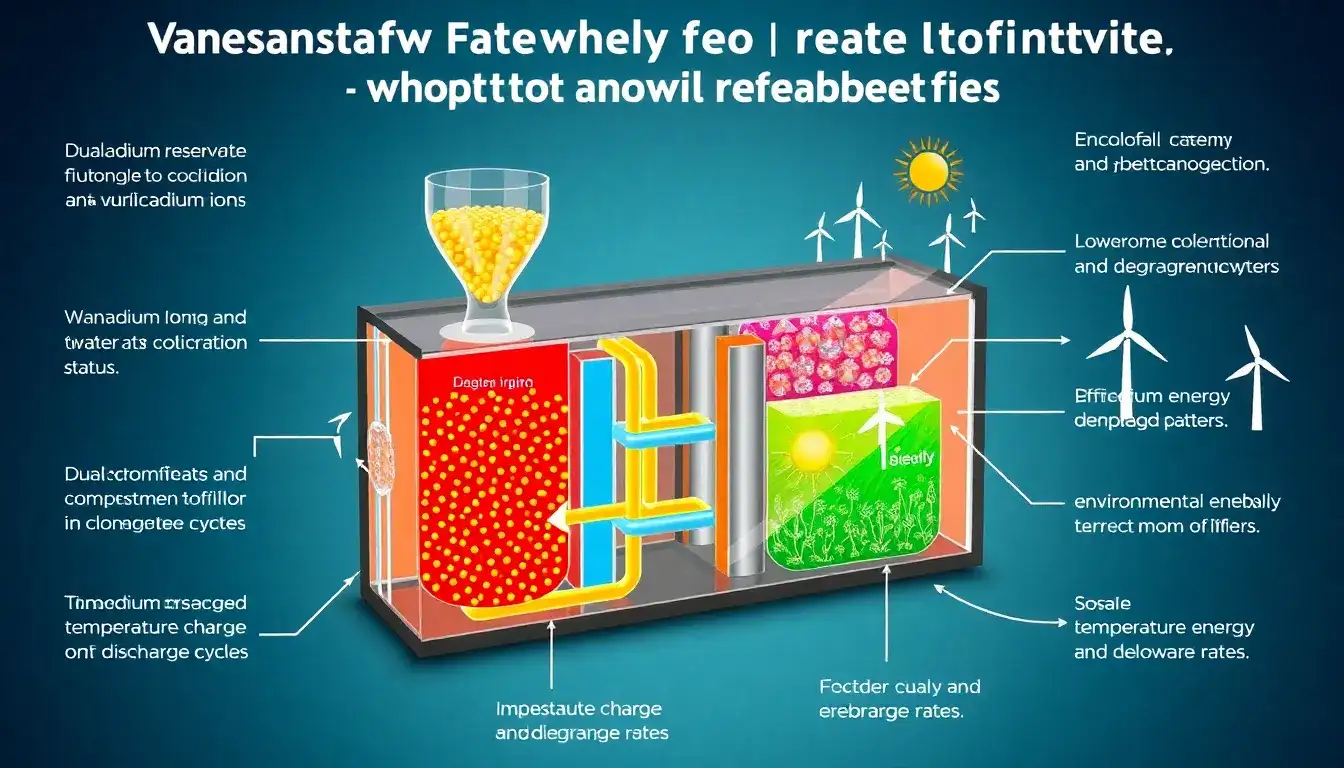
Vanadium flow batteries (VFBs) are known for their exceptionally long lifetimes, often exceeding 25 years. Several factors contribute to their durability and extended operational lifespan:
Key Factors Contributing to Long Lifetimes
- Liquid Electrolyte Chemistry: The liquid electrolytes in VFBs allow for fully reversible ion exchange reactions without the formation of dendrites or phase changes, which can lead to capacity loss in other battery types.
- No Solid Phase Reactions: Unlike traditional batteries where reactions occur within a solid phase, VFBs conduct reactions entirely in the liquid phase, minimizing material degradation and capacity loss.
- Energy Storage Mechanism: Most of the energy in VFBs is stored outside the electrochemical cells in the liquid electrolytes, reducing wear and tear on the cells themselves.
- Scalability and Maintenance: VFBs can be scaled easily by adding more electrolyte or increasing the size of the tanks, and they require less maintenance compared to batteries that need frequent cell replacements.
- Mitigation of Contamination: The minimal risk of cross-contamination and the ability to reverse any contamination issues mean that VFBs can maintain their efficiency over time.
- Operating Conditions: Maintaining a stable operating environment, adhering to recommended charge/discharge cycles, and ensuring high-quality components can further extend the lifespan of these batteries.
Overall, the combination of advanced chemistry, scalable design, and low maintenance requirements makes vanadium flow batteries particularly durable and long-lasting.
Original article by NenPower, If reposted, please credit the source: https://nenpower.com/blog/what-makes-vanadium-flow-batteries-have-the-longest-lifetimes/

