

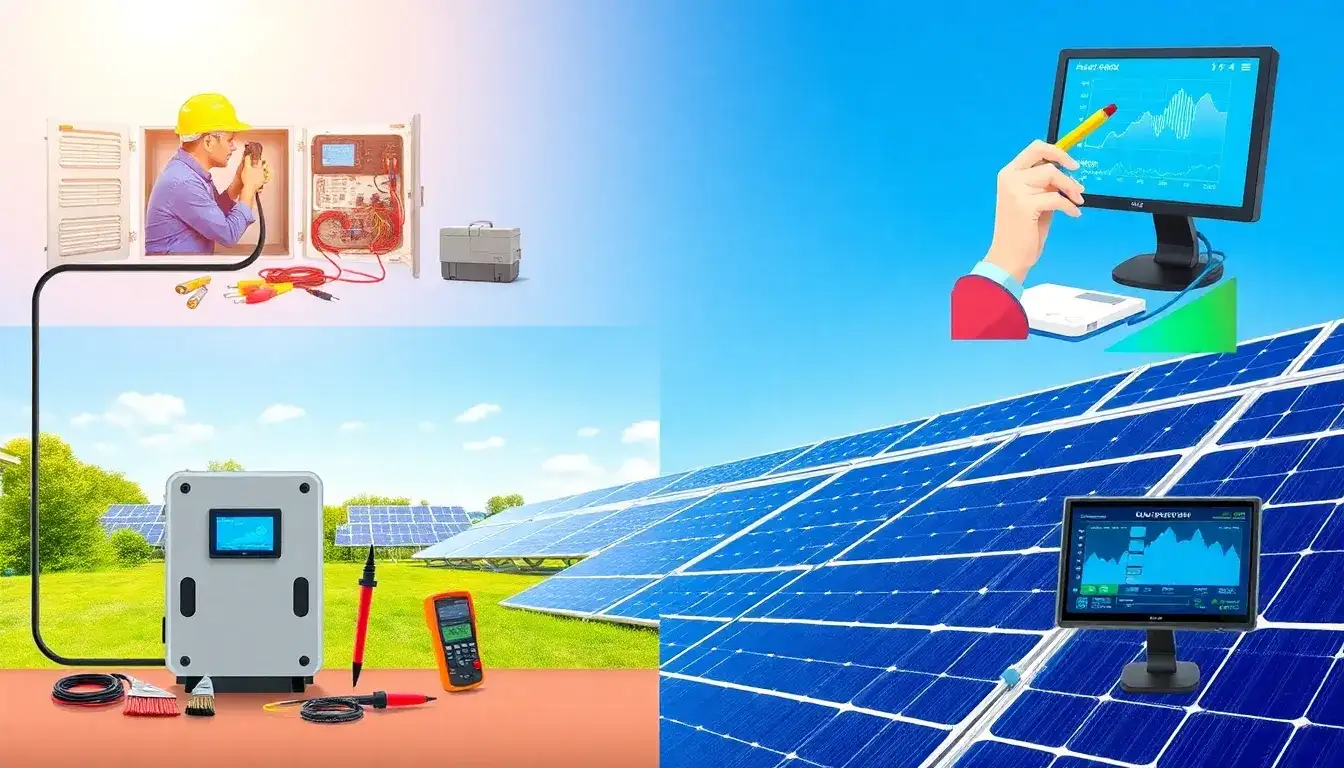
To optimize the performance and extend the lifespan of solar inverters, implementing comprehensive maintenance practices is essential. These involve regular inspection, cleaning, monitoring, and professional servicing tailored to the inverter’s environment and operational conditions. Key maintenance practices include:
1. Site Location and Environmental Control
- Install the inverter in a dust-free, well-ventilated area to prevent overheating and moisture buildup, which can cause rust and damage internal components. Proper ventilation ensures the inverter stays cool and functions efficiently.
- Monitor environmental conditions such as temperature and humidity regularly. Temperatures outside of the recommended range and high humidity levels can cause condensation and damage. Use cooling or heating systems as needed and employ dehumidifiers or relocate the inverter if moisture is excessive.
2. Regular Inspections
- Conduct frequent visual inspections (e.g., monthly) checking for physical damage like cracks, corrosion, discoloration, loose wiring, or signs of moisture accumulation. Early detection helps prevent major breakdowns.
- Check control panels for warning or error codes that indicate technical issues requiring immediate attention.
3. Cleaning Procedures
- Clean the inverter and solar panels regularly to remove dust, pollen, bird droppings, and debris that may block airflow or sunlight. Cleaning can be done with a soft cloth or brush and water or mild soapy water; avoid harsh materials that could scratch surfaces.
- Clean air intake filters and cooling fans at least every six months to ensure proper ventilation and prevent overheating.
4. Electrical Connections and Component Checks
- Periodically inspect and tighten all electrical connections, terminals, and wiring to eliminate risks of loose connections, arcing, or short circuits that could cause inverter failure.
- Check for capacitor wear and signs of ultrasonic vibrations or overheating since these common issues affect inverter reliability.
5. Software and Performance Monitoring
- Use manufacturer-provided monitoring software or mobile apps to track inverter performance in real time. Look for deviations in energy output or unexpected error alerts to address potential issues preemptively.
- Regularly update inverter firmware to benefit from manufacturer improvements, bug fixes, and enhanced security features.
6. Cooling and Protection from Extreme Weather
- Ensure cooling fans are operational and unobstructed to prevent overheating. Maintain at least 12 inches of clearance around the inverter for airflow.
- Prepare for extreme weather by safeguarding the inverter from lightning, over-voltage, and temperature fluctuations with proper housing and surge protection to avoid failure.
7. Professional Maintenance
- Schedule professional maintenance at least annually or as recommended by the manufacturer for detailed inspections and servicing that go beyond routine user checks. This can include internal component testing and recalibration to sustain optimal performance.
8. Documentation and Maintenance Logs
- Keep detailed records of inspections, cleaning, repairs, and performance data to track trends and anticipate maintenance needs. This data-driven approach optimizes maintenance timing and investment returns over the inverter’s life.
By combining these practices—environmental control, routine inspections and cleaning, electrical and software checks, cooling management, professional servicing, and thorough documentation—solar inverter owners can maximize system efficiency, prevent downtime, prolong inverter lifespan beyond typical warranties, and enhance overall solar energy returns.
Original article by NenPower, If reposted, please credit the source: https://nenpower.com/blog/what-maintenance-practices-can-optimize-the-performance-of-solar-inverters/

