

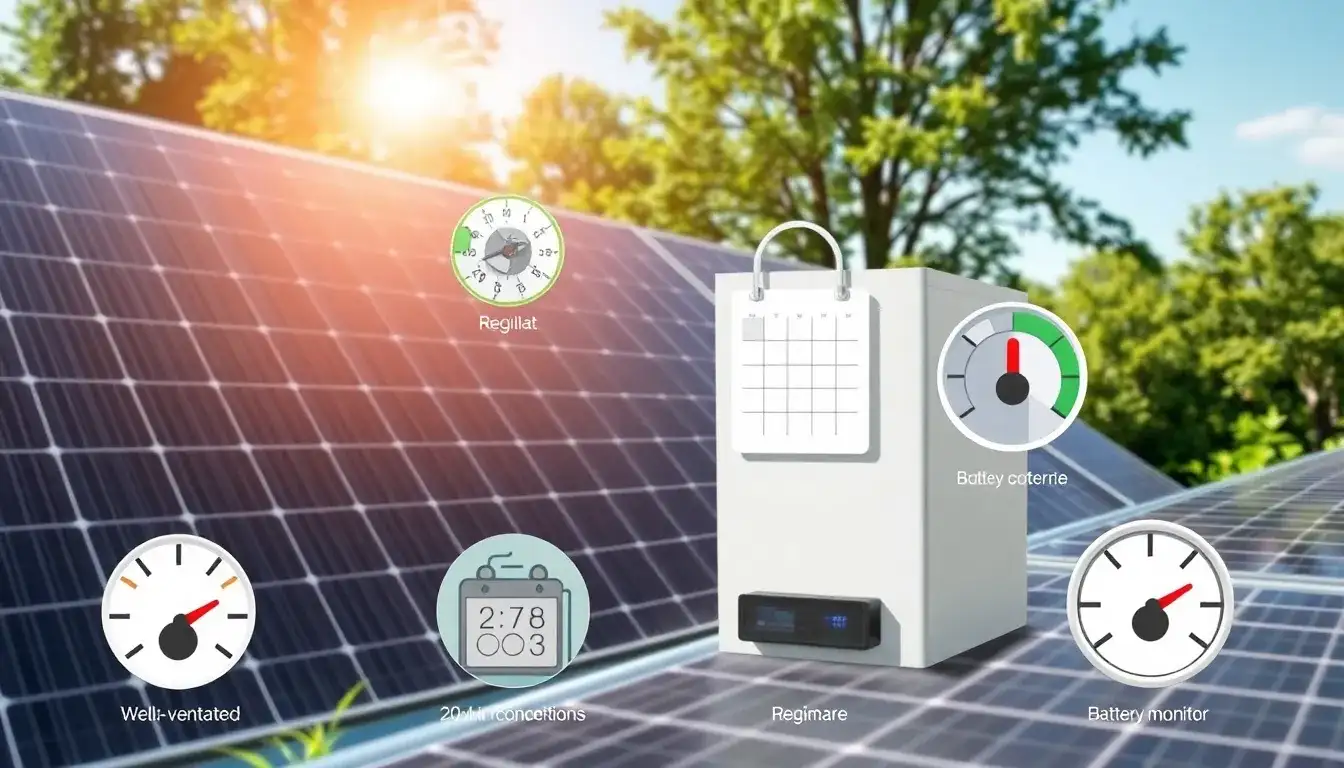
To extend the lifespan of lithium-ion solar batteries, several key maintenance practices should be followed, focusing on charge management, temperature control, physical inspection, and regular system monitoring:
Charge Management
- Maintain an Optimal State of Charge (SOC): Keep the battery charge between approximately 20% and 80% to avoid stress from deep discharges or full charges, which can degrade the battery faster. Storing batteries at about 50% charge is recommended if not in use.
- Regular Cycling: Use the battery regularly to maintain chemical activity within the cells. Lithium-ion batteries benefit from periodic use rather than long-term storage without cycling.
- Avoid Deep Discharges: Prevent the battery from discharging below its minimum voltage threshold to avoid damage and capacity loss.
Temperature Control
- Store and Operate at Optimal Temperatures: Store batteries in a cool environment between 5 °C and 20 °C (41 °F and 68 °F) and avoid exposure to excessive heat or freezing conditions. High temperatures accelerate degradation, and cold reduces capacity temporarily.
- Ensure Proper Ventilation: Keep the battery area well-ventilated, especially in hot climates, possibly using fans or cooling systems to prevent overheating.
- Insulate Against Cold: In colder months, insulate battery enclosures and monitor charging rates adjusted to temperature to prevent capacity loss.
Physical Inspection and Cleaning
- Inspect Battery Casings: Look for physical damage, swelling, or leaks which can indicate battery failure risk.
- Clean Terminals and Connections: Periodically clean battery terminals using a baking soda and water solution, dry thoroughly, and apply anti-corrosion gel to prevent corrosion and ensure good electrical contact.
- Tighten Connections: Loose cables or connectors reduce performance and can cause damage; check and tighten connections regularly.
Monitoring and System Checks
- Use Battery Management Systems (BMS): Employ BMS to monitor voltage, current, temperature, and SOC in real time to detect any irregularities early.
- Test Battery Voltage and Capacity: Regularly test voltage levels and overall battery performance to identify capacity loss and recalibrate charging equipment as needed.
- Seasonal Maintenance: Perform comprehensive system checks and adjustment of charge controllers and inverters especially during spring and fall to adapt to changing conditions.
Summary Table of Best Practices
| Maintenance Aspect | Recommended Practice |
|---|---|
| State of Charge | Keep between 20%-80%, store at ~50% charge |
| Usage | Regular cycling, avoid long-term storage without use |
| Temperature | Store between 5-20 °C, avoid heat exposure, insulate in cold environments |
| Cleaning | Clean terminals, apply anti-corrosion gel |
| Connections | Tighten cables and connectors regularly |
| Monitoring | Use BMS for real-time monitoring, test voltage and capacity periodically |
| Seasonal Maintenance | Adjust charge controller settings, comprehensive checks in spring and fall |
By following these guidelines, lithium-ion solar batteries can maintain capacity and performance longer, reducing the need for premature replacements and enhancing overall solar energy system reliability.
Original article by NenPower, If reposted, please credit the source: https://nenpower.com/blog/what-maintenance-practices-can-extend-the-lifespan-of-lithium-ion-solar-batteries/

