

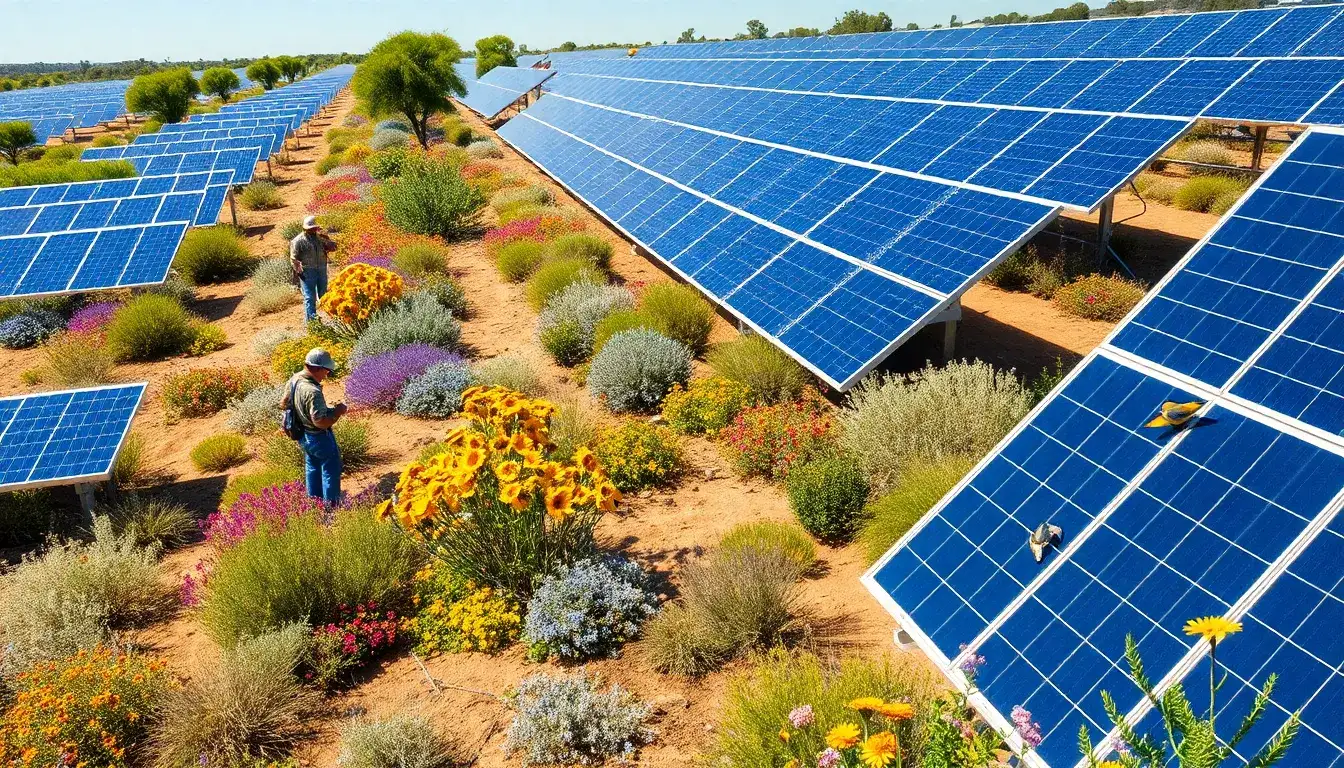
Maintaining native vegetation on solar sites can significantly reduce long-term maintenance costs and support environmental benefits. Here are some recommended maintenance practices for solar sites with native vegetation:
Initial Years (0-3 Years)
- Plant Native Species: Establish native grasses, forbs, and other vegetation to recharge and rebuild soil health.
- Higher Initial Maintenance: Native plants require higher maintenance in the first few years, including regular mowing and herbicide application.
- Mowing and Herbicide Use:
- First Year: Mow vegetation 4-6 inches once noxious plants start growing. Spot spray with non-selective herbicides to reduce invasive species.
- Years 2-3: Mow once plants reach 10 inches to prevent seeding of undesirable species. Continue spot spraying to manage invasive plants.
Ongoing Maintenance (After Year 4)
- Periodic Mowing: Mow vegetation every 3-5 years down to 6 inches from February to early spring to prevent wildlife nesting in vegetation.
- Spot Spraying: Continue spot spraying to remove invasive plants throughout the solar site.
- Monitoring for Invasive Species: Regularly inspect the site to identify and control invasive species early, as they can outcompete native vegetation.
Long-Term Benefits
- Reduced Maintenance Costs: Over time, native vegetation reduces maintenance costs by requiring less frequent mowing compared to traditional turfgrass.
- Soil Health and Biodiversity: Native vegetation promotes soil health, supports local biodiversity, and mitigates environmental impacts of solar installations.
Original article by NenPower, If reposted, please credit the source: https://nenpower.com/blog/what-maintenance-practices-are-recommended-for-solar-sites-with-native-vegetation/

