

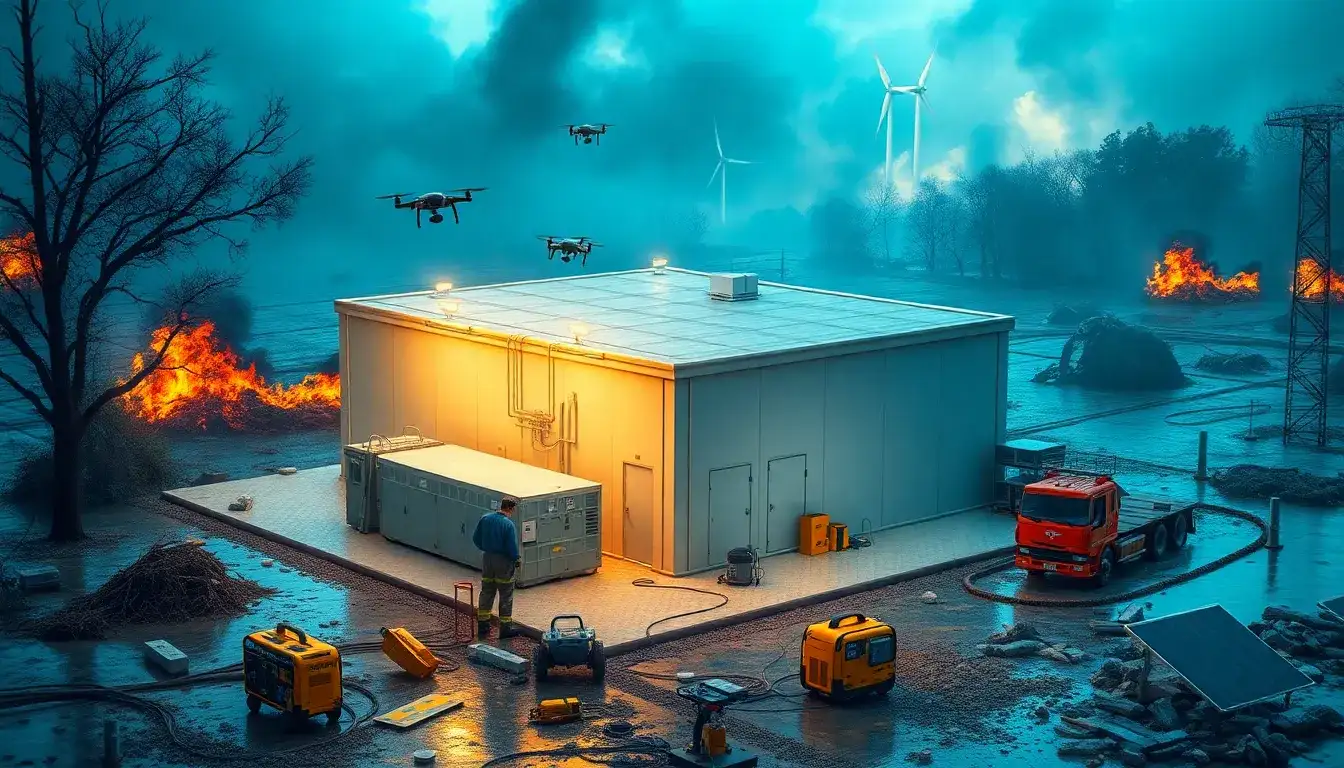
Maintaining energy storage systems is crucial for ensuring their reliability and functionality during disaster scenarios. Here are some of the key maintenance considerations:
Maintenance Considerations
1. Regular Servicing
- Regularly check and maintain the system to ensure it operates at peak condition, especially before severe weather events.
- Use built-in diagnostics to remotely monitor battery health and address any issues promptly.
2. Compatibility and Integration
- Ensure that the energy storage system is compatible with existing infrastructure (like power grids, renewable sources, and backup generators).
- Proper integration helps in seamless operation during emergencies.
3. Maintenance Needs During Disasters
- Opt for systems that are low maintenance and easy to service, as limited access and stress are typical in disaster situations.
- Choose systems with fast response times to provide instant backup power when needed.
4. Environmental Protection
- For systems in areas prone to extreme conditions (like hurricanes, wildfires, or extreme heat):
- Install systems in wind-resistant enclosures to shield against flying debris or extreme winds.
- Use fire-resistant or temperature-controlled rooms to protect against high heat, which can degrade battery life.
5. Cost Considerations
- Balance upfront costs, operational expenses, and long-term maintenance costs against the system’s performance and reliability.
- Assess the financial feasibility while ensuring the system meets power requirements during extended outages.
6. Compliance with Regulations
- Familiarize yourself with local regulations and building codes related to energy storage systems.
- Ensure compliance to avoid operational issues during emergencies.
By addressing these maintenance considerations, energy storage systems can effectively support critical infrastructure during disasters and contribute to faster recovery efforts.
Original article by NenPower, If reposted, please credit the source: https://nenpower.com/blog/what-maintenance-considerations-are-crucial-for-energy-storage-systems-in-disaster-scenarios/

