

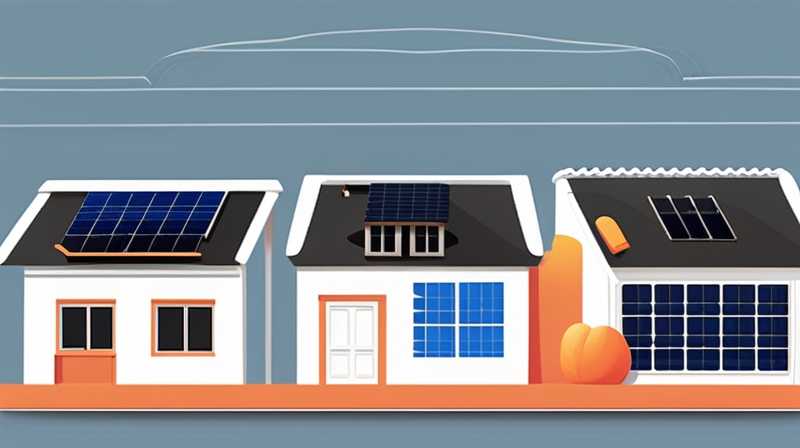
1. SOLAR ENERGY TYPES FOR ROOFS
When evaluating types of solar energy suitable for rooftops, 1. photovoltaic (PV) panels are prevalent, 2. solar thermal systems offer unique benefits, 3. building-integrated photovoltaics (BIPV) provide aesthetic advantages, and 4. tracking solar systems maximize energy capture. Of these, photovoltaic systems are the most common for residential roofs due to their accessibility and efficiency. These panels convert sunlight directly into electricity, allowing homeowners to produce their own power, reduce energy costs, and contribute to a sustainable energy future. Additionally, advancements in technology have led to improvements in efficiency and affordability, making PV panels an attractive option for many.
2. UNDERSTANDING PHOTOVOLTAIC PANELS
Photovoltaic technology stands at the forefront of solar energy solutions for rooftops. Functioning through the photovoltaic effect, these panels are composed of silicon cells that convert sunlight into electrical energy. As sunlight strikes the solar cells, it excites electrons, generating an electric current. This innovative method of energy production not only provides substantial savings on electricity bills but also contributes positively to the environment by decreasing reliance on fossil fuels.
Residential installations can vary significantly in terms of capacity and configuration. Homeowners often find that 1. solar panel systems come in various sizes, accommodating different energy needs, and 2. the optimal angle and orientation of panels significantly influence energy production. The proper placement of PV panels is essential; south-facing rooftops typically yield the highest performance due to maximum sun exposure. Furthermore, the slope and shading from nearby structures or trees can also impact efficiency, meaning that homeowners must carefully evaluate their roof conditions before initiating installation.
While the upfront costs of installing photovoltaic systems may deter some homeowners, various incentives and financing options exist. 1. Federal tax credits can substantively reduce installation costs, and 2. local and state programs may offer additional support. Many regions are moving towards sustainable energy solutions, making solar energy not only a choice for the environmentally conscious but also a financially viable option in the long run. The combination of these financial incentives with falling installation prices creates a compelling case for considering PV panels as a primary energy source for residential roofs.
3. SOLAR THERMAL SYSTEMS: AN ALTERNATIVE APPROACH
In contrast to photovoltaic systems, solar thermal installations harness sunlight primarily for heating rather than electricity generation. Integrating solar thermal systems into residential rooftops provides homeowners with a sustainable means of heating water, which can lead to substantial cost savings. One of the most common applications is in domestic water heating. These systems can convert solar energy into heat, significantly lowering water heating costs and reducing fossil fuel consumption.
Solar thermal systems work efficiently to capture sunlight using a combination of 1. flat-plate collectors and 2. evacuated tube collectors. Flat-plate collectors, comprised of a dark absorbent surface and a transparent cover, are ideal for residential setups. They work well in regions with ample sunlight, converting the sun’s rays into heat for domestic water systems or space heating. On the other hand, evacuated tube collectors are known for their efficiency and performance even in colder climates. These systems use multiple glass tubes to create a vacuum, significantly enhancing heat retention and efficiency.
Despite their clear advantages, there are potential drawbacks to consider. 1. Solar thermal systems typically have higher initial installation costs compared to PV panels, and 2. they require more effort in maintenance and upkeep. Homeowners must also evaluate their specific heating needs and existing systems in place when considering the installation of solar thermal technology. Nevertheless, combining solar thermal systems with photovoltaic panels can be an exceptional solution for those seeking maximum energy efficiency and sustainability from their rooftop installations.
4. BUILDING-INTEGRATED PHOTOVOLTAICS (BIPV)
Building-integrated photovoltaics represent an innovative fusion of architecture and solar technology, designed to integrate seamlessly into a building’s existing structure. Unlike traditional solar panels, which are added on top of existing rooftops, BIPV systems are embedded into building materials such as roof tiles, facades, and windows. This unique approach not only provides the functionality of energy production but also enhances the aesthetic appeal of structures.
1. The integration of solar cells into roofing materials allows for a dual-purpose solution, contributing to energy production while maintaining architectural integrity. Aesthetically pleasing designs enable homeowners or builders to opt for BIPV options without compromising on the visual aspects of the property. Moreover, this technology can be particularly advantageous in urban environments where rooftops may be limited or where zoning laws restrict traditional solar installations.
In terms of mechanics, BIPV systems operate similarly to conventional photovoltaic systems, converting sunlight into electricity. However, it’s noteworthy that 1. BIPV solutions tend to yield slightly lower efficiencies due to space constraints and integration challenges, and 2. upfront costs remain relatively high compared to standard PV installations. Despite these challenges, the growing demand for sustainable construction and advances in technology are driving investors and innovatives towards BIPV systems. Over time, as building codes increasingly favor energy-efficient construction, BIPV systems may prove to be a revolutionary solution for combining energy needs with architectural design.
5. TRACKING SOLAR SYSTEMS: OPTIMIZED ENERGY CAPTURE
Tracking solar systems represent an advanced approach to solar energy collection, designed to maximize energy capture throughout the day. Unlike traditional fixed PV panels, tracking systems can pivot and rotate to follow the sun’s trajectory, optimizing solar exposure. This adaptability results in significantly increased energy output by utilizing the sun’s movement across the sky.
There are two primary types of tracking systems: 1. single-axis trackers and 2. dual-axis trackers. Single-axis systems rotate on one axis, typically horizontally, following the sun from east to west. This configuration works well for installations in regions with a predictable sun path, offering increased energy capture compared to static panels. Dual-axis systems add a second rotational axis, enabling more precise tracking of the sun’s elevation angle, enhancing efficiency. This system is particularly beneficial in areas where the sun’s position varies dramatically with the seasons.
Despite their advantages, tracking systems come with certain considerations. 1. They generally require a larger initial investment compared to fixed solar systems, and 2. they demand additional maintenance due to their moving parts. Homeowners should weigh the potential for increased energy production against the costs and maintenance requirements associated with tracking systems. With continuous advancements in technology and cost efficiencies, many are discovering that advanced tracking systems can play a significant role in maximizing solar energy production.
6. ENVIRONMENTAL IMPACT OF SOLAR ENERGY
Solar energy is increasingly regarded as a superior alternative to fossil fuels due to its sustainable nature and minimal environmental footprint. By harnessing sunlight directly, solar systems mitigate greenhouse gas emissions, presenting a compelling case for widespread adoption among homeowners and businesses alike. When comparing solar energy options for roofs, it’s essential to consider not only their efficiency and performance but also their overall environmental implications.
1. Photovoltaic systems produce clean electricity, contributing to a reduction in carbon emissions and reliance on non-renewable energy sources, while 2. solar thermal options minimize water heating energy consumption. By investing in solar technologies and implementing solar panels on rooftops, homeowners are essentially participating in a larger movement towards sustainability. These individuals can mitigate energy consumption and contribute to a greener energy grid, fostering a more environmentally friendly community.
Moreover, the fabrication and installation processes of solar technologies are evolving to become more eco-conscious. For instance, many manufacturers are adopting sustainable practices in sourcing materials and reducing waste during production. 1. Recyclability of solar panels at the end of their life cycle and 2. the lifespan of solar technologies, typically exceeding 25 years, further highlight their sustainability. Over time, the presence of solar energy in residential areas provides a transition towards a more responsible and eco-friendly future that benefits both individuals and the broader environment.
7. ECONOMIC ASPECTS OF SOLAR ENERGY INSTALLATION
The financial implications of rooftop solar energy solutions extend beyond mere installation costs. While the initial expense often represents a barrier for many, various factors contribute to significant long-term savings and returns on investment. Homeowners often find that solar installation boosts property value, as potential buyers recognize the appeal of understanding future energy savings and potential tax credits now associated with solar technology.
1. Federal and state incentives can considerably reduce the financial burden of installing solar systems, and 2. net metering policies offer additional financial advantages by allowing homeowners to sell excess power back to the grid. These programs can enhance the financial viability of solar energy investments, encouraging more individuals to consider their options seriously. Additionally, reduced energy bills over time and the long-term benefits of energy independence make solar energy installations an increasingly attractive opportunity for homeowners.
The initial financial commitment necessary for solar energy projects can vary based on several factors, including the type of technology selected and the roof’s specific conditions. 1. Financing options such as solar leases or power purchase agreements (PPAs) allow homeowners to take advantage of solar energy without making large upfront investments, and 2. alternative financing programs through banks or credit unions can provide opportunities for homeowners to secure loans specifically for solar installations. By evaluating personal finance, homeowners can find suitable financing options that align with their financial goals while investing in solar energy technology.
8. FUTURE TRENDS IN SOLAR ENERGY
As the world shifts towards sustainable energy solutions, the future of solar energy is promising. Ongoing research and development in the solar sector aim to improve efficiency, lower production costs, and expand the accessibility of solar technology for homeowners. Innovations such as advancements in battery storage systems, smart grid technology, and energy management systems represent exciting concepts on the horizon.
1. Battery solutions allow homeowners to store excess energy, enhancing energy independence and providing backups during outages, and 2. smarter grid technologies facilitate improved energy management and distribution, maximizing the efficiency of solar energy systems. These developments have the potential to increase the appeal of solar energy installations, encouraging more households to adopt renewable energy solutions.
Moreover, governments and organizations are increasingly implementing policies and incentives that promote solar energy adoption, emphasizing the importance of transitioning towards clean energy sources. 1. Continuing efforts to reduce greenhouse gas emissions, and 2. commitments to creating sustainable urban environments are shaping the future landscape of solar energy. As technology continues to evolve, a more significant integration of solar energy in our daily lives becomes not only possible but probable, ensuring a cleaner, greener future for generations to come.
9. FREQUENTLY ASKED QUESTIONS
WHAT ARE THE BENEFITS OF INSTALLING SOLAR PANELS ON MY ROOF?
Installing solar panels on rooftops provides numerous advantages. 1. They significantly reduce electricity bills by generating your own power, and 2. contribute positively to environmental conservation by utilizing renewable energy. Moreover, by investing in solar technology, homeowners can enhance the value of their property, making it more attractive to potential buyers. Recent studies have demonstrated that homes equipped with solar panels tend to sell faster and at higher prices. Additionally, homeowners gain energy independence, decreasing reliance on traditional energy sources and stabilizing their energy costs over time. With the advent of various financing options and incentives, the long-term savings associated with solar installations become even more appealing.
HOW DOES THE INSTALLATION PROCESS FOR SOLAR PANELS WORK?
The installation process for solar energy systems starts with an initial consultation. 1. Contractors assess your roof’s suitability, including its angle, direction, and shading, and 2. provide estimates based on your energy needs. Once you decide to proceed, the contractor will finalize the design of your solar array and obtain any necessary permits. The next stage involves the actual installation of the solar panels, which typically includes the mounting of racks, installation of inverters, and wiring connections. After installation, the system is tested to ensure everything operates correctly. Homeowners receive guidance on how to monitor system performance and understand the benefits of their new solar energy setup, enabling them to make informed decisions going forward.
WHAT MAINTENANCE DO SOLAR SYSTEMS REQUIRE?
Solar energy systems are generally low-maintenance, offering hassle-free operation for homeowners. 1. Regular inspections should be conducted to ensure that panels remain clean and free of debris, and this can usually be done by simply hosing them off. If leaves or snow accumulate, it is crucial to clear these off to maintain optimal energy production. Annual professional inspections can provide peace of mind and ensure that any maintenance requirements are addressed promptly. Additionally, homeowners should monitor inverter performance through provided applications, which alert them to any irregularities. Understanding the performance metrics and maintaining open communication with contractors can enhance the lifespan and efficiency of solar systems.
10. FINAL THOUGHTS ON SOLAR ENERGY OPTIONS
It is critical to recognize that the best solar energy system for a rooftop depends largely on each homeowner’s individual needs, preferences, and circumstances. The diverse array of options available—including photovoltaic panels, solar thermal systems, building-integrated photovoltaics, and tracking systems—provides tailored solutions for every household. By thoroughly evaluating factors such as energy requirements, roof conditions, available financing options, and long-term goals, homeowners can make informed decisions regarding solar installations.
The integration of solar technologies into residential rooftops stands as not only an attractive investment opportunity but also a necessary step towards achieving a sustainable energy future. As advancements in technology continue to evolve alongside supportive government policies, more households will find immense value in adopting solar energy solutions. By investing in renewable energy, individuals can partake in significant economic savings while actively contributing to environmental stewardship. The transition towards solar energy is unfolding now, and with the right information, homeowners can confidently choose the solar option that best aligns with their aspirations for energy independence, sustainability, and financial savings. As the push for a cleaner, greener tomorrow takes center stage, embracing solar energy solutions can empower households to take part in a collective journey towards a more sustainable future.
Original article by NenPower, If reposted, please credit the source: https://nenpower.com/blog/what-kind-of-solar-energy-is-better-for-the-roof/

