

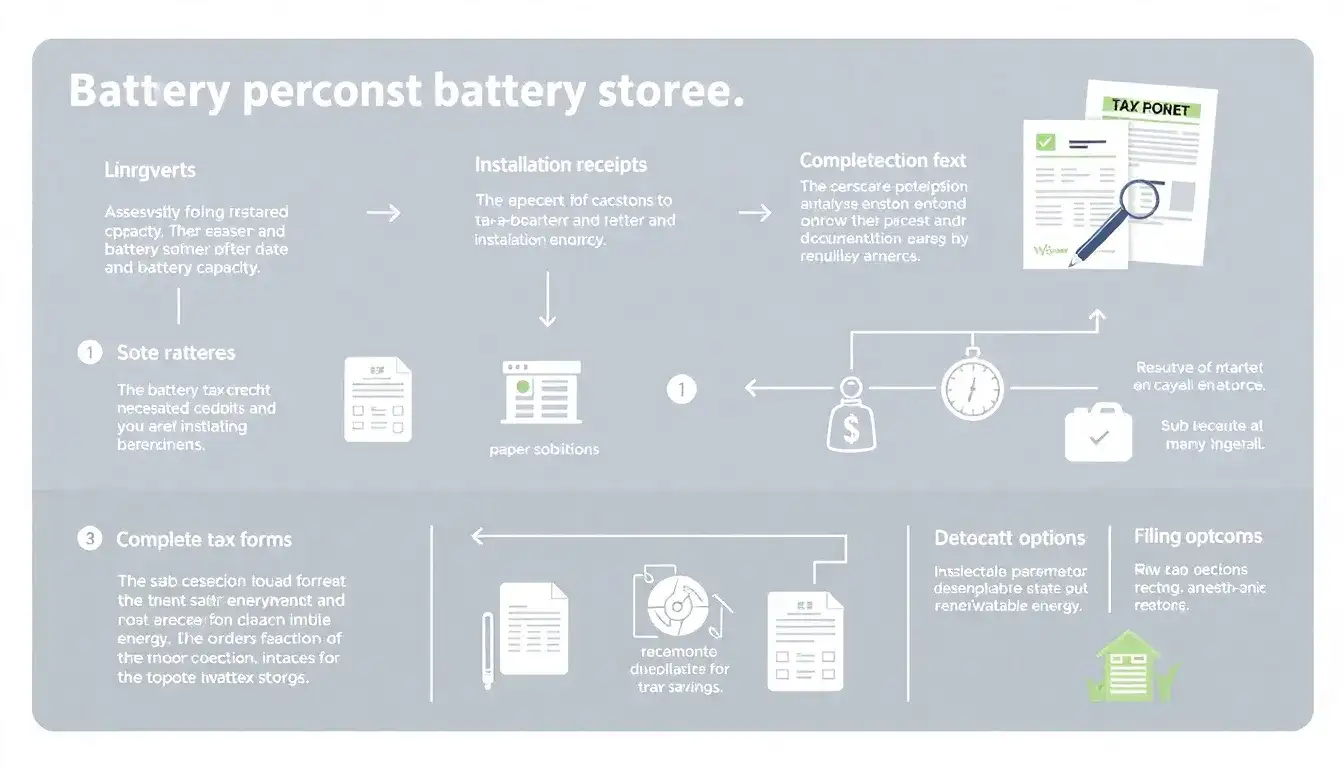
Claiming the Tax Credit for Battery Storage
To claim the tax credit for battery storage, follow these steps:
Eligibility and Credit Details
- Eligibility Criteria: For residential credits, qualified battery storage technology must have a capacity of not less than 3 kilowatt hours. For standalone energy storage under the Inflation Reduction Act, a minimum system size of 5kWh is required.
- Credit Rate for Residential: The Residential Clean Energy Credit offers a tax credit of 30% for property placed in service from December 31, 2021, to December 31, 2032.
- Credit Rate for Standalone Systems: The Energy Storage Investment Tax Credit provides up to 30% of the cost of eligible energy storage systems, including installation costs and related expenses.
Step-by-Step Process
- Assess Eligibility:
- Ensure your battery storage system meets the minimum capacity requirement and is installed in a dwelling unit located in the United States.
- For standalone energy storage, verify that the system size is at least 5kWh if applicable.
- Maintain Documentation:
- Keep detailed records, including purchase receipts, installation costs, and system specifications.
- Complete the Appropriate IRS Form:
- For residential tax credits, use Form 5695 (Residential Energy Credits).
- For investment tax credits on standalone systems, use Form 3468 (Investment Credit).
- Consult a Tax Professional:
- It is advisable to consult a tax professional to ensure all requirements are met and to navigate any complexities in the tax credit process.
- File Your Tax Return:
- Attach the completed IRS form (5695 or 3468) to your federal tax return to claim the credit.
Original article by NenPower, If reposted, please credit the source: https://nenpower.com/blog/what-is-the-process-for-claiming-the-tax-credit-for-battery-storage/

