

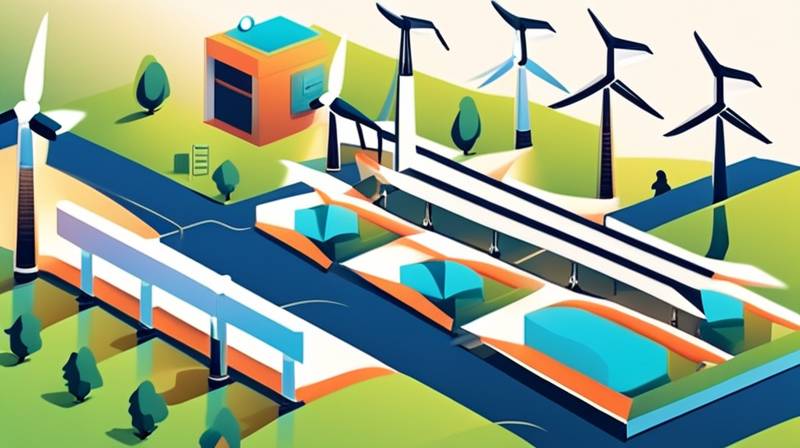
What is the principle of wind turbine energy storage?
Wind turbine energy storage operates primarily based on the need to capture excess energy generated during periods of high wind and release it during low wind periods. 1. Wind energy conversion, 2. Energy storage technologies, 3. Demand-supply balancing, 4. Environmental considerations. One crucial aspect to delve into is energy storage technologies. These include various systems that can efficiently store electrical energy produced by wind turbines for later use, such as batteries, pumped hydro storage, and compressed air energy storage. Each technology has its strengths and weaknesses, making it essential to choose the most appropriate system based on specific site conditions, scale, and economic feasibility.
1. WIND ENERGY CONVERSION
Wind energy conversion systems primarily transform kinetic energy harnessed from wind into electrical energy. This process relies on wind turbines equipped with blades that capture wind movement. As the wind passes over the turbine blades, it generates lift, causing the blades to spin around a rotor. This spinning motion is converted into electrical energy via a generator. The amount of energy produced is heavily dependent on wind speed; hence, a continuous assessment of wind patterns is vital for efficient energy production.
Moreover, the efficiency of wind turbines is influenced by their design and the technologies employed. For example, turbine blades designed for maximum aerodynamic efficiency can significantly enhance energy capture. This means that choosing the right turbine model is crucial for optimizing energy output. Additionally, wind energy systems must be integrated with energy storage solutions to mitigate intermittency issues presented by wind variability. In this light, manufacturers are continually innovating to produce more advanced and efficient turbines capable of harnessing wind energy at greater scales.
2. ENERGY STORAGE TECHNOLOGIES
One of the critical challenges in wind energy production is managing fluctuations in energy supply and demand. Energy storage technologies provide a viable solution to this dilemma. Various methods have been developed to store the surplus energy generated when wind conditions are optimal, which can then be used when generation dips, ensuring a more stable energy supply.
Battery systems, particularly lithium-ion batteries, have become prominent in energy storage due to their relatively high energy density, rapid response times, and decreasing costs. This technology enables quick discharge of stored energy to meet immediate demand, making them ideal for medium to short-term storage. Furthermore, advancements in battery management systems have allowed for improved performance, leading to longer lifespans and enhanced efficiency.
Another promising method is pumped hydro storage, which uses excess energy to pump water uphill to a reservoir. When energy is needed, water is released to flow downhill, passing through turbines to generate electricity. This approach, albeit geographically limited, offers substantial storage capacity and can deliver power over extended periods, making it suitable for large-scale operations.
3. DEMAND-SUPPLY BALANCING
Understanding the principles of demand-supply balancing is crucial for effective energy management. As wind energy generation fluctuates based on environmental conditions, it is vital to align energy supply with consumer demand. This alignment is particularly critical in energy markets where energy prices can be influenced by supply availability.
To achieve this balance, operators must utilize sophisticated forecasting techniques to predict wind energy production accurately. Such forecasts are enabled by advanced meteorological modeling that helps in anticipating wind conditions. Proper assessment leads to optimized energy dispatch schedules that can shift energy generation to meet peak demand periods effectively. Furthermore, demand response programs can allow consumers to adjust their energy usage during peak generation hours, further aiding in the balance.
Incorporating smart grid technologies also facilitates real-time communication between energy producers and consumers. By enabling automated adjustments in energy supply and usage, smart grids enhance demand management. Ultimately, a well-integrated energy storage solution that collaborates with demand-side resources allows for optimized grid reliability, thereby reducing reliance on fossil fuels and enhancing sustainability.
4. ENVIRONMENTAL CONSIDERATIONS
The adoption of wind energy and associated storage systems raises several environmental considerations that must be addressed. While wind energy is a clean and renewable source, the implications of large-scale implementations require scrutiny. The environmental impact of battery production, particularly in terms of resource extraction, poses significant concerns. Lithium mining, for example, can lead to habitat destruction and water depletion in arid regions. Therefore, exploring sustainable mining practices and alternative battery technologies is imperative.
Additionally, pumping hydro systems can significantly alter local ecosystems. Concerns arise over water quality, aquatic life disruptions, and landscape alterations. An environmental impact assessment should be a mandatory requirement during the planning stages of these projects to ascertain the potential consequences on local biodiversity.
Furthermore, wind turbine installations may also face public opposition due to concerns over visual impacts, noise generation, and effects on bird migration. Implementing strategies for community engagement and education is critical in addressing these concerns. In essence, balancing technological advancement with environmental stewardship will create a more sustainable energy future.
FREQUENTLY ASKED QUESTIONS
WHAT TYPES OF ENERGY STORAGE ARE MOST EFFECTIVE FOR WIND TURBINES?
When considering effective energy storage for wind turbines, a range of technologies comes into play. Lithium-ion batteries stand out due to their high energy density and rapid response times, making them suitable for short to medium-term storage needs. They provide flexibility in meeting peak demand due to their capacity for quick discharges. However, the lifecycle and environmental implications of battery production raise concerns.
In contrast, pumped hydro storage offers a more extensive storage capacity ideal for long-term applications. By transferring energy to and from water reservoirs, this method can provide substantial energy over extended periods, but this solution is often geographically constrained. Emerging technologies like compressed air energy storage (CAES) also show promise, utilizing surplus energy to compress air stored in underground facilities, which can later be released to generate electricity. Ultimately, the choice of storage technology is contingent upon site specifics, infrastructure resources, and energy demand profiles.
HOW DOES WIND ENERGY STORAGE ADDRESS INTERMITTENCY?
Wind energy spent periods of high generation can produce excess energy that often goes unused due to demand fluctuations. This intermittency in generation highlights the importance of energy storage solutions. Energy storage systems mitigate this issue by capturing surplus energy and releasing it when wind production declines, thus stabilizing the energy supply and demand.
These systems can flatten the energy output curve, ensuring that energy remains available even during calm wind conditions. Additionally, integrated grid strategies, including demand-response measures, optimize energy management, allowing consumers to adjust their usage in synchronization with wind production schedules. Moreover, advancements in forecasting technology enhance the ability to predict periods of high wind energy generation, allowing for strategic planning that further reduces reliance on non-renewable sources.
WHAT CHALLENGES DO WIND ENERGY STORAGE SYSTEMS FACE?
While wind energy storage systems present numerous advantages, they are not without challenges. One significant hurdle involves economic feasibility. The initial capital costs for both energy storage installations and the associated infrastructure can be daunting, requiring a comprehensive financial analysis to justify investment.
Furthermore, the environmental implications of certain storage technologies persistently raise concerns. For instance, battery production processes demand significant raw material extraction, often resulting in negative ecological impacts. This scrutiny necessitates the ongoing development of sustainable practices and alternative technologies.
Additionally, regulatory barriers and a lack of standardized practices can hinder the widespread adoption of wind energy storage solutions. Collaborating with policymakers to establish favorable conditions and incentives can prove instrumental in driving growth in this essential sector.
The complex interplay of various factors underscores the potential for wind turbine energy storage to revolutionize energy systems globally. An evolving technological landscape, aligned with environmental priorities and community collaboration, will pave the road toward a sustainable, renewable energy future. Consequently, the focus should extend beyond mere implementation, encouraging continuous learning and adaptation to ensure the optimal performance of wind energy and storage systems. The necessity to engage all stakeholders, including producers, consumers, and regulators, cannot be overstated. Only through an integrative approach can we unlock the full potential of wind energy storage, making it a centerpiece in the transition towards a cleaner, more resilient energy economy.
Original article by NenPower, If reposted, please credit the source: https://nenpower.com/blog/what-is-the-principle-of-wind-turbine-energy-storage/

