

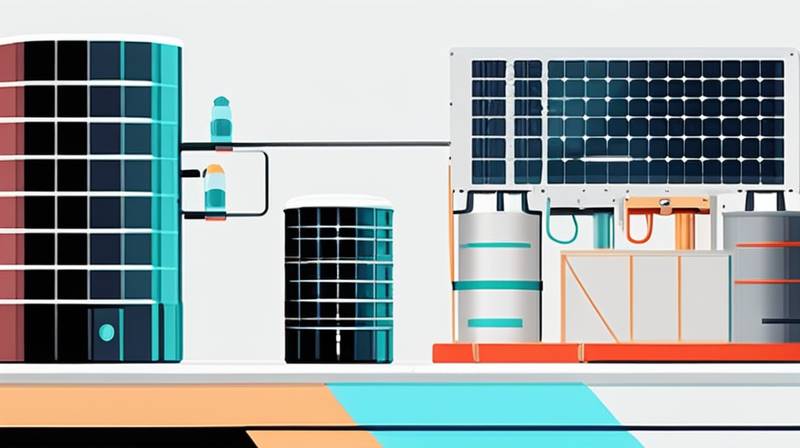
Principle of energy storage tanks encompasses several key concepts: 1. Energy accumulation for future use, 2. Utilization of various methods for storage, 3. Efficiency related to energy loss and retrieval, 4. Applications across multiple sectors. The mechanism relies on the fundamental principle of energy conversion, which includes the transformation of excess energy into a storable form, ensuring availability during peak demand. One significant implementation is in renewable energy systems, particularly solar and wind, which allow for buffering the energy generated and supplying it during times of lesser production, thus stabilizing the energy supply chain.
1. INTRODUCTION TO ENERGY STORAGE TANKS
Energy storage tanks serve a pivotal function in the management and optimization of energy supply and demand. These systems are designed to capture, retain, and release energy, aligning with the requirements of various applications across industries and utilities. The principle underlying these tanks hinges largely on enhancing reliability and sustainability by facilitating the balance between energy generation and consumption.
As technology advances, the significance of energy storage tanks has become increasingly pronounced. Fluctuations in energy generation from renewable sources necessitate a robust storage solution, allowing for the accumulation of excess power during peak production periods. This capability aids in smoothing out the variability inherent in sources such as solar and wind by storing surplus energy for later use, ensuring a consistent and reliable energy supply.
The versatility of energy storage can be observed in different formats, including thermal storage, mechanical storage, and electrical storage systems. Each technology employs unique mechanisms tailored for specific applications, whether it’s for large-scale utility needs or localized consumer demands. Understanding these systems involves delving deeper into the mechanics of energy transformation and the efficiencies associated with each technology.
2. CATEGORIES OF ENERGY STORAGE TANKS
THERMAL ENERGY STORAGE
Thermal energy storage (TES) represents one of the primary forms of energy storage, emphasizing the retention of thermal energy in various systems for later use. This type typically utilizes materials such as water, ice, or phase change materials that absorb and hold heat energy. The operation of thermal storage systems can be classified into two main categories: sensible heat storage and latent heat storage.
- Sensible heat storage involves raising the temperature of a material without a change in its phase, while latent heat storage utilizes materials that absorb or release energy during phase transitions, such as melting or freezing. For instance, in solar thermal systems, excess heat collected during sunny periods may be stored in large insulated tanks filled with water, allowing for heating purposes during cooler times.
- The effectiveness of thermal energy storage is largely dependent on the thermal conductivity and insulation properties, as well as how quickly the stored energy can be retrieved. Efficient TES allows industrial processes, district heating, and even residential buildings to utilize stored heat at optimal times, thus enhancing overall thermal efficiency and contributing to reduced energy costs.
MECHANICAL ENERGY STORAGE
Another prevalent category of energy storage tanks involves mechanical energy storage techniques whose operational principles revolve around converting electrical energy into mechanical energy. These systems encompass a variety of methodologies, including pumped hydro storage and compressed air energy storage.
- Pumped hydro storage operates by using excess electricity to pump water from a lower reservoir to a higher elevation. When energy demand rises, water is released back down through turbines, facilitating electricity generation. This method capitalizes on gravitational potential energy and is notable for its high efficiency and large storage capacity, making it advantageous for balancing grid demand.
-
Compressed air energy storage (CAES) on the other hand, similarly utilizes excess energy to compress air in underground caverns or tanks. Upon demand, the stored air is released to drive turbines for power generation. Each of these methods plays a crucial role in mitigating the intermittence of renewable energy sources, ultimately contributing to grid stability and sustainability.
3. ELECTRICAL ENERGY STORAGE
Electrical energy storage systems focus on the direct storage of electricity through various technologies. The most common examples include batteries, supercapacitors, and flywheels, each with distinct operational principles.
BATTERIES
- Batteries represent one of the most widely utilized forms of electrical energy storage, with numerous types available including lithium-ion, lead-acid, and flow batteries. Each type operates based on the electrochemical reactions within the battery cells, allowing for the storage and later retrieval of electrical energy when required. The versatility and the compact nature of batteries make them suitable for a myriad of applications, ranging from small consumer electronics to electric vehicles and large grid-scale storage.
-
However, battery technology is constantly evolving. Innovations focus on enhancing energy density, charging times, lifecycle, and environmental impacts. As a result, the rise of advanced chemistries, such as solid-state batteries, promises to revolutionize energy storage, making it even more efficient and sustainable.
SUPERCAPACITORS
- Supercapacitors, also known as ultracapacitors, differ from conventional batteries primarily in their storage mechanism, utilizing electrostatic fields rather than chemical reactions. This results in higher power densities and much faster charge and discharge cycles, making them ideal for applications requiring quick bursts of energy, such as in regenerative braking systems in electric vehicles.
-
While supercapacitors may not store as much energy as batteries, their longevity and reliability offer significant advantages in certain niche applications. As with batteries, ongoing enhancements to supercapacitor technology continue to expand their potential uses across various sectors, resulting in improved energy management solutions.
4. EFFICIENCY AND PERFORMANCE
ENERGY LOSSES AND OPTIMIZATION
Efficiency stands as a critical parameter when assessing the performance of energy storage systems. All storage methods inherently experience some energy loss through processes such as heat dissipation, mechanical friction, or conversion inefficiencies. Understanding these energy losses is crucial for optimizing storage solutions towards achieving maximum effectiveness.
- Cycle efficiency—referring to the ratio of energy retrieved to energy initially stored—is a pivotal factor in determining the viability of a storage system. Technologies that exhibit higher cycle efficiencies typically result in more economical and environmentally friendly solutions, ultimately reducing costs associated with electricity and enhancing the overall lifecycle of the system.
-
Technological advancements and management strategies can further amplify performance. For example, sophisticated control systems that monitor energy flow can optimize charge and discharge cycles based on demand patterns, subsequently increasing the efficiency of energy retrieval. This optimization can lead to advanced predictive models that contribute to even more effective energy storage solutions.
APPLICATIONS OF ENERGY STORAGE TANKS
The applications for energy storage tanks extend across diverse industries, fulfilling needs from enhancing grid stability to enabling energy independence in residences.
- In the electrical grid, utility companies implement storage solutions to accommodate fluctuations in demand, storing excess energy when consumption decreases and releasing it during peak times. This capability allows for enhanced grid reliability while diminishing reliance on fossil fuel generation, aligning with global sustainability goals.
-
Additionally, in residential settings, homeowners increasingly adopt energy storage systems to harness the benefits of on-site renewable energy production. By integrating solar panels with battery systems, households can store solar energy generated during the day for use during hours of peak consumption. This self-sufficiency reduces energy bills and contributes to a more sustainable energy ecosystem.
5. REGULATORY FRAMEWORK AND MARKET TRENDS
REGULATORY SUPPORT
Governments have increasingly recognized the importance of energy storage technologies as a crucial component in the transition towards sustainable energy systems. Numerous policies and regulations, designed to promote research, development, and implementation of energy storage solutions, are shaping market dynamics.
- Initiatives such as tax credits, grants, and financial incentives encourage businesses and consumers to invest in energy storage. Such support ultimately cultivates innovation, propelling the development of more efficient and cost-effective energy storage technologies while supporting renewable integration into existing grid infrastructure.
-
Furthermore, many countries are focusing on setting clear objectives to reduce greenhouse gas emissions. Energy storage proves instrumental in achieving carbon reductions, as it enables a higher penetration of renewables in the energy mix while facilitating the decarbonization of transportation and industrial sectors.
FUTURE TRENDS
Emerging trends emphasize a shift towards decentralized energy systems where individual users store and manage their energy. This paradigm provides greater resilience against utility outages while empowering communities to harness local renewable energy resources.
- Energy storage technology is likely to continue evolving, with substantial investments aimed at enhancing the efficiency, lifespan, and sustainability of storage solutions. Notable innovations in solid-state batteries, improved forecasting algorithms, and integrated storage management systems promise to redefine how energy is captured and utilized.
-
The integration of digital technologies, such as blockchain, is also anticipated to enhance energy trading capabilities, enabling a peer-to-peer energy exchange system where consumers can directly buy and sell excess energy. This transition towards a more decentralized energy economy suggests a promising path for energy storage tanks.
COMMONLY ASKED QUESTIONS
WHAT TYPES OF ENERGY STORAGE TANKS ARE AVAILABLE?
There are primarily three types of energy storage tanks: thermal, mechanical, and electrical. Thermal energy storage primarily involves storing heat or cold for later use, such as in district heating systems or air conditioning. Mechanical energy storage utilizes gravitational energy or kinetic energy, with pumped hydro and compressed air systems being prevalent examples. Electrical storage encompasses batteries, supercapacitors, and other technologies geared specifically for storing electrical energy efficiently.
HOW DOES THERMAL ENERGY STORAGE WORK?
Thermal energy storage functions by accumulating thermal energy during off-peak hours for use during periods of high demand. This process often employs materials capable of storing heat, such as water or phase change materials that absorb heat when melted and release it again as they solidify. By efficiently capturing and storing excess heat, thermal storage systems help to manage energy use and optimize the balance between supply and demand, ultimately leading to cost savings and reduced reliance on fossil fuels.
WHAT IMPACT DOES ENERGY STORAGE HAVE ON RENEWABLE ENERGY?
Energy storage significantly enhances the viability and integration of renewable energy sources within the existing grid framework. By storing energy generated from intermittent sources like solar and wind, storage systems help to stabilize supply fluctuations and ensure that energy produced during peak generation periods is readily available when demand spikes. This capability not only facilitates higher penetration of renewables but also contributes to reduced reliance on fossil fuels, aligning with global commitments to combat climate change.
In summary, the principle surrounding energy storage tanks is foundational to contemporary energy management strategies. These systems play a vital role in energy accumulation, efficient retrieval, and seamless integration into various applications. By leveraging innovative technologies, energy storage giantly shapes the future energy landscape, facilitating not only reliability and sustainability but also economic viability in an ever-evolving energy market. As the adoption and development of these technologies continue to progress, their significance will remain paramount in achieving global energy goals, especially as societies transition toward cleaner energy sources. The convergence of regulatory support and technological advancement promises to further amplify the potential contributions of energy storage tanks, underscoring their importance for future energy needs.
Original article by NenPower, If reposted, please credit the source: https://nenpower.com/blog/what-is-the-principle-of-energy-storage-tank/

