

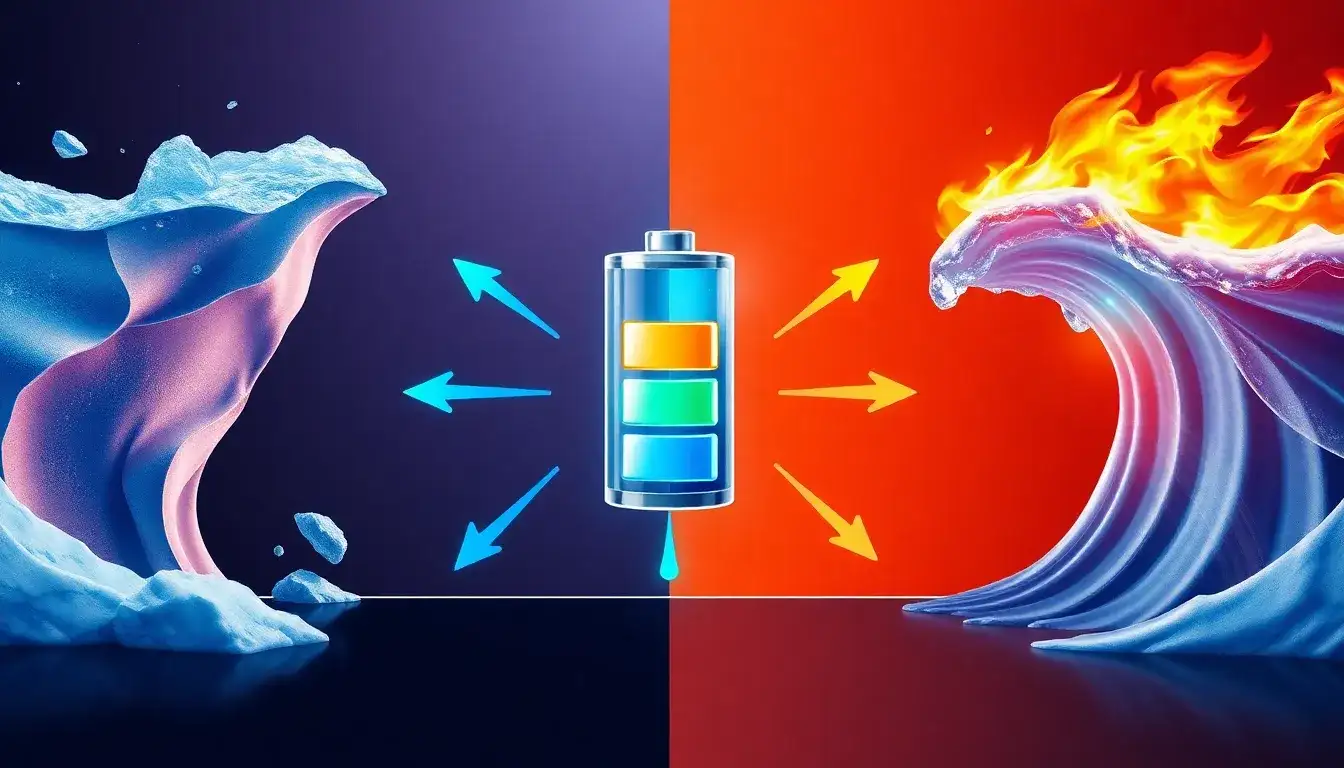
Effects of Temperature on Battery Cycle Life
Higher Temperatures
- Increased Performance but Reduced Lifespan: At higher temperatures, battery performance and capacity can temporarily increase. However, this enhancement comes at the cost of a significantly reduced lifecycle. For every 15 degrees Fahrenheit (about 8 degrees Celsius) above a certain baseline (often around 77 degrees Fahrenheit or 25 degrees Celsius), the lifecycle can be cut in half.
- Chemical Reaction Acceleration: Higher temperatures accelerate chemical reactions inside the battery, which enhances performance but also accelerates degradation.
- Rapid Discharge: Batteries may discharge faster in hotter conditions, leading to a shorter runtime for devices.
Lower Temperatures
- Reduced Performance but Longer Lifespan: In colder temperatures, battery performance is reduced due to slower chemical reactions and increased internal resistance. However, this condition generally leads to a longer lifecycle.
- Capacity Reduction: Cold temperatures decrease the battery’s ability to hold and deliver a charge effectively. For example, lead-acid batteries may provide only half their nominal capacity at 0°F (-18°C).
- Incomplete Charging: Charging batteries in cold temperatures can lead to incomplete charging, which may cause internal damage over time.
Optimal Operating Range
To maintain optimal performance and extend the cycle life of batteries, it is crucial to operate them within the manufacturer-recommended temperature range. Advanced thermal management systems can help regulate battery temperature in critical applications.
Overall, balancing temperature conditions is essential for maintaining the health and longevity of batteries.
Original article by NenPower, If reposted, please credit the source: https://nenpower.com/blog/what-is-the-impact-of-temperature-on-battery-cycle-life/

