

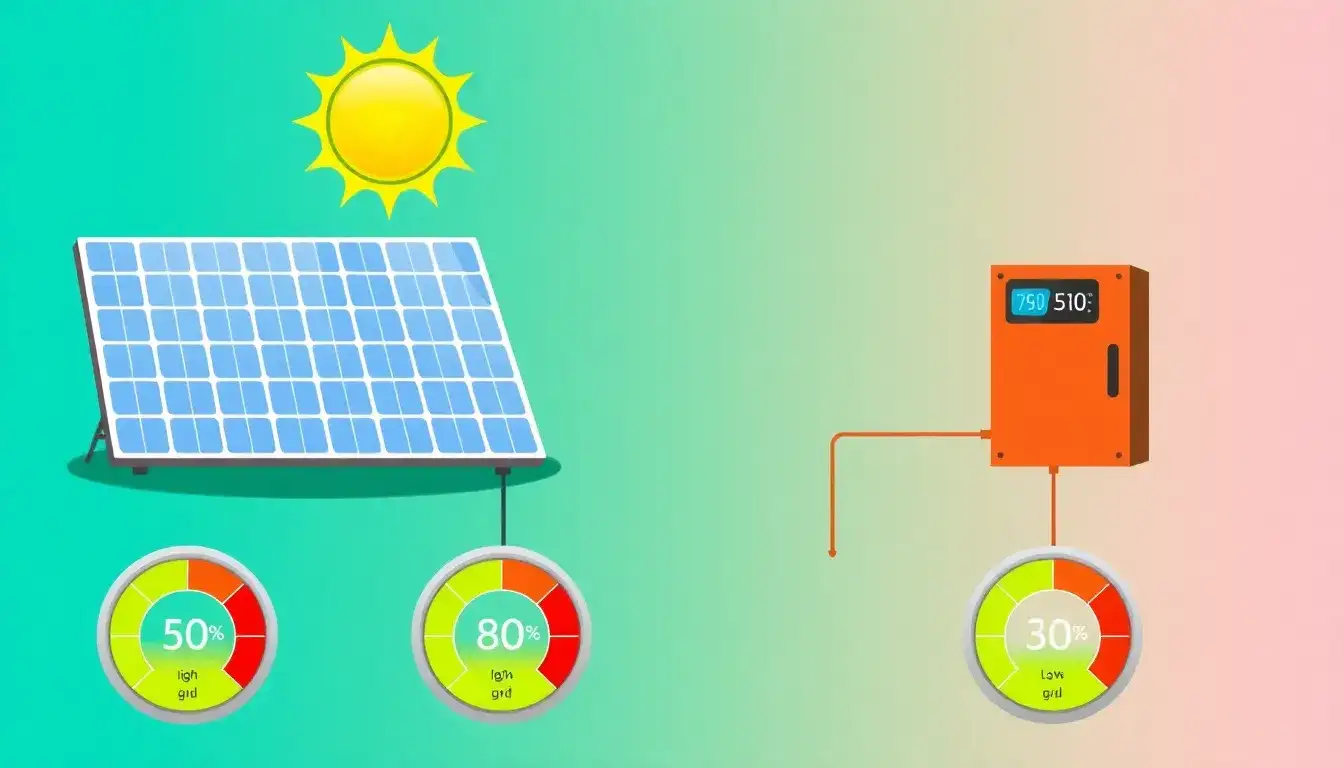
Inverter efficiency has a significant impact on the overall energy production and performance of solar power systems, affecting not only the amount of usable electricity generated but also the system’s financial returns and reliability.
How Inverter Efficiency Affects Energy Production
- Conversion Efficiency: The inverter’s efficiency defines how much of the DC power generated by solar panels is converted into usable AC power. Higher inverter efficiency means a larger proportion of the generated solar energy is converted and delivered for use, directly increasing total energy output. For example, an inverter operating at 95% efficiency will convert 95% of the DC power into AC power, while a 90% efficient inverter loses more energy in the process, resulting in less usable power.
- Load and Sizing Effects: Inverter efficiency is not a fixed number; it varies with the input power level and voltage. Efficiency tends to be lower when the inverter operates at low input power, such as during early morning, late afternoon, or partial shading conditions. Systems that are under-sized relative to the inverter’s nameplate rating generally experience lower overall DC/AC conversion efficiency compared to those appropriately sized. Proper string sizing and matching to the inverter are crucial for maximizing efficiency and energy production.
- Partial Load Performance: Since inverter efficiency decreases at lower loads due to fixed standby losses, energy production during hours of low irradiance can be less efficient. However, this usually has a smaller impact on overall daily production since these low-power periods are limited.
Broader Impacts on System Performance
- Energy Yield and Financial Returns: Improved inverter efficiency leads to higher energy yield, which translates to more electricity produced over the system’s lifetime. This directly affects the system’s return on investment (ROI), reducing the payback period and increasing financial benefits for homeowners, businesses, and power plant operators.
- System Reliability and Lifespan: Efficient inverters generate less heat due to reduced energy losses, which helps prevent overheating and component failures. This enhances system reliability and can extend the inverter’s operational lifespan, reducing maintenance needs and downtime.
- Grid Stability and Power Quality: Modern high-efficiency inverters also contribute to grid stability by providing power factor support and managing voltage fluctuations. Maintaining power quality reduces energy losses in distribution and supports a more resilient and efficient electricity grid.
Summary Table
| Impact Aspect | Effect of Higher Inverter Efficiency |
|---|---|
| Energy Conversion | More DC power converted to usable AC power |
| System Output | Increased total electricity production |
| Partial Load Conditions | Less efficiency drop during low irradiance periods |
| Financial Returns | Higher ROI, reduced payback period |
| System Reliability | Lower heat, longer inverter lifespan |
| Grid Integration | Improved grid stability and power quality |
In essence, inverter efficiency plays a pivotal role in maximizing the energy harvested from solar panels, enhancing system durability, and boosting economic returns. Selecting high-efficiency inverters and ensuring proper system design and sizing are key strategies for optimizing overall energy production and system performance.
Original article by NenPower, If reposted, please credit the source: https://nenpower.com/blog/what-is-the-impact-of-inverter-efficiency-on-overall-energy-production/

