

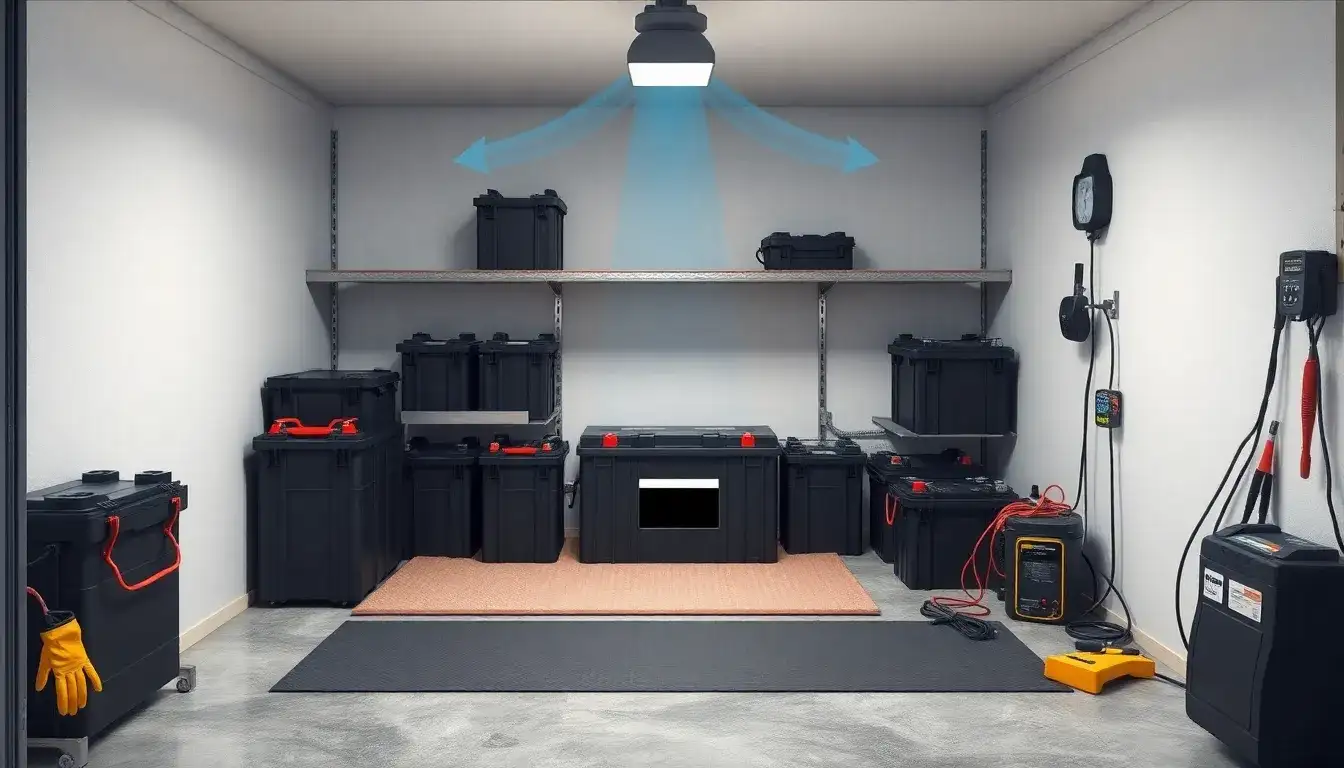
Storing lead-acid batteries properly when they are not in use is crucial to maintaining their performance and longevity. Here are the best practices for storing these batteries:
General Storage Conditions
- Temperature Range: Store batteries in a cool, dry place between 15°C to 25°C (59°F to 77°F), ideally at or below room temperature.
- Charging Level: Fully charge the battery before storage. Regularly check the charge level every few months and charge as needed to prevent deep discharge.
- Avoid Direct Sunlight: Keep batteries away from direct sunlight and moisture.
- Ventilation: Ensure the storage area is well-ventilated to prevent the buildup of harmful gases.
Safety and Handling
- Protective Measures: Wear appropriate personal protective equipment (PPE) such as gloves and safety glasses when handling batteries.
- Avoid Ignition Sources: Store batteries away from heat, sparks, or open flames to prevent explosions or fires.
- Secure Storage: Use a stable and secure shelf or area to prevent batteries from tipping over.
Special Considerations for Long-Term Storage
- Maintenance: Use a battery maintainer or trickle charger to maintain the charge level, especially during prolonged storage periods.
- Physical Inspection: Regularly inspect the battery for signs of physical damage or corrosion.
- Environmentally Considerate Storage: For leaking batteries, use a bunded pallet and store in a sheltered area with good ventilation to minimize environmental hazards.
By following these guidelines, you can effectively store lead-acid batteries when they are not in use, ensuring they remain in good condition and function optimally when needed.
Original article by NenPower, If reposted, please credit the source: https://nenpower.com/blog/what-is-the-best-way-to-store-lead-acid-batteries-when-they-are-not-in-use/

