

What is all-vanadium liquid flow battery energy storage?
1. All-vanadium liquid flow batteries utilize a unique electrochemical process for energy storage, specifically leveraging vanadium as the electrolyte medium, 2. This technology offers significant advantages such as scalability and safety, allowing for large-scale energy storage systems, 3. All-vanadium flow batteries exhibit a longer lifespan compared to conventional batteries, which enhances their economic viability over time, 4. Their distinct design enables rapid response to fluctuations in energy demand, making them a vital component in renewable energy integration.
1. INTRODUCTION TO ALL-VANADIUM LIQUID FLOW BATTERIES
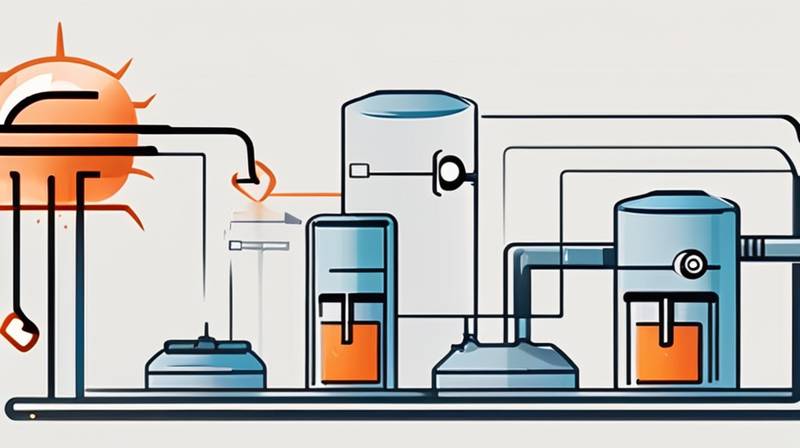
All-vanadium liquid flow batteries (VRFBs) represent a revolutionary approach to energy storage, distinguished by their use of vanadium species in both positive and negative electrolytes. Unlike traditional batteries, which store energy in solid materials, VRFBs hold electrolytes in liquid form, allowing for a more flexible and adaptable energy storage solution. The fundamental operation of a VRFB involves the electrochemical reactions that occur in two separate tanks, significantly enhancing its efficiency and operational characteristics.
A key aspect of this technology is its modular nature, allowing it to be scaled up to meet varying energy storage needs. This means that developers and users can design systems that match specific energy demands, from small-scale applications to large grid-level installations. The ability to incorporate large quantities of energy provides crucial support for integrating renewable energy sources like solar and wind.
2. MECHANISM OF OPERATION IN VRFBS
At the core of the all-vanadium liquid flow battery’s functionality lies a complex electrochemical mechanism. When the battery discharges, positive and negative vanadium ions flow through a membrane, facilitating the transfer of electrons that generates electrical energy. The membrane effectively separates the two electrolyte solutions, preventing cross-contamination and preserving the integrity and balance of the energy exchange process.
During charging, the reverse occurs. Electrical energy is applied, prompting the vanadium ions in the positive and negative solutions to shift their oxidation states. This distinct mechanism allows the all-vanadium system to provide nearly instantaneous energy release, which is essential for applications that demand quick responses to fluctuations in energy supply and demand. The robust design ensures that the battery can operate optimally across a wide range of temperatures and operating conditions.
3. ADVANTAGES OF USING AL-VANADIUM FOR ENERGY STORAGE
The utilization of vanadium in liquid flow batteries offers several notable benefits that enhance their appeal in energy storage applications. Firstly, VRFBs exhibit a longer cycle life compared to conventional battery technologies. This longevity arises from the stability of the vanadium ions, which do not degrade over time as seen in lithium-ion batteries. Consequently, VRFBs can be cycled extensively without significant performance degradation, enabling them to offer reliable service over a prolonged period.
Additionally, the safety attributes of all-vanadium liquid flow batteries are remarkable. Since the electrolyte is in a liquid state and non-flammable, the risk of thermal runaway—a significant concern in lithium-ion technology—is minimized. This characteristic renders VRFBs particularly suitable for large installations where safety protocols are paramount. Furthermore, the environmentally benign nature of vanadium contributes to a diminishing carbon footprint, aligning with global sustainability goals.
4. SCALABILITY AND CONFIGURATION OF VRFBS
An essential feature of all-vanadium liquid flow batteries is their scalability. The energy capacity can be adjusted effortlessly by modifying the size of the electrolyte storage tanks, enabling users to tailor energy systems for specific requirements. This modular approach is advantageous in various sectors, such as solar energy, where skewed energy production necessitates significant energy storage for use during non-generative periods.
Moreover, VRFBs can be configured in diverse designs to cater to various applications. From utility-scale energy storage to backup power for critical infrastructure, the configurations can be optimized to accommodate the needs of different users. Such adaptability enhances the potential for integrating these systems into any energy network, providing versatility that few other energy storage technologies can match.
5. CHALLENGES FACING ALL-VANADIUM LIQUID FLOW BATTERIES
While all-vanadium liquid flow batteries showcase considerable advantages, they also face distinct challenges that must be addressed for broader adoption. The initial capital investment for deploying VRFB systems can be significantly higher than for traditional batteries. High costs associated with vanadium acquisition and processing contribute to this challenge, necessitating strategies for cost-effective scaling and production.
Additionally, the efficiency of VRFBs tends to be lower than other technologies, primarily due to the inherent energy losses in the chemical processes involved. There is ongoing research aimed at optimizing the design and chemistry of these batteries to mitigate energy loss during operation. As advances are made in both materials science and engineering, the hopes for all-vanadium liquid flow batteries remain high.
6. THE ROLE OF AL-VANADIUM LIQUID FLOW BATTERIES IN RENEWABLE ENERGY INTEGRATION
As the world continues transitioning from fossil fuels to renewable energy sources, the role of efficient energy storage technologies becomes pivotal. All-vanadium liquid flow batteries are uniquely positioned to support this transition thanks to their compatibility with renewable resources like solar and wind. These sources can be variable and unpredictable, making it essential to store surplus energy generated during peak production periods for future use.
The ability of VRFBs to respond rapidly to demand fluctuations makes them an ideal match for renewable energy systems. By providing grid stabilization and frequency regulation, VRFBs not only support energy reliability but also play an instrumental role in mitigating the intermittency issues often faced by solar and wind energy. Moreover, protecting grid infrastructure from overloads during production surges is critical to maintaining long-term sustainability.
7. CONCLUSION
The all-vanadium liquid flow battery represents a sophisticated and innovative approach to energy storage, characterized by its unique mechanism that utilizes vanadium ions in liquid electrolyte form. This technology stands to revolutionize the energy sector, providing invaluable solutions to the challenges of energy storage, particularly in the context of renewable energy integration. With the ability to scale capacities easily, enhance operational longevity, and maintain a high level of safety, VRFBs offer numerous advantages that align with global sustainability goals.
As we confront pressing energy demands and environmental challenges, the all-vanadium flow battery emerges as a viable alternative to conventional energy storage systems. Despite the notable challenges, including initial costs and efficiency, ongoing research and development efforts promise to enhance the performance and economic viability of this technology. The successful integration of all-vanadium liquid flow batteries into energy systems is vital for achieving reliable, sustainable, and resilient infrastructures, ensuring a balanced energy supply.
Its diverse applications across utility projects, commercial facilities, and hybrid systems reinforce its potential in reshaping the energy landscape. In essence, the future of energy storage is brightened by the advantages and adaptability that all-vanadium liquid flow batteries provide, positioning them as a cornerstone technology for a sustainable energy future.
FREQUENTLY ASKED QUESTIONS
WHAT IS THE COST OF INSTALLING AN ALL-VANADIUM LIQUID FLOW BATTERY SYSTEM?
The financial investment required for an all-vanadium liquid flow battery system isn’t uniform and varies based on multiple factors including system size, required energy capacity, and region-specific considerations. On average, initial setup costs can range from hundreds of thousands to several million dollars, especially for utility-scale solutions. Critical underlying factors contributing to these costs include expenses related to vanadium processing, equipment needed for tank storage, and associated infrastructure. Even though the initial outlay might appear substantial, the longevity and operational efficiency of VRFBs can yield significant savings over time. Essentially, the total cost of ownership must be evaluated with a comprehensive lens, factoring in replacement, maintenance, and potential revenue from participating in energy markets. This informed assessment often reveals that VRFBs can deliver a competitive edge over time, especially as technology matures, further reducing costs.
HOW DOES AN ALL-VANADIUM LIQUID FLOW BATTERY COMPARE TO LITHIUM-ION BATTERIES?
When comparing all-vanadium liquid flow batteries to lithium-ion batteries, significant differences emerge across several dimensions, particularly concerning performance longevity, safety, and scalability. VRFBs generally boast an extended lifecycle, allowing for many more cycles before performance significantly declines, whereas lithium-ion batteries can experience quicker degradation under constant usage. Furthermore, the safety risks associated with lithium-ion technology—such as thermal runaway—are markedly reduced in VRFBs due to their non-flammable liquid electrolyte. Scalability also plays a critical role; while lithium-ion systems require intricate upgrades for larger implementations, VRFBs can be easily scaled by augmenting the size of the electrolyte tanks. This scalability feature positions VRFBs more favorably for hybrid and large-grid applications. While lithium-ion batteries might be favored for light-duty applications and electronics, all-vanadium liquid flow batteries have considerable potential for utility-scale and grid-level energy storage solutions.
WHAT IS THE ENVIRONMENTAL IMPACT OF ALL-VANADIUM LIQUID FLOW BATTERIES?
The environmental implications of all-vanadium liquid flow batteries are largely positive, particularly when considering their sustainable attributes. The primary component, vanadium, is a naturally occurring element that can be responsibly extracted and processed with a comparatively lower environmental impact than other battery materials. Moreover, VRFBs are recyclable and utilize less toxic materials than many traditional battery technologies. Their long lifecycle reduces waste generation from replacements and mitigates the environmental burden associated with battery disposal. Furthermore, the application of VRFB technology contributes significantly to reducing greenhouse gas emissions, especially in applications that support renewable energy generation. By enhancing the stability and storage capabilities of renewable energy sources, all-vanadium flow batteries assume a vital role in global efforts to transition towards a more sustainable energy framework, ultimately contributing to a greener planet.
Original article by NenPower, If reposted, please credit the source: https://nenpower.com/blog/what-is-all-vanadium-liquid-flow-battery-energy-storage/

