

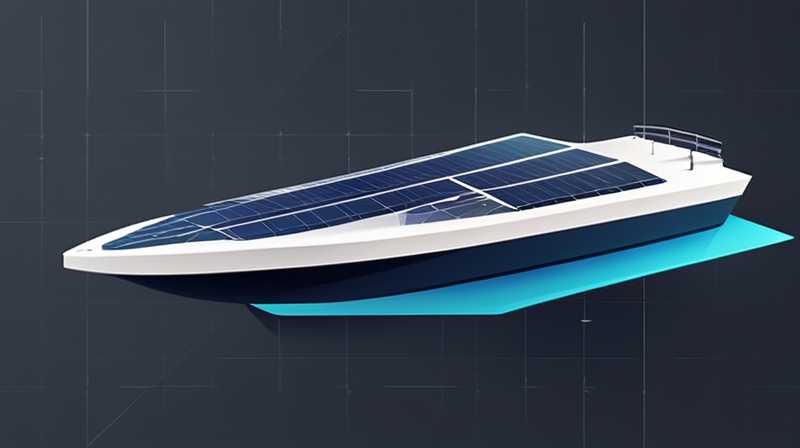
A vessel equipped with solar panels is commonly referred to as a solar-powered boat, solar electric boat, or solar catamaran. These terms emphasize the vessel’s reliance on solar energy for propulsion. The ability to harness energy from the sun allows these boats to operate without traditional fossil fuels, resulting in a significant reduction in carbon emissions and operating costs. 1. The incorporation of solar panels enables continuous energy generation, leading to greater autonomy on the water. Solar-powered boats are usually designed with eco-friendly materials and advanced technology, ensuring minimal impact on marine life. Their application ranges from leisure boats, research vessels, to commercial shipping, showcasing versatility in design and functionality.
1. SOLAR POWERED BOATS: AN OVERVIEW
Solar-powered boats integrate solar panels into their design to harness sunlight and convert it into electrical energy. While this technology has existed for several decades, its popularity has surged in recent years due to the growing awareness of environmental sustainability and the advances in solar energy technologies. By employing solar panels to generate electricity, these vessels are equipped to run on clean energy, eliminating reliance on fossil fuels, which not only reduces greenhouse gas emissions but also lowers operational costs significantly.
The market for solar-powered boats has expanded considerably with innovations in solar technology, including advancements in solar panel efficiency and battery storage systems. Enhanced photovoltaic materials allow for greater absorption of sunlight and consequently more energy output. In alignment with global sustainability goals, designers are increasingly focusing on creating solar-powered vessels not just for individual use but for commercial applications as well.
The emergence of specialized solar boats, such as solar catamarans, is particularly noteworthy. These vessels utilize a twin-hull design that enhances stability while maximizing the available deck space for solar panel installation. The larger surface area accommodates more extensive solar arrays, allowing them to collect more sunlight and store more energy efficiently, further extending their range and operational versatility.
2. MECHANICS OF SOLAR ENERGY IN BOATS
The operational effectiveness of solar-powered boats hinges on the integration of solar panels, batteries, and electric propulsion systems. Solar panels convert sunlight into electricity through the photovoltaic effect, which generates direct current (DC). Most systems also include a charge controller that optimizes the flow of electricity to batteries for storage. When operating equipment or propelling the vessel, this stored energy can be utilized efficiently.
Advanced technologies in energy storage, predominantly lithium-ion batteries, are pivotal for solar-powered boat operations. These batteries have successfully revolutionized the marine industry by offering more lightweight and compact solutions compared to traditional lead-acid batteries. Their high energy density translates to longer operational durations for solar-powered vessels, allowing for extended cruising without the interruption of frequent recharging. Furthermore, the implementation of smart energy management systems allows boat operators to monitor energy consumption, thus optimizing the use of stored energy effectively.
One crucial aspect of solar technology in marine applications is the placement and orientation of solar panels. Positioning the panels to maximize sun exposure throughout the day allows boats to capture as much sunlight as possible. This is often achieved through adjustable mounting systems that can be modified based on the geographical location and seasonal variations in sunlight intensity, proving to be a crucial advancement in solar boat technology.
3. ENVIRONMENTAL IMPACT AND SUSTAINABILITY
The transition towards solar-powered boats aligns harmoniously with global sustainability efforts. The marine transportation sector is largely dependent on fuel-based energy sources, contributing to significant environmental pollution through emissions and potential oil spills. Solar-powered vessels, by avoiding fossil fuels altogether, minimize carbon footprints and promote cleaner waterways. This shift not only addresses concerns related to climate change but also emphasizes the importance of preserving marine ecosystems.
The benefits of solar energy extend beyond reduced emissions; they also involve innovative waste management and eco-friendly manufacturing processes. Many solar-powered boats are constructed from sustainable materials that are designed to be recyclable, which reduces their environmental impact even further. By prioritizing sustainability in their design and operation, solar-powered boats can help safeguard marine biodiversity while providing an alternative form of transportation that aligns with environmental stewardship.
The integration of solar technology into boats can also inspire a more eco-conscious boating culture, encouraging boaters to recognize the important relationship between their activities and the health of marine ecosystems. As awareness of environmental issues rises, an increasing number of recreational and commercial boaters are opting for solar boats, embracing an eco-friendly lifestyle and encouraging others to follow suit.
4. FUTURE PROSPECTS AND INNOVATIONS
The outlook for solar-powered boats promises numerous advancements driven by technological innovation and emergent market trends. One notable development is the exploration of hybrid systems, combining solar power with alternative energy sources such as wind and hydrogen fuel cells. Such multi-faceted approaches can significantly enhance the reliability and efficiency of energy generation, allowing for uninterrupted operations even in unfavorable weather conditions or during extended voyages.
The integration of artificial intelligence and machine learning technologies is also on the horizon for solar-powered vessels. Through real-time data collection and analysis, these smart systems can optimize energy management, navigational routes, and operational efficiencies, equipping boat operators with the tools necessary for maximizing resource utilization.
Moreover, as regulations surrounding emissions and environmental impact become progressively stringent, the adoption of solar-powered boats by commercial shipping industries may witness a notable increase. The maritime sector is gradually moving away from traditional fuel sources in favor of sustainable practices, driven both by regulatory compliance and enhanced societal expectations regarding environmental responsibility.
The innovation in the solar panel design continues to evolve, with thin-film solar cells and bifacial solar panels emerging as potential alternatives to conventional panels. These developments could lead to lighter and more efficient solar arrays, making solar-powered boats even more competitive in terms of performance and design aesthetics.
5. SAFETY CONSIDERATIONS WITH SOLAR POWERED VESSELS
While solar-powered boats offer numerous advantages, it is essential to address the safety considerations associated with their operation. Ensuring reliable energy production is crucial for maintaining a safe cruising experience. Solar panel efficiency can be impacted by weather conditions, which may lead to inadequate energy generation during periods of heavy cloud cover or storms. For this reason, it is advisable for operators to maintain a sufficient backup power system, including a small generator or the ability to connect to shore power in order to recharge batteries when needed.
In addition to energy reliability, the practical aspects of operational safety must be considered. Proper training in navigating solar-powered vessels and understanding their unique characteristics is key for ensuring safe operation. Boat operators should be familiar with the solar system’s components, maintenance requirements, and limitations.
Furthermore, regulations concerning electrical systems must be adhered to, as they can influence the general safety of the vessel and its passengers. Compliance with local maritime laws and regulations is integral, as these guidelines help safeguard the boats and the environment. Regular inspections by certified professionals can also mitigate risks and enhance safety measures.
FREQUENTLY ASKED QUESTIONS
WHAT ARE THE BENEFITS OF SOLAR POWERED BOATS?
Solar-powered boats offer a wide array of benefits. Primarily, they significantly reduce operational costs by eliminating the need for traditional fuel sources, making them economically advantageous for long-term use. They also contribute positively to environmental sustainability by minimizing carbon emissions and reducing reliance on fossil fuels, which helps combat climate change and protect marine ecosystems.
Another notable advantage is the autonomy these vessels provide. With solar panels generating electricity during daylight hours, they can venture further without the constraints associated with refueling, making them ideal for extended voyages or remote locations. Additionally, many solar-powered boats boast advanced technological features that enhance navigation, energy management, and operational efficiency, ensuring a modern and innovative approach to marine transportation.
Finally, the adoption of solar technology fosters an eco-friendly culture among boaters. By choosing solar-powered options, individuals take part in a movement towards sustainable practices within the boating community, encouraging others to consider the environmental impact of their own activities on the water.
HOW DO SOLAR PANELS FUNCTION ON A BOAT?
The functionality of solar panels on a boat revolves around their ability to convert sunlight into usable electricity through the photovoltaic effect. When sunlight strikes the solar cells, it excites electrons within the material, creating direct current (DC) electricity. This electricity can then be utilized in various ways, including powering the boat’s propulsion system and onboard electrical appliances.
The generated electricity must be regulated efficiently to ensure the safe charging of batteries and to maintain optimal power distribution. Thus, a charge controller typically accompanies solar panels. It prevents overcharging and ensures that the battery receives the correct amount of energy. Additionally, in many systems, the stored electricity can be converted into alternating current (AC) to power larger appliances, and it can also be used to charge batteries that can retain energy for use during nighttime or adverse weather conditions.
The placement and orientation of solar panels on a boat greatly influence their efficiency. Properly angling the panels towards the sun enhances energy absorption, while adjustable mounting systems can optimize sunlight exposure based on geographic location, ensuring an efficient energy generation process.
WHAT TYPES OF SOLAR POWERED BOATS ARE AVAILABLE?
The variety of solar-powered boats on the market spans a wide spectrum, catering to diverse user needs and preferences. One common type is the solar recreational boat, designed specifically for leisure activities. These boats are often equipped with comfortable living spaces, enabling families or individuals to enjoy extended outings while minimizing environmental impact.
Another notable category includes solar catamarans, which utilize a twin-hull design to provide enhanced stability and spacious decks for solar panel installations. These catamarans are suitable for tasks ranging from leisure cruising to conducting research and eco-friendly tourism activities.
Commercial solar vessels also deserve mention, as they are increasingly being incorporated into business operations for low-emission transportation of goods or passengers. Examples include solar ferries and cargo ships, which utilize clean energy to enhance operational efficiency while adhering to regulatory standards associated with emissions.
Finally, solar sailboats are a burgeoning category that combines traditional sailing technology with solar power, employing sails for propulsion while augmenting energy needs with solar panels. This hybrid approach maximizes energy use and ensures efficient cruising capabilities.
FINAL REMARKS
The horizon of solar-powered boating appears promising, as technology continues to evolve and sustainability becomes a primary focus in the maritime industry. As more individuals and companies embrace the transition towards renewable energy sources, solar-powered boats stand poised to play an instrumental role in redefining marine transportation for future generations. With significant advancements in solar technology, energy storage, and ecological design, the next era of boating is not only ecologically sustainable but also represents the marriage of innovation and environmental stewardship.
By supporting this innovative development, we contribute to a shift in perspective, encouraging a lifestyle that values harmony with nature rather than exploitation. The adoption of solar-powered boats serves as both a practical choice for watercraft owners and a commitment to a more sustainable future. As regulations around climate change become more stringent and public interest in eco-friendly practices grows, vessels harnessing the sun’s powerful energy can emerge as the preferred method for exploration on our vast and beautiful waterways. Through continued advancements, education, and community engagement, the future of solar-powered vessels is bright, showcasing not only the urgency of adopting renewable energy but also the tremendous potential these boats offer for transforming the maritime landscape.
Original article by NenPower, If reposted, please credit the source: https://nenpower.com/blog/what-is-a-boat-with-solar-panels-called/

