

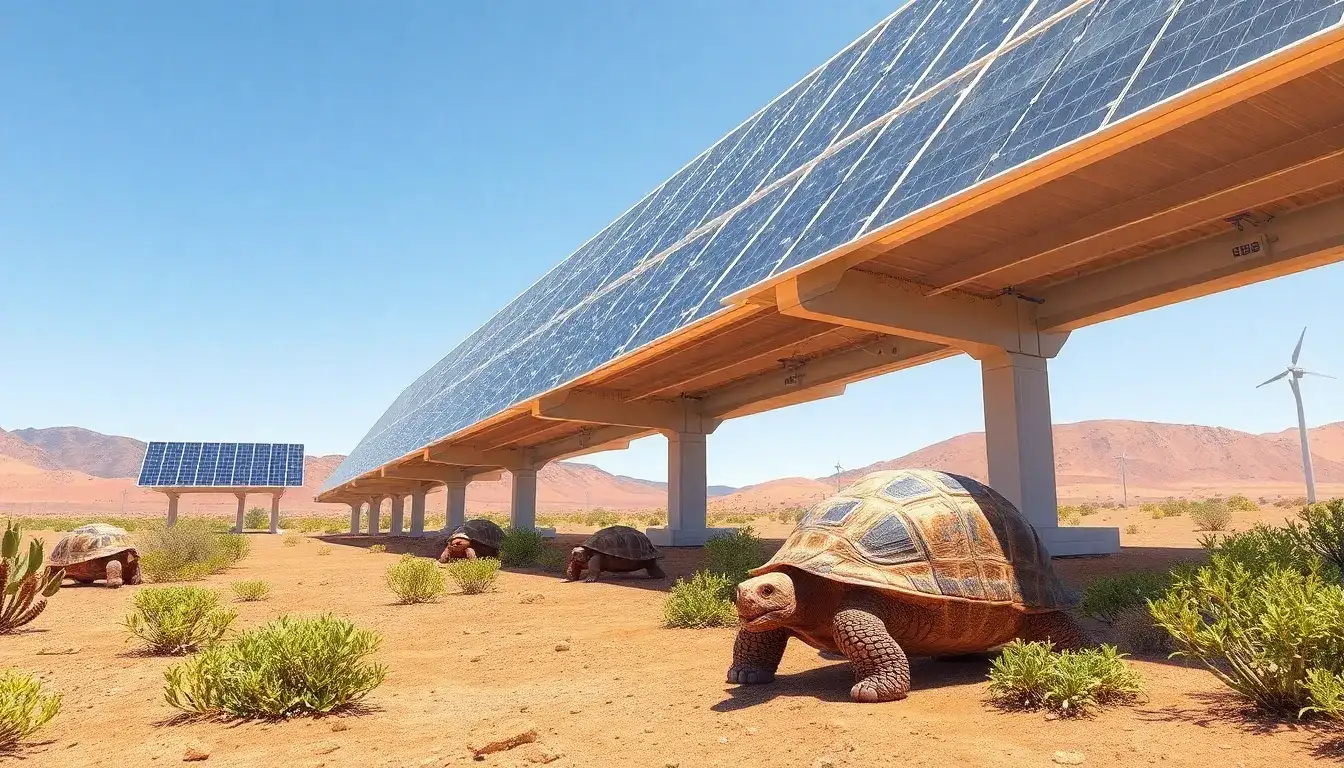
Several innovative solutions have been implemented to minimize the impact of solar panels on desert tortoises, particularly in the Mojave Desert, where both solar energy development and tortoise habitat overlap:
Habitat-Friendly Solar Facility Design
- Selective Vegetation Clearing: Instead of clearing entire areas, developers only clip vegetation as necessary, preserving much of the natural plant cover and topography.
- Elevated Solar Panels: Panels are installed with the lower edge at 42 inches above ground, considerably higher than the typical 24 inches. This allows more light for undergrowth and maintains habitat for tortoises and other wildlife.
- Increased Panel Spacing: Spacing between solar panel rows was increased from 14 feet to 20 feet, which reduces the visual “lake effect” that attracts predatory ravens and allows more vegetation to thrive underneath.
Maintaining Wildlife Connectivity and Passage
- Fence Openings for Passage: The perimeter fencing includes openings about 10 inches wide by 7 inches tall spaced roughly every 260 feet, permitting desert tortoise and other wildlife movement through the site.
Reducing Direct Harm and Disturbance
- Temporary Relocation of Tortoises: Prior to construction, desert tortoises are temporarily relocated to holding pens, allowing them to avoid disturbance during the building phase. Some relocated tortoises are fitted with radio transmitters to monitor their movements and long-term habitat use after release.
- Limiting Vehicle Impact: Maintenance vehicles are restricted to small utility types and speed limits of 15 mph are imposed. Additionally, staff receive desert tortoise awareness training to reduce accidental harm.
Biological Conservation Techniques
- Head-Starting Programs: Researchers have developed and tested enhanced head-starting strategies where juvenile desert tortoises are captive-reared indoors and outdoors to increase their survival after release. Larger juveniles released post-rearing show better survival, helping to offset population losses caused by habitat disruption.
Balancing Renewable Energy Development and Species Conservation
Efforts emphasize balancing the urgent need for solar energy (to combat climate change) with conservation goals by adapting facility design and operational practices to maintain functional habitat and connectivity for the desert tortoise while minimizing mortality risks.
These combined approaches—habitat-sensitive solar panel layout, wildlife passage provisions, careful animal handling, and scientific population support—represent leading-edge solutions aimed at allowing solar energy growth while reducing impacts on this threatened species.
Original article by NenPower, If reposted, please credit the source: https://nenpower.com/blog/what-innovative-solutions-have-been-implemented-to-minimize-the-impact-of-solar-panels-on-desert-tortoises/

