

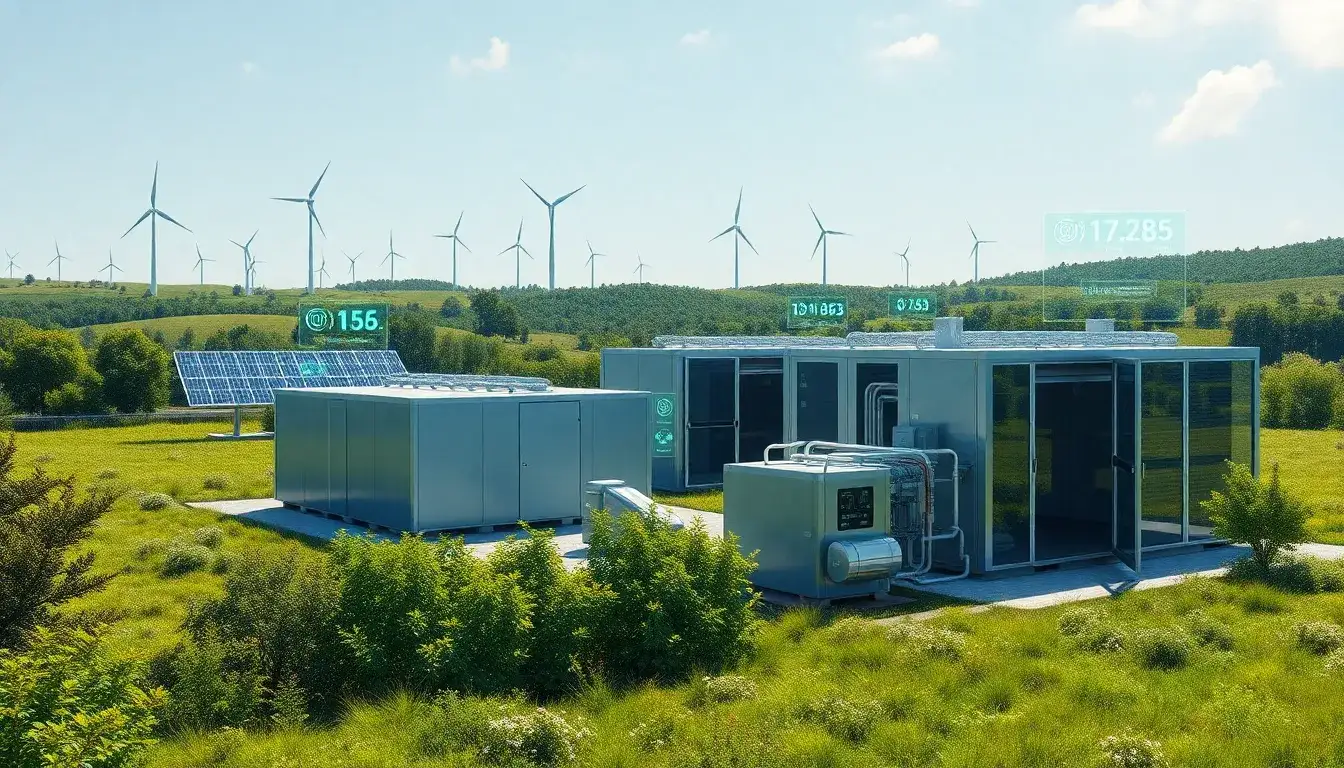
Long-duration energy storage (LDES) is critical for integrating renewable energy and enhancing grid resilience by storing electricity for 10+ hours or even days. Several innovative solutions are being explored and commercialized to meet these long-duration needs:
Key Innovative Long-Duration Energy Storage Technologies
- Flow Batteries (Vanadium Redox, Iron Flow, Zinc-Bromine):
These batteries store energy in liquid electrolytes held in external tanks, allowing for independent scaling of power and energy capacity. Vanadium Redox Flow Batteries (VRFBs) offer scalability, long lifespan, safety, and environmental benefits. Iron flow batteries, such as those developed by ESS Inc., provide safe, sustainable, and affordable long-duration storage with unlimited cycling and zero capacity degradation over a 25-year design life. Zinc-bromine flow batteries also present promising cost-effective alternatives for extended duration storage. - Iron-Air Batteries:
Using abundant iron and oxygen, these batteries promise very low-cost, long-duration storage by leveraging reversible iron oxidation and reduction to store and release electricity. They combine cost advantages with long discharge durations suitable for grid-scale applications. - Hydrogen Storage:
Hydrogen can be produced through electrolysis when excess renewable electricity is available and stored as a gas or liquid for long periods. It offers very long-duration storage (from hours to days or more) and can be reconverted to electricity via fuel cells or turbines. Projects like Pacific Gas & Electric’s microgrid demonstrate hydrogen storage with durations up to 48 hours, potentially expandable to 96 hours. - Gravity-Based Storage:
Innovative mechanical gravity storage systems use excess electricity to lift heavy masses or store potential energy, which can later be converted back to electricity. These systems offer long-duration storage without chemical degradation, suitable for multi-hour to days-long energy provisioning.
Benefits and Applications
- These technologies address renewable intermittency by enabling grid-scale storage that can discharge over many hours, ensuring reliable power supply during demand peaks or low renewable generation periods.
- Long-duration storage supports decarbonization by reducing reliance on fossil-fueled peaker plants and enabling a renewable baseload.
- Applications include utility-scale distributed energy resources (DER), industrial microgrids, remote locations, electrified transport support, and resilient community power systems.
In summary, the main innovative long-duration energy storage solutions being developed and deployed today are advanced flow batteries (notably iron and vanadium), iron-air batteries, hydrogen storage systems, and gravity-based mechanical storage. These technologies offer safe, scalable, and economically viable ways to store renewable energy for 10+ hours to multiple days, crucial for the clean energy transition and grid reliability.
Original article by NenPower, If reposted, please credit the source: https://nenpower.com/blog/what-innovative-solutions-are-being-explored-for-long-duration-energy-storage/

