

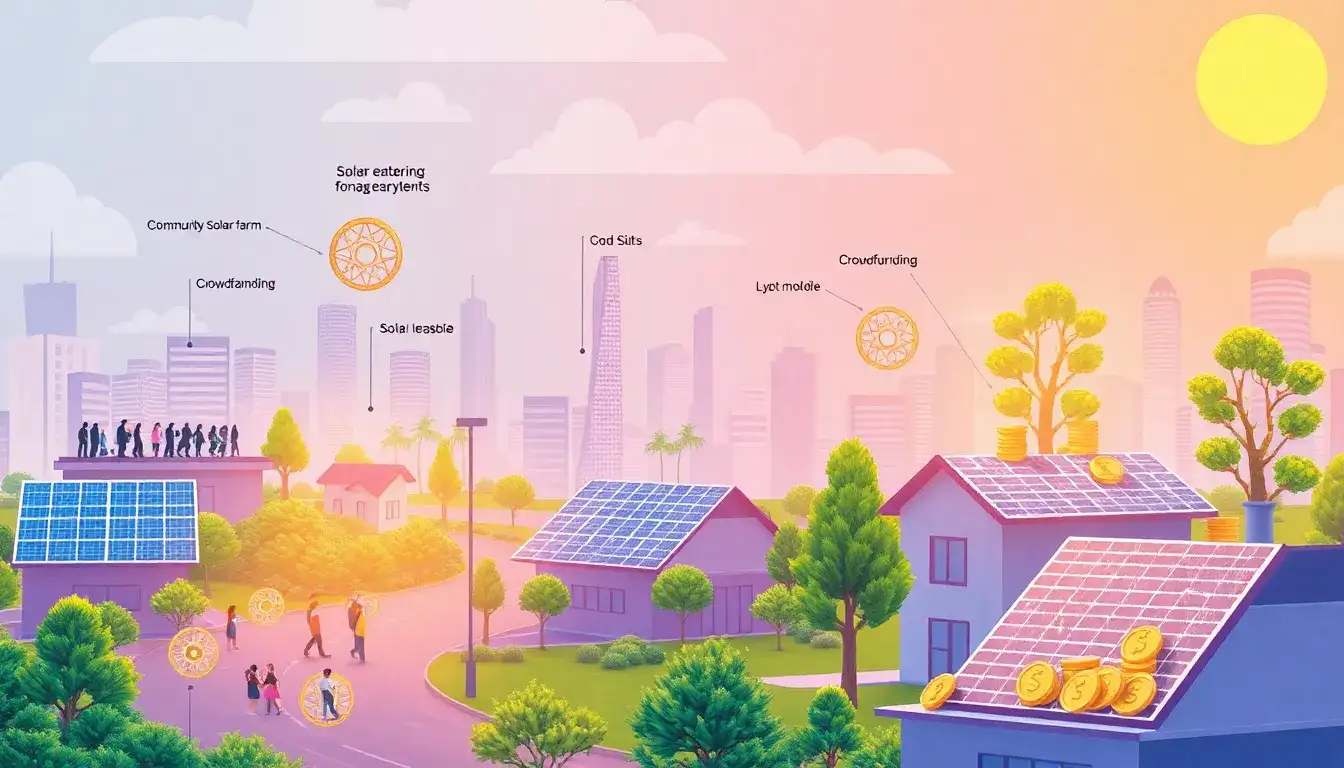
Innovative financing models for solar energy systems have expanded access to renewable energy, offering various options for different markets and needs. Here are some of these models:
1. Power Purchase Agreements (PPAs)
PPAs allow customers to buy solar power produced by the panels at rates lower than utility electricity. This pay-as-you-go model minimizes upfront costs and is popular for both residential and commercial installations.
2. Solar Leasing
Solar leasing involves a flat monthly payment for the use of a solar energy system over a term typically lasting 20 or 25 years. This model includes annual rate escalators and often offers a buyout option at the end of the lease.
3. Crowdfunding and Peer-to-Peer Lending
Crowdfunding platforms enable individuals to invest small amounts in solar projects, providing access to funding from a broad base of investors. Peer-to-peer lending connects investors directly with property owners for solar installations.
4. Pay-As-You-Go (PAYG) Financing
Especially effective in developing countries, PAYG allows consumers to pay for solar systems in manageable installments, often via mobile money platforms. This model has increased access to clean energy in off-grid areas.
5. Blended Finance
Combining public, private, and philanthropic capital, blended finance reduces risks for private investors by using public funds or guarantees. This approach has been successful in funding renewable projects in developing countries.
6. Green Bonds
These are debt instruments specifically for environmentally friendly projects. Green bonds allow investors to support sustainable initiatives while earning returns, proving effective in developing countries.
7. Public-Private Partnerships (PPPs)
PPPs involve collaboration between governments and private entities to develop renewable energy infrastructure. They share risks and rewards, often using models like Build-Operate-Transfer.
8. Impact Investing and Crowdsourcing
Impact investing channels capital into projects with environmental benefits, often through crowdsourcing platforms that democratize investment opportunities for sustainable energy projects.
9. Carbon Financing
Carbon credits are sold from projects that reduce greenhouse gas emissions, providing essential funding for renewable energy projects and making them attractive to investors.
10. Direct Pay and Climate Bill Incentives
New incentives like the Inflation Reduction Act’s Direct Pay provision allow tax-exempt entities to receive cash back on clean energy projects. This model makes solar more accessible to low-income households and nonprofits.
Original article by NenPower, If reposted, please credit the source: https://nenpower.com/blog/what-innovative-financing-models-are-available-for-solar-energy-systems/

