

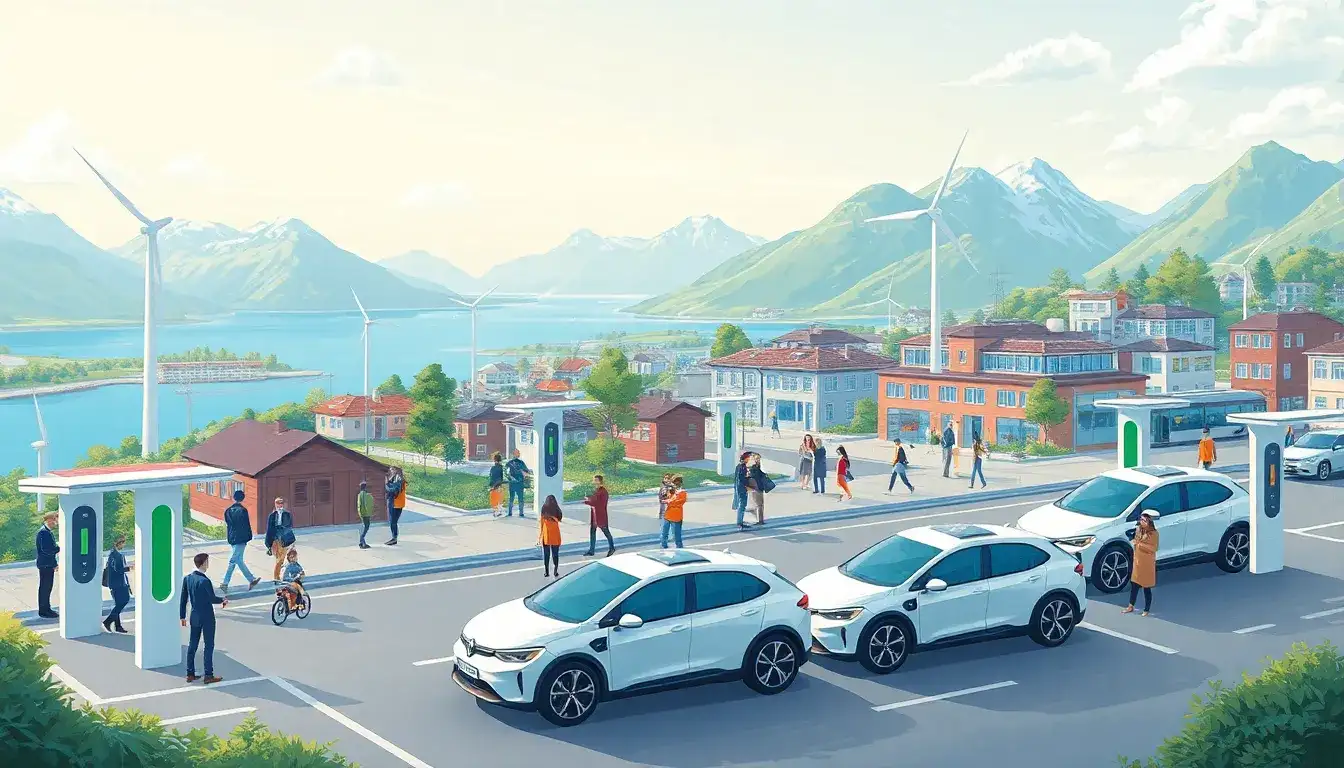
Norway’s electric vehicle (EV) adoption is driven by a comprehensive set of incentives implemented by the government. These incentives have been in place since the 1990s and have significantly contributed to Norway’s status as a global leader in EV adoption. Here are some of the key incentives driving EV adoption in Norway:
Key Incentives
- Tax Incentives:
- Exemption from Purchase Tax: Until 2022, there was no purchase tax on EVs, but from 2023, a weight-based tax was introduced for new EVs.
- VAT Exemption: No Value Added Tax (VAT) on buying or leasing EVs.
- Registration Tax Exemption: Zero-emission vehicles are exempt from registration taxes.
- Reduced Company Car Tax: Lower taxes for company cars help encourage businesses to adopt EVs.
- Operational Incentives:
- Road Tax Reductions: At least a 50% reduction in road taxes for EV owners.
- Toll Exemptions: Significantly reduced or exempt from tolls.
- Parking and Ferry Fee Discounts: Lower fees for parking and ferry use.
- Infrastructure and Lifestyle Incentives:
- Access to Bus Lanes: EV drivers can use bus lanes, reducing travel time and increasing convenience.
- Lower Parking Fees: Often reduced or free parking in urban areas.
- Strong Charging Infrastructure: Norway has a well-developed network of public EV charging points, which supports widespread EV adoption.
- Environmental and Policy Alignment:
- Targets for Zero-Emission Sales: Norway aims for 100% of new passenger car sales to be zero-emission by 2025, reinforcing its commitment to EVs.
- Public Awareness and Education: Past events like the A-ha and Bellona road trip have raised public awareness and encouraged policy support for EVs.
These incentives cumulatively make EVs more economical and appealing than traditional fossil-fuel vehicles, significantly contributing to Norway’s high rate of EV adoption.
Original article by NenPower, If reposted, please credit the source: https://nenpower.com/blog/what-incentives-are-driving-ev-adoption-in-norway/

