

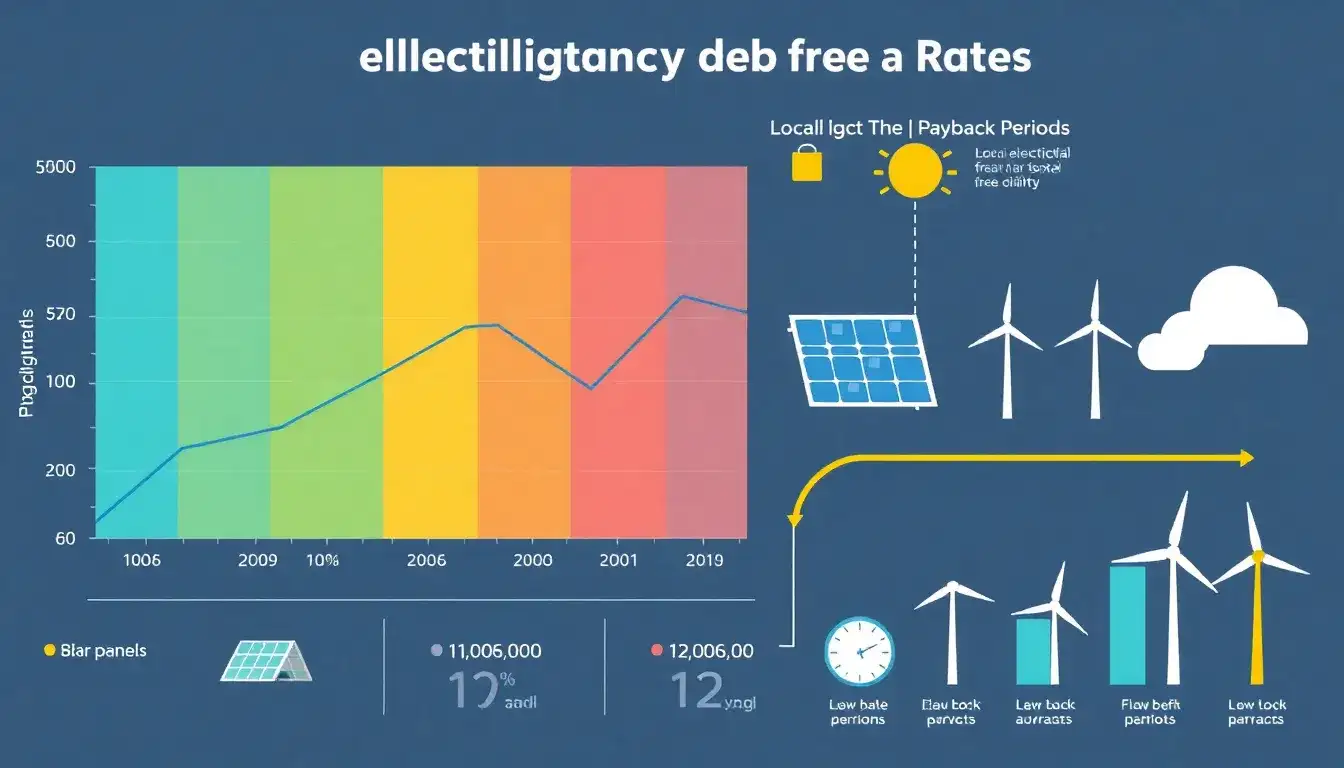
Impact of Electricity Rate Fluctuations
- Higher Electricity Rates: An increase in local electricity rates can shorten the solar payback period. This is because homeowners save more on their monthly utility bills by switching to solar energy, thereby offsetting the cost of the solar system more quickly.
- Lower Electricity Rates: Conversely, a decrease in electricity rates can lengthen the payback period. Lower rates mean less savings per month from using solar energy, leading to a longer time needed to recoup the initial investment.
- Stability and Predictability: Consistent electricity rates allow for more accurate payback period predictions. However, fluctuations make it essential to re-evaluate the payback period over time to adjust for changes in savings due to rate changes.
Calculating the Payback Period Considering Rate Fluctuations
To calculate the solar payback period, divide the total cost of the solar system (after incentives) by the annual savings on electricity bills. If electricity rates increase, annual savings will rise, reducing the payback period. Conversely, if rates decrease, savings will be less, extending the payback period.
Example Calculation:
- Initial System Cost: $15,000
- Incentives (30% tax credit): $4,500 (reducing cost to $10,500)
- Annual Savings:
- Before rate change: $1,000/year
- After rate increase: $1,500/year
- Initial Payback Period: $10,500 / $1,000 = 10.5 years
- Payback Period After Rate Increase: $10,500 / $1,500 = 7 years
Thus, an increase in electricity rates can significantly shorten the payback period, making solar energy a more attractive investment option.
Original article by NenPower, If reposted, please credit the source: https://nenpower.com/blog/what-impact-does-local-electricity-rate-fluctuation-have-on-the-payback-period/

