

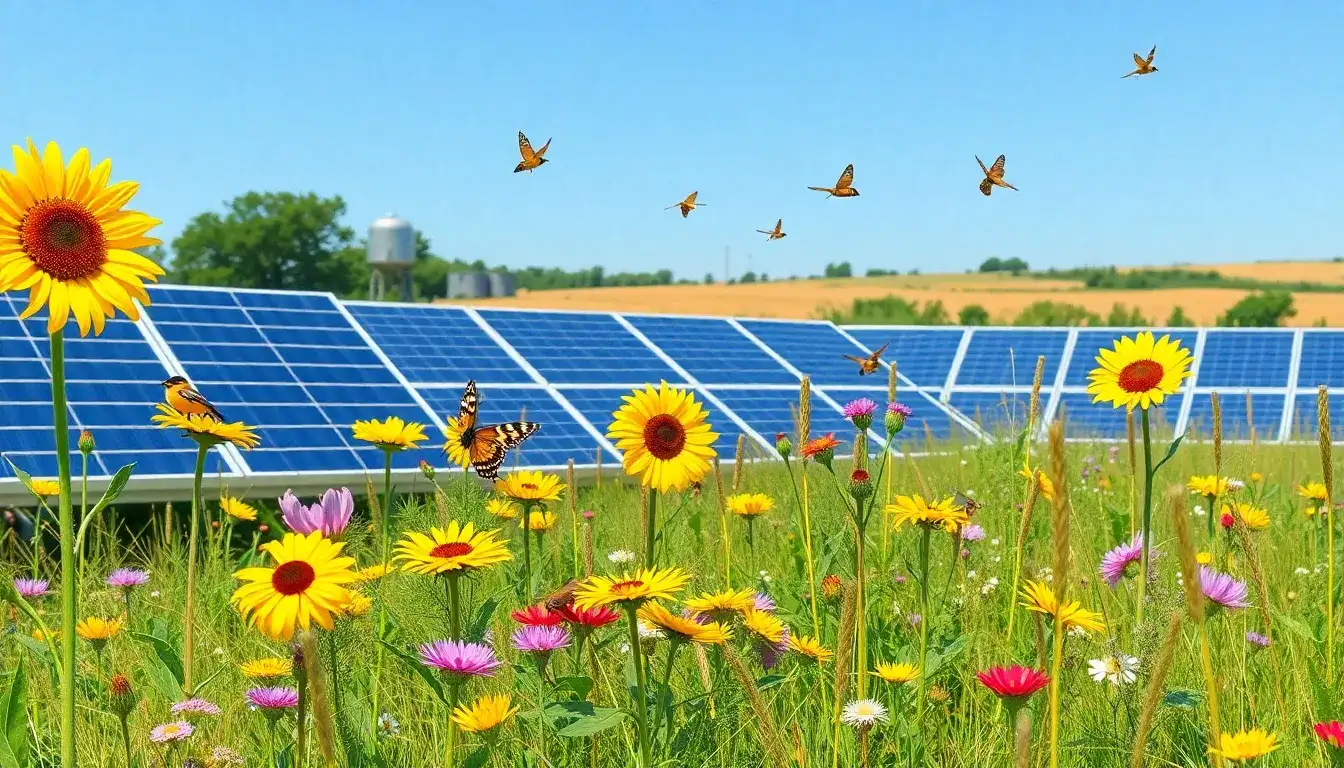
Solar farms with native vegetation have a profoundly positive impact on local pollinators. These installations integrate native, pollinator-friendly plant species around and between solar panels, creating a habitat that supports a wide range of pollinators, including bees, butterflies, and other beneficial insects. The benefits include:
- Increased Pollinator Populations: Studies have shown that native bees can multiply by a factor of 20 when solar farms are planted with native vegetation. The overall insect population can increase threefold over the course of several years.
- Enhanced Biodiversity: The use of native plants promotes biodiversity by providing food, shelter, and breeding grounds for pollinators and other wildlife, such as birds and small prairie animals.
- Support for Crop Pollination: By supporting pollinator populations near agricultural areas, solar farms with native vegetation can enhance crop pollination. Insects found near wildflowers at the solar farms are also seen on crops like soybeans, potentially boosting farm productivity.
- Environmental Benefits: Native vegetation helps mitigate ecosystem impacts by reducing soil erosion, improving water retention, and supporting ecosystem health during storms and droughts.
Overall, incorporating native vegetation into solar farms offers a sustainable approach that balances renewable energy production with ecological conservation.
Original article by NenPower, If reposted, please credit the source: https://nenpower.com/blog/what-impact-do-solar-farms-with-native-vegetation-have-on-local-pollinators/

