

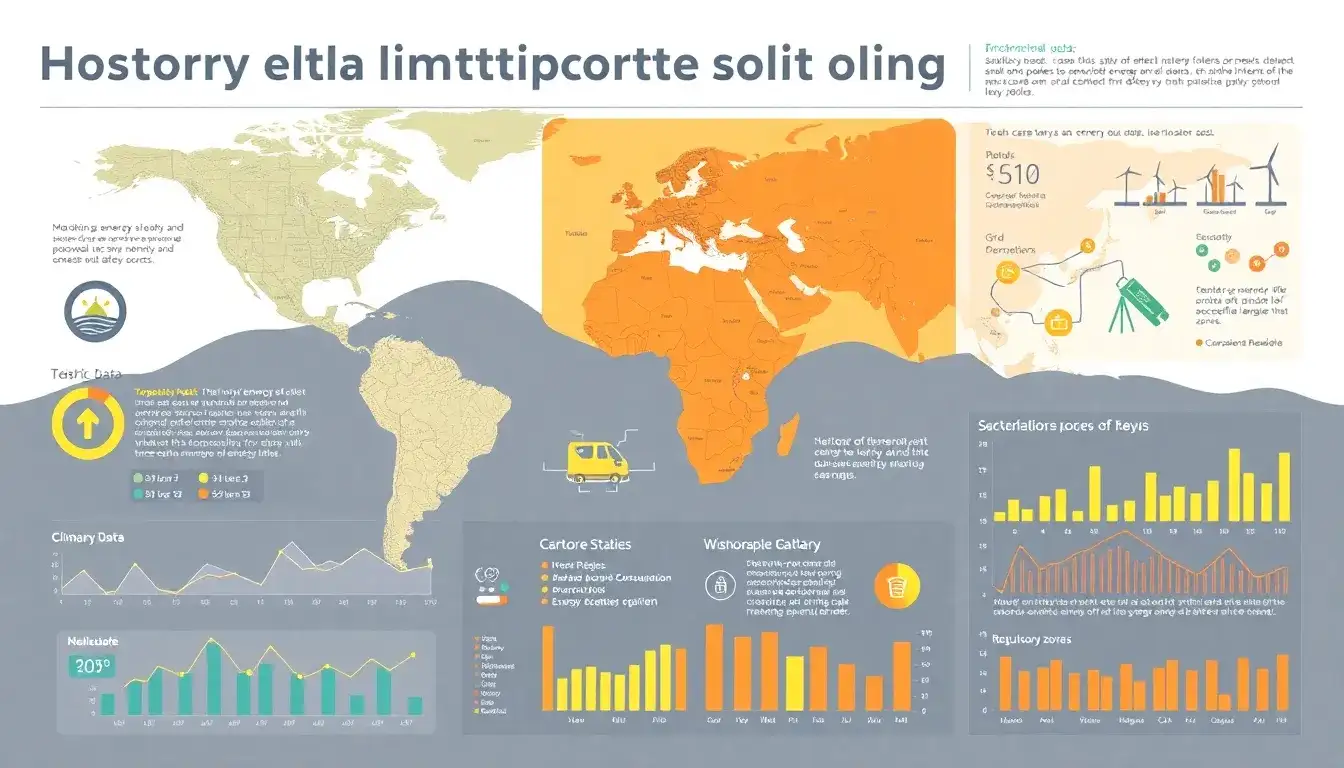
To optimize battery siting, developers primarily rely on historical electricity market data and grid infrastructure patterns, with specific focus on:
- Intra-day price volatility: Historical electricity prices (real-time and day-ahead markets) at granular nodal levels reveal patterns of price spreads, which determine the profitability of charging/discharging cycles. For example, CAISO data shows how renewable curtailment and demand fluctuations create arbitrage opportunities.
- Congestion patterns: Past transmission congestion events help identify nodes where batteries can alleviate grid bottlenecks and capitalize on locational marginal price (LMP) differentials.
- Renewable generation curtailment: Historical data on wind/solar curtailment in renewable-rich regions highlights opportunities to store excess generation.
- Grid load profiles: Time-series demand data (peaks/valleys) informs optimal charge/discharge timing to reduce system stress and energy costs.
- Infrastructure failure rates: Records of network outages and component reliability aid in risk assessment and redundancy planning.
Developers use advanced analytics to cross-reference these datasets with weather patterns, policy changes, and market rule evolution to forecast future site viability. Tools like PowerSignals (from Yes Energy) and Enel’s DER.OS software apply machine learning to this data for predictive siting and dispatch optimization.
Original article by NenPower, If reposted, please credit the source: https://nenpower.com/blog/what-historical-data-is-most-useful-for-optimizing-battery-siting/

