

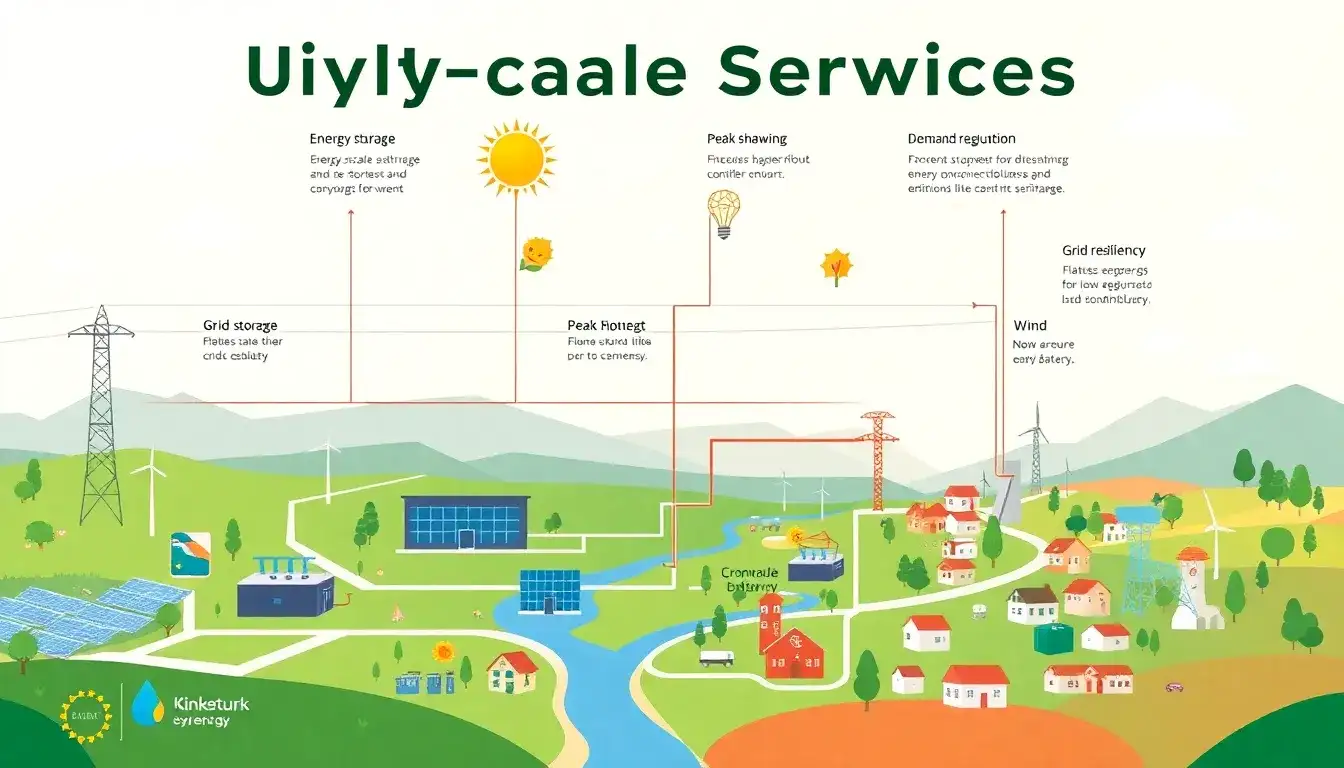
Utility-scale battery storage systems provide a wide range of essential grid services that enhance grid stability, reliability, and the integration of renewable energy sources. Key grid services that these batteries can deliver include:
Frequency Regulation and Ancillary Services
Utility-scale batteries can rapidly inject or absorb power within seconds to help maintain the grid’s frequency and voltage at stable and desired levels. Their fast-response capability allows grid operators to use them for ancillary services such as frequency regulation, voltage support, and fast ramp rate control, which improve overall grid reliability and stability.
Capacity Reserve and Peak Shaving
These batteries can act as a capacity reserve by storing energy during periods of low demand or excess generation and discharging it during peak demand periods. This peak shaving helps reduce the need for expensive peaking generation plants and defers investments in grid infrastructure upgrades.
Transmission and Distribution Support
Utility-scale battery systems can be installed at various points in the transmission or distribution network to provide transmission capacity support, reduce congestion, and help defer costly grid reinforcements. They can support grid resilience especially in rural or isolated grids by providing backup power to critical infrastructure during outages.
Renewable Energy Integration and Capacity Firming
One of the most valuable services is enabling higher penetration of variable renewable energy sources like solar, wind, and hydro by storing excess energy when generation surpasses demand and smoothing out power output. This “capacity firming” ensures a more reliable and less expensive electricity supply, mitigating intermittency issues of renewables and allowing grids to better utilize clean energy.
Power Output Smoothing and Ramp Rate Control
Utility-scale batteries can smooth sudden fluctuations in power output from renewable sources or load changes by controlling ramp rates, which prevents grid instability caused by rapid changes in supply or demand.
Backup Power and Grid Resilience
In the event of grid disturbances or outages, these batteries can supply backup power to critical facilities such as hospitals and emergency services, enhancing overall grid resilience.
Summary Table of Utility-Scale Battery Grid Services
| Grid Service | Description | Benefits |
|---|---|---|
| Frequency Regulation & Ancillary Services | Fast injection/absorption of power to maintain frequency/voltage | Improved grid stability and reliability |
| Capacity Reserve & Peak Shaving | Store energy off-peak, discharge during peak demand | Reduces peak load, defers infrastructure upgrades |
| Transmission & Distribution Support | Provide localized grid support and congestion relief | Enhances grid resilience and defers costly upgrades |
| Renewable Energy Integration (Capacity Firming) | Store excess renewable energy, smooth output | Increases renewable utilization and grid reliability |
| Power Output Smoothing & Ramp Rate Control | Control rapid power changes to stabilize grid | Prevents fluctuations-induced instability |
| Backup Power & Grid Resilience | Supply power during outages to critical facilities | Enhances emergency preparedness and resilience |
Utility-scale battery storage systems are thus key enablers for a cleaner, more flexible, and reliable electric grid by providing these versatile grid services.
Original article by NenPower, If reposted, please credit the source: https://nenpower.com/blog/what-grid-services-can-utility-scale-batteries-provide/

