

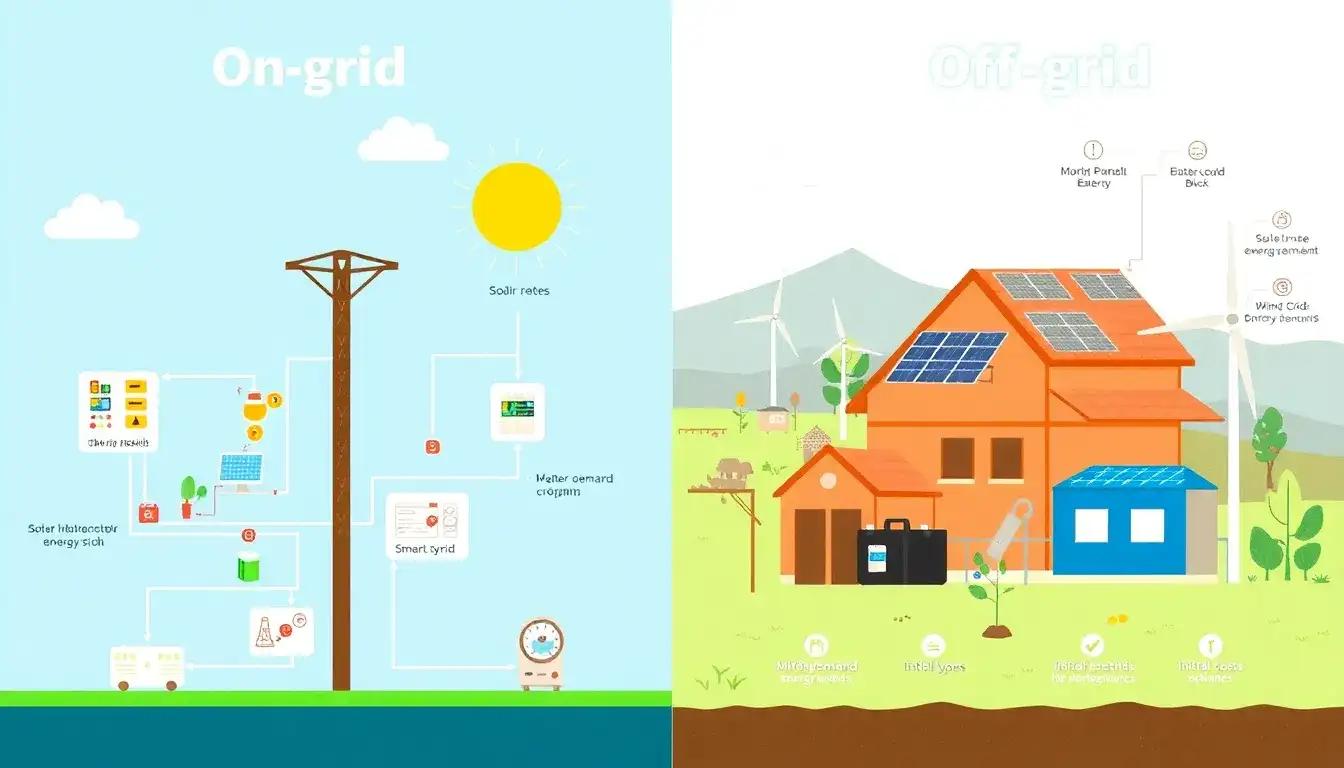
When deciding between on-grid and off-grid energy storage systems, several factors should be considered to ensure the best choice for your specific needs. Here are some key considerations:
Factors to Consider
-
Energy Independence and Grid Access
- On-Grid Systems: These systems are connected to the utility grid and provide no energy independence. They are ideal for areas with reliable grid access, offering cost-effectiveness and net metering benefits.
- Off-Grid Systems: These systems are perfect for remote areas with no grid access or for those seeking complete energy independence. They provide power during grid outages but require significant battery storage, increasing their cost.
-
Cost and Budget
- On-Grid Systems: Generally less expensive upfront, as they do not require extensive battery storage. Costs are mainly offset by reduced electricity bills and incentives.
- Off-Grid Systems: More expensive due to the need for substantial battery storage and backup power systems. However, they can be cost-effective in remote areas.
-
Energy Storage and Management
- On-Grid Systems: Option to include batteries for peak shaving or backup, but often not necessary as the grid acts as a buffer.
- Off-Grid Systems: Require comprehensive battery storage to ensure continuous energy supply, making them more complex and maintenance-intensive.
-
Reliability and Maintenance
- On-Grid Systems: Simpler to maintain, with fewer components and less reliance on battery health.
- Off-Grid Systems: More complex, requiring regular maintenance of battery banks and other equipment.
-
Energy Needs and Lifestyle
- On-Grid Systems: Suitable for urban or suburban settings where grid reliability is high and energy efficiency is a priority.
- Off-Grid Systems: Ideal for rural or remote areas, or for those who value energy self-sufficiency, even if it means lifestyle adjustments.
-
Environmental Impact
Both systems reduce carbon emissions, but off-grid systems can replace polluting alternatives like diesel generators in remote areas.
Considering these factors will help you choose between on-grid and off-grid systems based on your location, budget, energy goals, and lifestyle preferences.
Original article by NenPower, If reposted, please credit the source: https://nenpower.com/blog/what-factors-should-i-consider-when-choosing-between-on-grid-and-off-grid-energy-storage-systems/

