

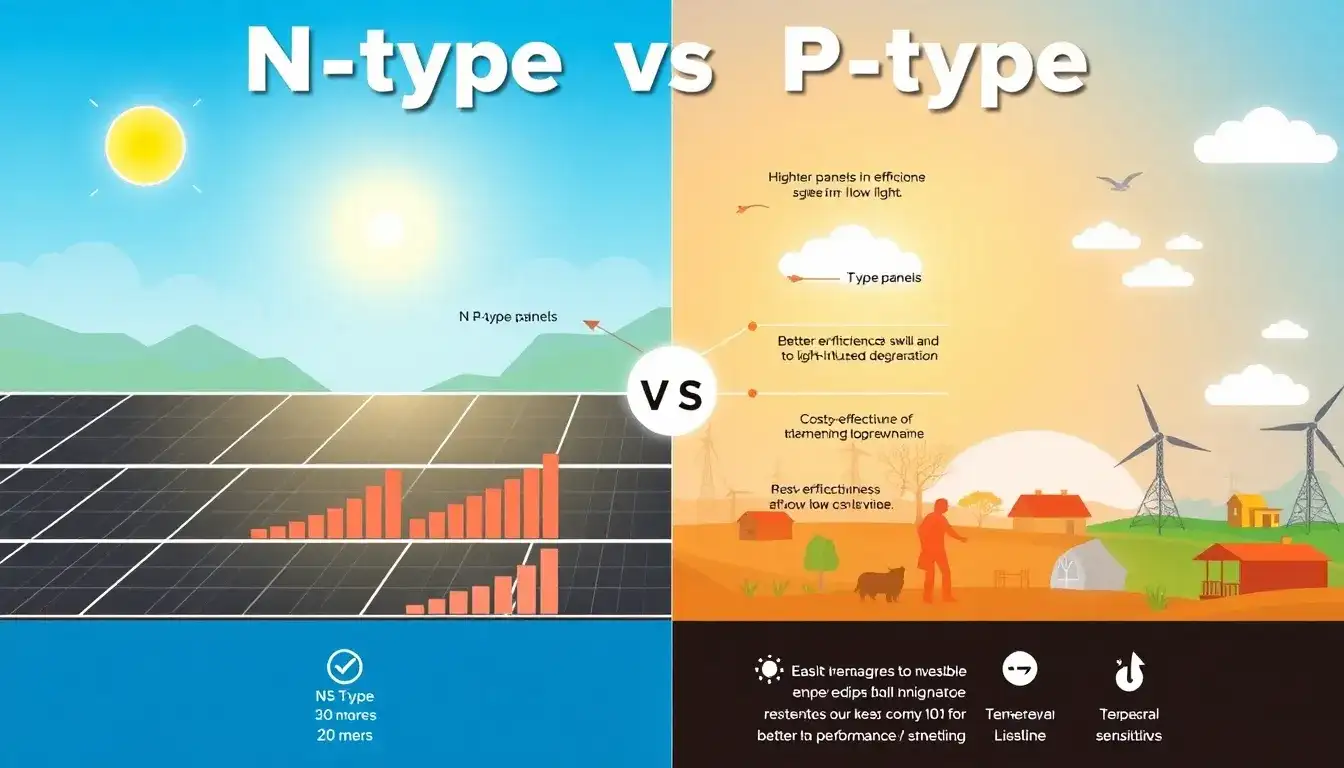
1. Efficiency and Performance
- Efficiency: N-type solar panels generally have higher efficiency (around 25.7%) compared to P-type panels (around 23.6%). This results in more power generated from the same surface area.
- Light-Induced Degradation (LID): N-type panels are resistant to LID, a common issue in P-type panels that can reduce efficiency by up to 10%.
- Temperature Performance: N-type panels maintain efficiency better under high temperatures.
2. Cost and Budget
- Initial Cost: P-type panels are generally cheaper to purchase and install, making them more affordable upfront.
- Long-term Cost: Although N-type panels are more expensive initially, their higher efficiency and longer lifespan can lead to cost savings over time.
3. Lifespan and Durability
- Longevity: N-type panels typically last longer due to reduced degradation, offering warranties that often extend beyond those of P-type panels.
- Performance Over Time: N-type panels maintain higher efficiency over their lifespan, providing more consistent power output.
4. Availability and Market Presence
- Market Availability: P-type panels are more widely available and have been in use for decades, making them a common choice.
- Emerging Technology: N-type panels, though becoming popular, still have a shorter market history.
5. Specific Needs and Conditions
- Space and Energy Needs: If space is limited but energy needs are high, N-type panels might be preferable due to their higher efficiency.
- Environmental Conditions: N-type panels perform better in hot climates and under varying light conditions.
Ultimately, the decision between N-type and P-type solar panels should be based on your budget, the available installation space, energy requirements, and whether long-term efficiency is a priority.
Original article by NenPower, If reposted, please credit the source: https://nenpower.com/blog/what-factors-should-i-consider-when-choosing-between-n-type-and-p-type-solar-panels/

