

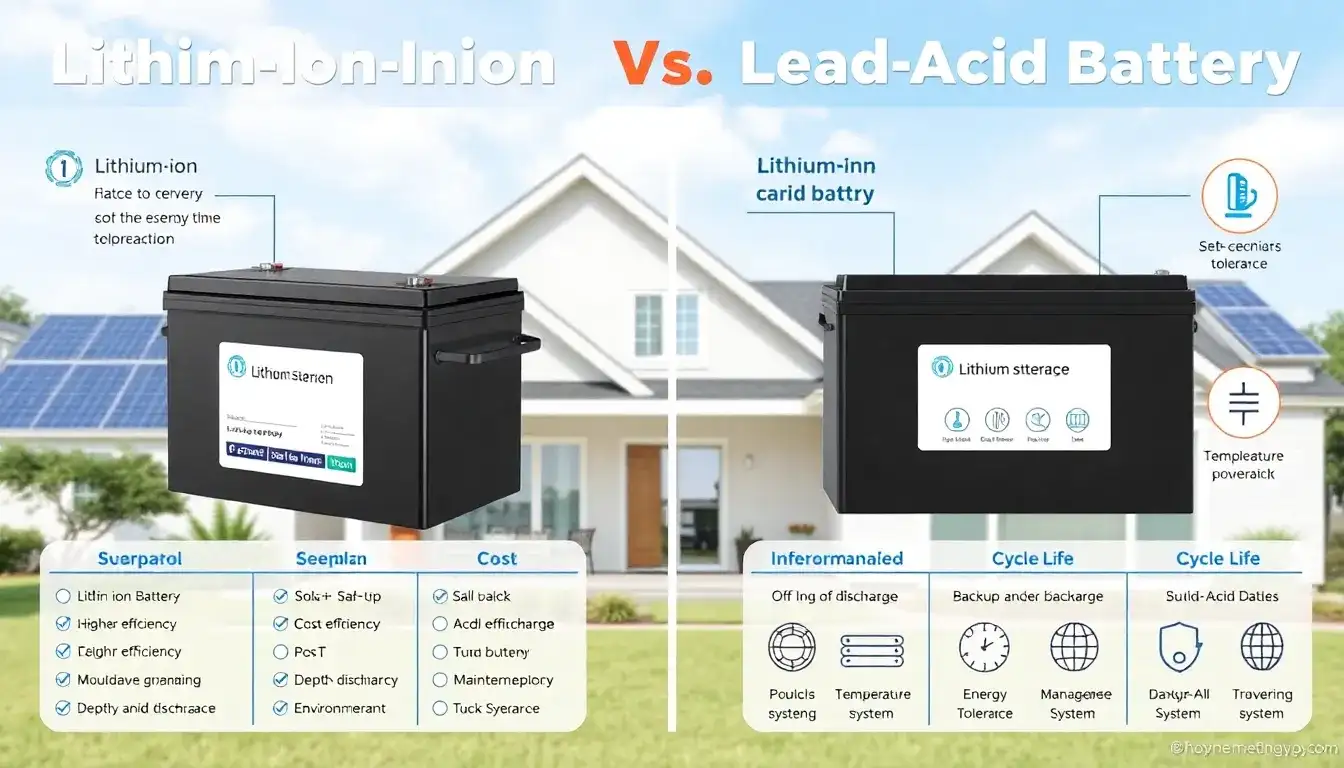
When choosing between lithium-ion and lead-acid batteries for home energy storage, several factors should be considered:
1. Cost
- Lithium-ion batteries are generally more expensive upfront, with costs ranging from $5,000 to $15,000, including installation. However, their longer lifespan and higher efficiency can offset this over time.
- Lead-acid batteries are cheaper, often costing hundreds to thousands less, but they don’t offer the long-term value that lithium-ion does.
2. Lifespan and Cycle Life
- Lithium-ion batteries have a longer lifespan, typically lasting 10 to 15 years and supporting thousands of charge/discharge cycles.
- Lead-acid batteries have shorter lifespans, usually between 3 to 12 years, and can only handle a few hundred cycles before significant degradation.
3. Energy Density and Capacity
- Lithium-ion batteries have higher energy density, meaning they can store more energy in a smaller space. This allows them to power more appliances for longer periods.
- Lead-acid batteries have lower energy density, making them less efficient in terms of storage capacity per unit volume.
4. Depth of Discharge
- Lithium-ion batteries can be safely discharged to 85% or more without damaging the battery, offering a greater effective capacity.
- Lead-acid batteries should not be discharged beyond 50% to maintain their lifespan.
5. Efficiency
- Lithium-ion batteries are more efficient, typically achieving 95% efficiency, which means more of the stored energy can be used.
- Lead-acid batteries are less efficient, with efficiencies ranging from 80% to 85%.
6. Charging Time
- Lithium-ion batteries charge faster than lead-acid batteries, often reducing charging time significantly.
7. Temperature Performance
- Lithium-ion batteries perform better in high temperatures compared to lead-acid batteries, making them suitable for warmer climates.
8. Maintenance and Storage
- Lithium-ion batteries require less maintenance and can be stored without needing to be constantly charged, unlike lead-acid batteries which need frequent maintenance checks and must be kept charged.
9. Safety and Reliability
- Lithium-ion batteries often have integrated battery management systems (BMS) that monitor and control temperature, voltage, and charge/discharge rates, enhancing safety and reliability.
Conclusion
For most home energy storage needs, lithium-ion batteries are generally recommended due to their superior efficiency, longer lifespan, and higher energy density. However, for applications where cost is the primary concern or where batteries are not used frequently, lead-acid batteries can still be a viable option.
Original article by NenPower, If reposted, please credit the source: https://nenpower.com/blog/what-factors-should-i-consider-when-choosing-between-lithium-ion-and-lead-acid-batteries-for-my-home-energy-storage-needs/

