

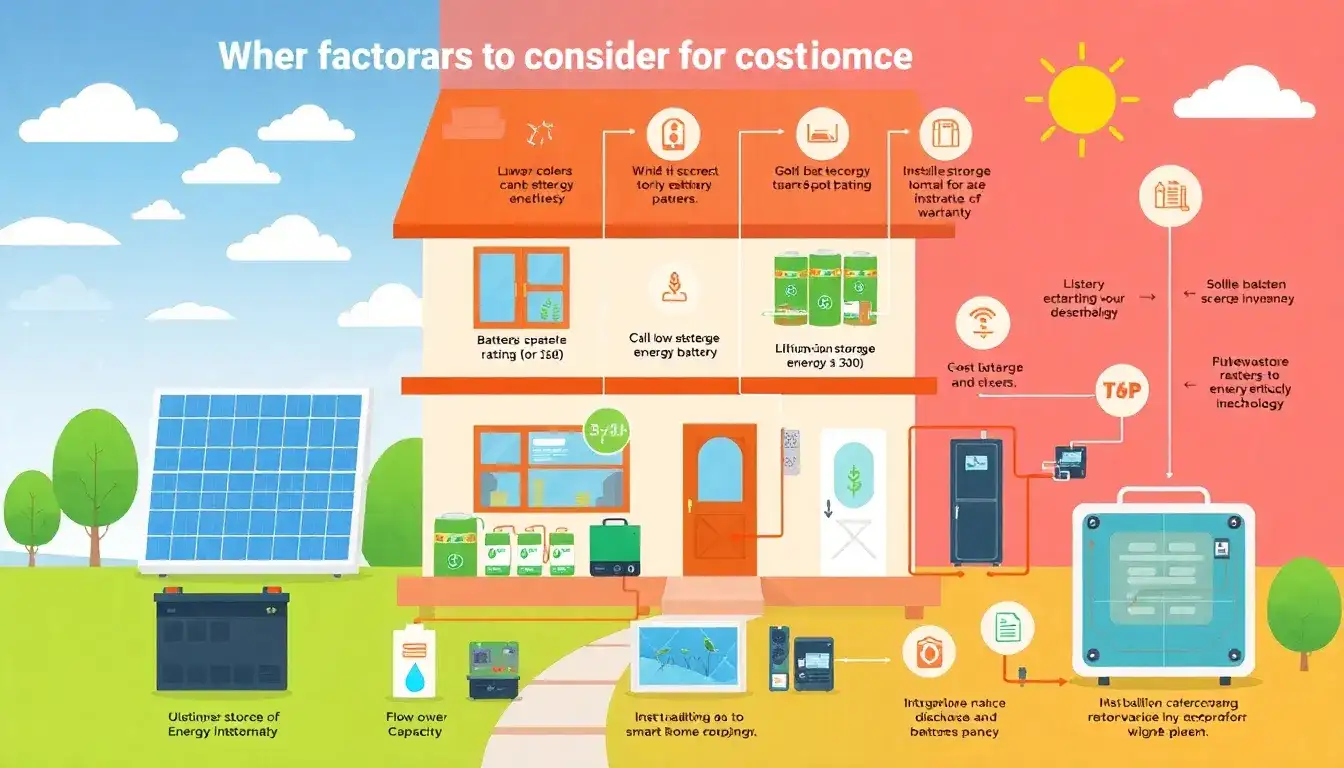
When choosing a residential energy storage system, several key factors should be considered to ensure you select the best option for your needs:
Key Factors to Consider
- Capacity and Scalability:
- Energy Needs: Assess your home’s energy consumption patterns to determine the required battery capacity.
- Scalability: Consider systems that allow for expansion by adding more modules in the future if needed.
- Type of Technology:
- Battery Type: Lithium-ion batteries are generally preferred for home energy storage due to their efficiency and longevity.
- Inverter Compatibility: Ensure the system integrates well with both on-grid and off-grid setups, if applicable.
- Cost-Effectiveness:
- Initial Cost: Compare the costs of different systems and calculate potential long-term savings.
- Incentives: Check for available incentives or rebates that can reduce the cost.
- Efficiency and Degradation:
- Round-Trip Efficiency (RTE): Higher RTE means less energy lost during charging and discharging.
- Battery Lifespan: Look for systems with a long lifespan to ensure durability and savings over time.
- Integration Capabilities:
- Solar Compatibility: If you have or plan solar panels, ensure the storage system integrates well with solar energy.
- Monitoring Systems: Choose systems with integrated monitoring for easier management and alerts.
- Safety and Compliance:
- Safety Features: Ensure the system includes features like thermal management and automatic disconnects.
- Regulatory Compliance: Verify compliance with local safety and environmental regulations.
- Manufacturer’s Reputation:
- Track Record: Consider the manufacturer’s reputation for product reliability and customer service.
By carefully evaluating these factors, you can choose a residential energy storage system that meets your needs efficiently and effectively.
Original article by NenPower, If reposted, please credit the source: https://nenpower.com/blog/what-factors-should-i-consider-when-choosing-between-different-residential-energy-storage-systems/

