

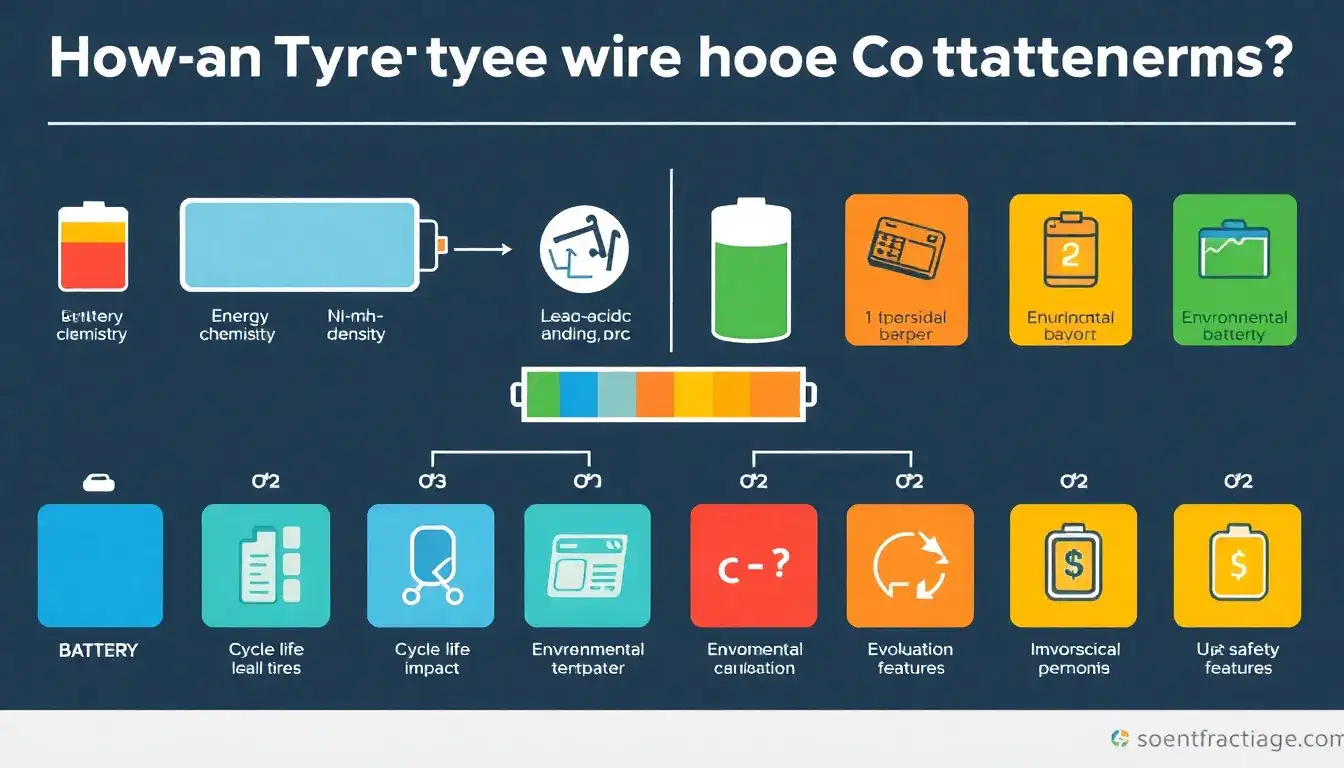
When choosing between different battery types, several key factors need to be considered to ensure the selected battery meets the requirements of your application. Here are some of the main considerations:
Rechargeable vs. Non-Rechargeable
- Rechargeable (Secondary) Batteries: Ideal for devices that consume a lot of power or need frequent use, such as smartphones or electric vehicles. Examples include Li-ion, NiMH, and NiCd.
- Non-Rechargeable (Primary) Batteries: Suitable for devices that require minimal power or are used infrequently, such as flashlights or smoke detectors.
System Operating Voltage
Ensure the battery’s voltage matches the device’s requirements. Different chemistries have different nominal voltages, e.g., Li-ion (3.6V) vs. NiMH (1.2V).
Capacity, Power, and Energy
- Capacity: Measured in Ah (ampere-hours), it determines how long a battery lasts on a single charge.
- Power: Measured in watts (W), it dictates how much energy can be delivered over time.
- Energy: Measured in Wh (watt-hours), it represents the total amount of energy stored in the battery.
Self-Discharge
Higher self-discharge rates mean the battery loses charge faster when not in use. For example, NiMH has a higher self-discharge rate than Li-ion.
Life Cycle
The number of charge/discharge cycles a battery can handle before its capacity significantly decreases. Li-ion typically offers 400-1200 cycles, while NiMH and NiCd offer up to 2000 cycles depending on the conditions.
Temperature Range
Batteries have optimal operating temperatures. For instance, Li-ion should not be charged below freezing.
Cost and Availability
More expensive batteries like Li-ion may offer higher performance but may be cost-prohibitive for some applications. Availability can also impact your choice.
Size and Shape
The physical dimensions of the battery should fit the device’s design constraints. Customizable Li-ion batteries can be beneficial for compact devices.
Safety and Environmental Impact
Consider the toxicity and recyclability of the battery. Li-ion and NiMH are generally safer than lead-acid and NiCd, which contain toxic materials.
Specific Energy Density
This is crucial for portable devices. Li-ion batteries have a high energy density, making them ideal for devices requiring both power and portability.
Each application has unique requirements, so tailoring your choice to these factors will ensure the battery performs optimally and meets your needs.
Original article by NenPower, If reposted, please credit the source: https://nenpower.com/blog/what-factors-should-i-consider-when-choosing-between-different-battery-types/

