

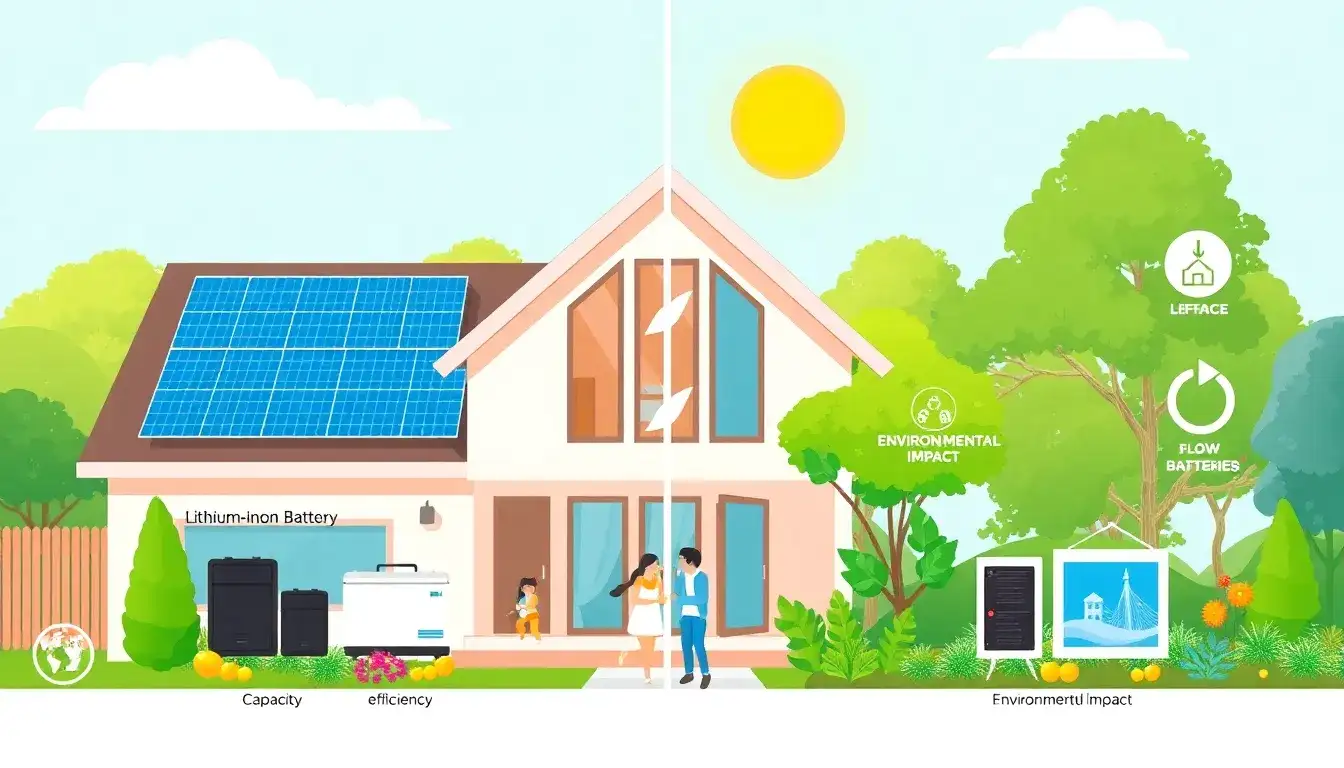
When selecting a residential energy storage system, several key factors need to be considered:
1. Capacity and Power Rating
- Capacity: The amount of energy the system can store, measured in kilowatt-hours (kWh). Ensure it aligns with your energy needs and usage patterns.
- Power Rating: How much power the system can deliver at once, affecting the number of appliances it can support during outages or peak usage.
2. Battery Type and Chemistry
- Different chemistries like lithium-ion, lead-acid, and flow batteries have various benefits, such as lifespan and environmental impact. Lithium-ion is popular due to its high efficiency and durability.
3. Battery Depth of Discharge (DoD) and Efficiency
- Depth of Discharge (DoD): How much of the battery’s capacity can be used without impacting its lifespan. Higher values are preferable.
- Efficiency: Refers to the round-trip efficiency, indicating how much usable energy is retained after charging and discharging.
4. Lifespan and Warranty
- Consider the expected lifespan and warranty conditions of the battery. Longer lifespans and comprehensive warranties offer better value.
5. Scalability and Expandability
- Ensure the system can be expanded or upgraded as your energy needs change.
6. Budget and Cost-Effectiveness
- Evaluate both the initial investment and the long-term savings. Calculate the return on investment based on reduced energy bills and potential incentives.
7. Reliability and Brand Reputation
- Assess the reliability of the system and the reputation of the manufacturer. Read reviews and consider customer support.
8. Safety Features and Certifications
- Prioritize systems with safety certifications like UL or TÜV, as well as features such as thermal management, fire-resistant enclosures, and robust battery management systems.
9. Integration and Compatibility
- Ensure that the system is compatible with your existing solar panels or other energy sources. Consider the ease of integration with smart home systems.
10. Environmental Impact
- Evaluate the environmental footprint of the system, including material sourcing, recyclability, and energy efficiency.
Original article by NenPower, If reposted, please credit the source: https://nenpower.com/blog/what-factors-should-i-consider-when-choosing-a-residential-energy-storage-system-2/

