

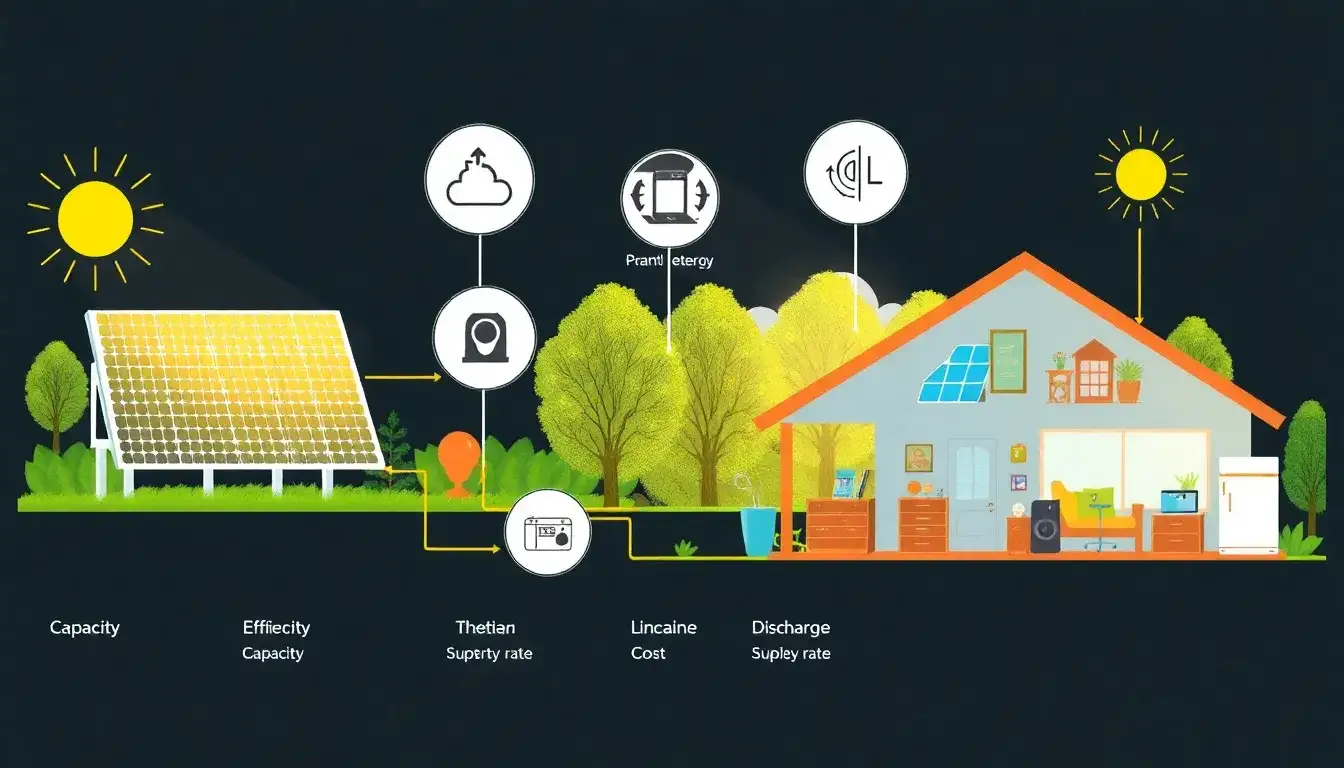
1. Battery Capacity and Power Rating
- Battery Capacity: Measured in kilowatt-hours (kWh), it shows how much energy the battery can store. A larger capacity stores more energy, suitable for high-demand households.
- Power Rating: Measured in kilowatts (kW), it indicates how much energy the battery can deliver at once. A higher power rating allows powering more devices simultaneously.
2. Depth of Discharge (DoD)
DoD is the percentage of the battery’s capacity that can be used before needing a recharge. A higher DoD means more usable energy, enhancing efficiency and longevity.
3. Round-Trip Efficiency
This measures the percentage of energy retained after charging and discharging. Higher efficiency means less energy loss and better performance.
4. Battery Lifespan and Warranty
- Lifespan: Measured in charge cycles or years, a longer lifespan extends the battery’s useful life.
- Warranty: Look for batteries with robust warranties covering performance over several years.
5. Battery Technology
Common technologies include lithium-ion, known for efficiency and longevity, lead-acid, which is cost-effective but less efficient, and saltwater as an eco-friendly option.
6. Cost and ROI
Evaluate upfront costs against long-term savings and calculate the Return on Investment (ROI) to ensure cost-effectiveness.
7. Compatibility with Solar System
Ensure the battery is compatible with existing or planned solar setups, including inverters and panels.
8. Scalability and Expansion
Consider if the system can be expanded in the future to accommodate increased energy needs.
9. Safety and Environmental Impact
Look for batteries with safety protections like overcharge and overheat protection, and consider environmental impact, especially for eco-friendly options.
Original article by NenPower, If reposted, please credit the source: https://nenpower.com/blog/what-factors-should-be-considered-when-choosing-a-battery-for-a-solar-system/

