

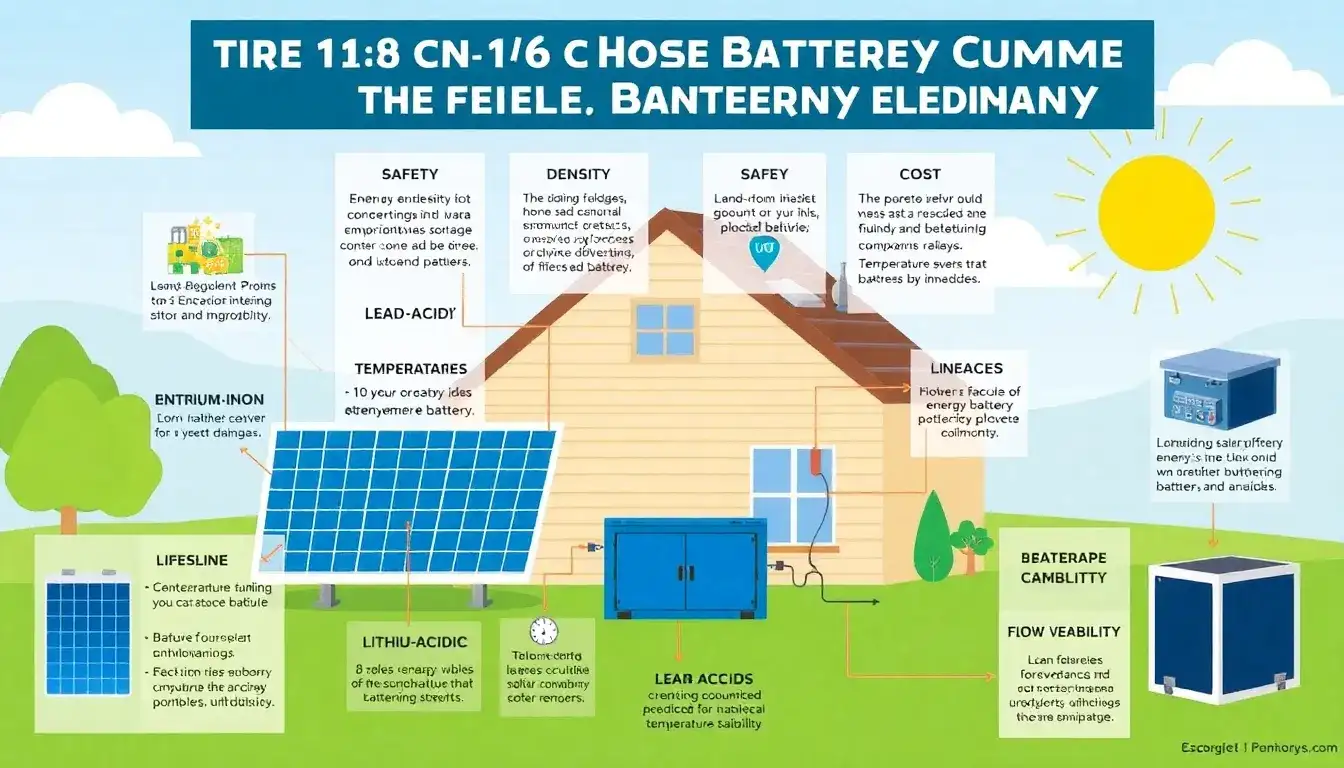
When choosing a battery chemistry for residential energy storage, several key factors should be considered to ensure safety, efficiency, and cost-effectiveness. Here are the main considerations:
Factors to Consider
-
Storage Capacity and Power Output
- Capacity: Determine how much energy you need to store based on your daily energy usage or backup needs.
- Power Output: Consider if you need batteries that can handle high power bursts for appliances like air conditioners or just steady power supply.
-
Safety and Fire Risk
- Different chemistries have varying levels of fire risk. Lithium Iron Phosphate (LFP) is considered safer than Nickel Manganese Cobalt (NMC) due to its lower thermal runaway risk.
-
Cycle Life and Longevity
- Cycle life affects how long the battery will last, with LFP offering more cycles than NMC.
-
Operating Conditions
- Consider the operating temperature range required. LFP operates well in wider temperature ranges than other lithium-ion chemistries.
-
Environmental Impact
- Evaluate the environmental impact of the battery’s components. LFP contains fewer toxic materials than NMC.
-
Cost
- Compare costs, including initial investment, maintenance, and potential replacements. LFP may have a longer lifespan but is often more expensive upfront.
-
Energy Density
- Higher energy density means more energy stored per unit of weight, which is beneficial for space-constrained installations.
-
Charge and Discharge Speed
- While most residential applications don’t require rapid charging/discharging, some may benefit from faster rates.
Common Battery Chemistries for Residential Use
- Lithium Iron Phosphate (LFP): Offers high safety, long cycle life, and wide temperature operation, but lower energy density.
- Nickel Manganese Cobalt (NMC): Higher energy density but increased fire risk compared to LFP.
- Lead-Acid: Less expensive but heavier, lower capacity, and shorter lifespan.
By carefully evaluating these factors, homeowners can select the most suitable battery chemistry for their residential energy needs.
Original article by NenPower, If reposted, please credit the source: https://nenpower.com/blog/what-factors-should-be-considered-when-choosing-a-battery-chemistry-for-residential-energy-storage/

