

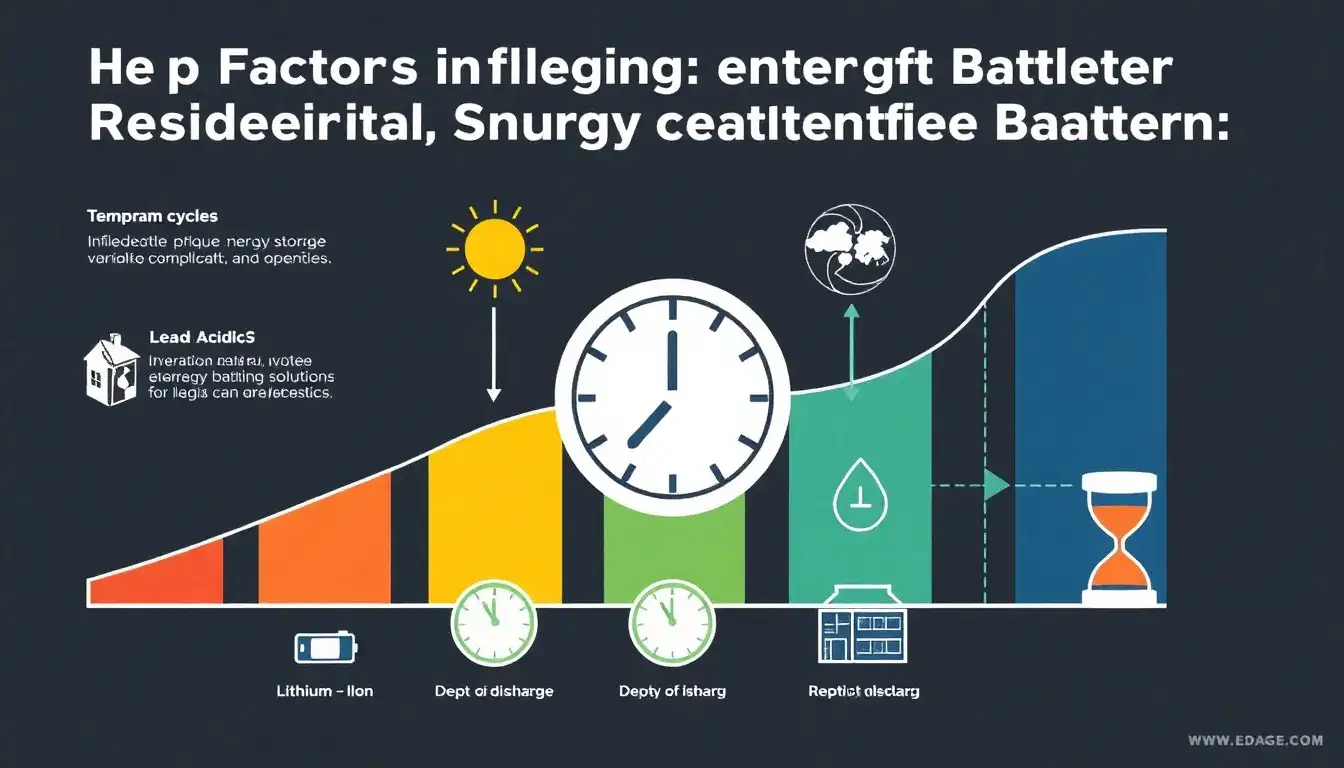
The lifespan of residential energy storage batteries is influenced by several key factors. Understanding these can help maximize the efficiency and longevity of battery systems:
Factors Influencing Battery Lifespan
- Depth of Discharge (DoD)
- The percentage of a battery’s capacity that is used before recharging affects its lifespan. Frequent deep discharges can reduce the battery’s lifespan, while minimizing deep cycling can extend it.
- Temperature
- Extreme temperatures, both hot and cold, can significantly degrade battery performance and lifespan. Maintaining batteries in a cool, dry environment is recommended.
- Charging and Discharging Rates
- Rapid charging and discharging can cause batteries to heat up, accelerating degradation. Using moderate charging rates is advised.
- Battery Usage and Cycles
- The number of charge-discharge cycles (usage patterns) impacts battery life. Most batteries are warrantied for a specific number of cycles, after which their capacity diminishes.
- Maintenance
- Regular maintenance, such as checking for physical damage and ensuring proper cooling, can contribute to optimal battery performance and extend lifespan.
- Battery Type
- The type of battery (e.g., lithium-ion, lead-acid) affects lifespan. Lithium-ion batteries generally last longer than lead-acid ones and are more common in home energy storage systems.
- Installation and Integration
- Proper installation and integration with other system components are crucial to prevent early failures and ensure efficient operation.
Original article by NenPower, If reposted, please credit the source: https://nenpower.com/blog/what-factors-most-influence-the-lifespan-of-residential-energy-storage-batteries/

