

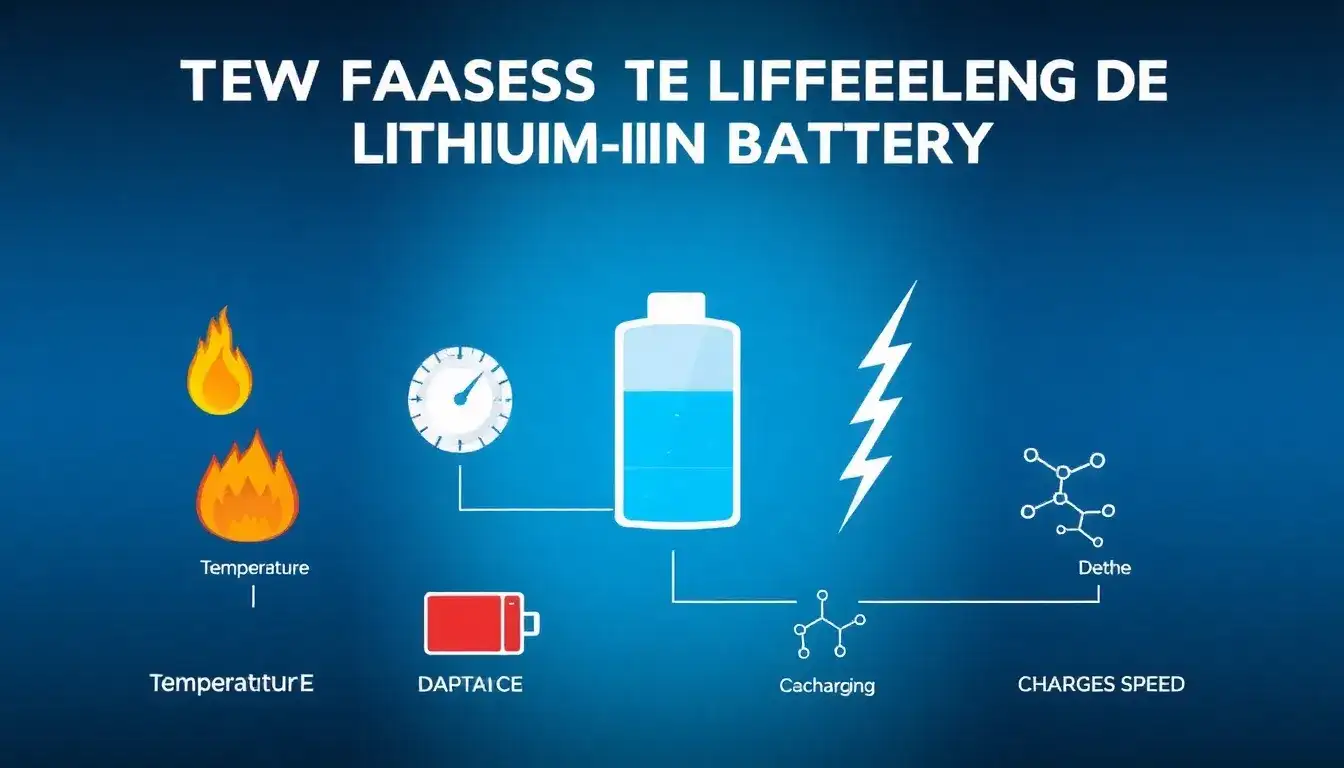
The lifespan of lithium-ion batteries is influenced by several key factors:
- Depth of Discharge (DoD): The extent to which a battery is discharged before recharging affects its lifespan. Shallower discharges prolong the battery’s life by reducing stress on the battery cells.
- Temperature: Elevated temperatures accelerate chemical reactions within the battery, leading to faster degradation. Conversely, cold temperatures can reduce efficiency but do not degrade the battery as rapidly as heat.
- Charging Patterns: Avoiding overcharging and using high currents can significantly stress the battery. Charging to a lower peak voltage (e.g., 3.92V/cell) can prolong battery life but reduces stored capacity.
- Battery Management System (BMS): A robust BMS helps maintain optimal operating conditions by preventing overcharge, deep discharge, and regulating temperature.
- Usage Patterns: Frequent and continuous use, especially under high-load conditions, speeds up degradation. Intermittent use can extend the battery’s lifespan.
- Battery Chemistry and Quality: Different chemistries (e.g., NMC, LFP) have varying lifespans. High-quality components and advanced chemistries like LTO can improve performance and longevity.
- Storage Conditions: Proper storage at partial charge in a cool, dry environment helps maintain health when batteries are not in use.
- Current Demands: High discharge rates can cause mechanical and thermal stress, shortening the battery’s cycle life.
- Regulations and Safety: Adhering to safety standards can impact battery design and indirectly influence lifespan by promoting safer, more durable battery technologies.
Original article by NenPower, If reposted, please credit the source: https://nenpower.com/blog/what-factors-most-influence-the-lifespan-of-lithium-ion-batteries/

