

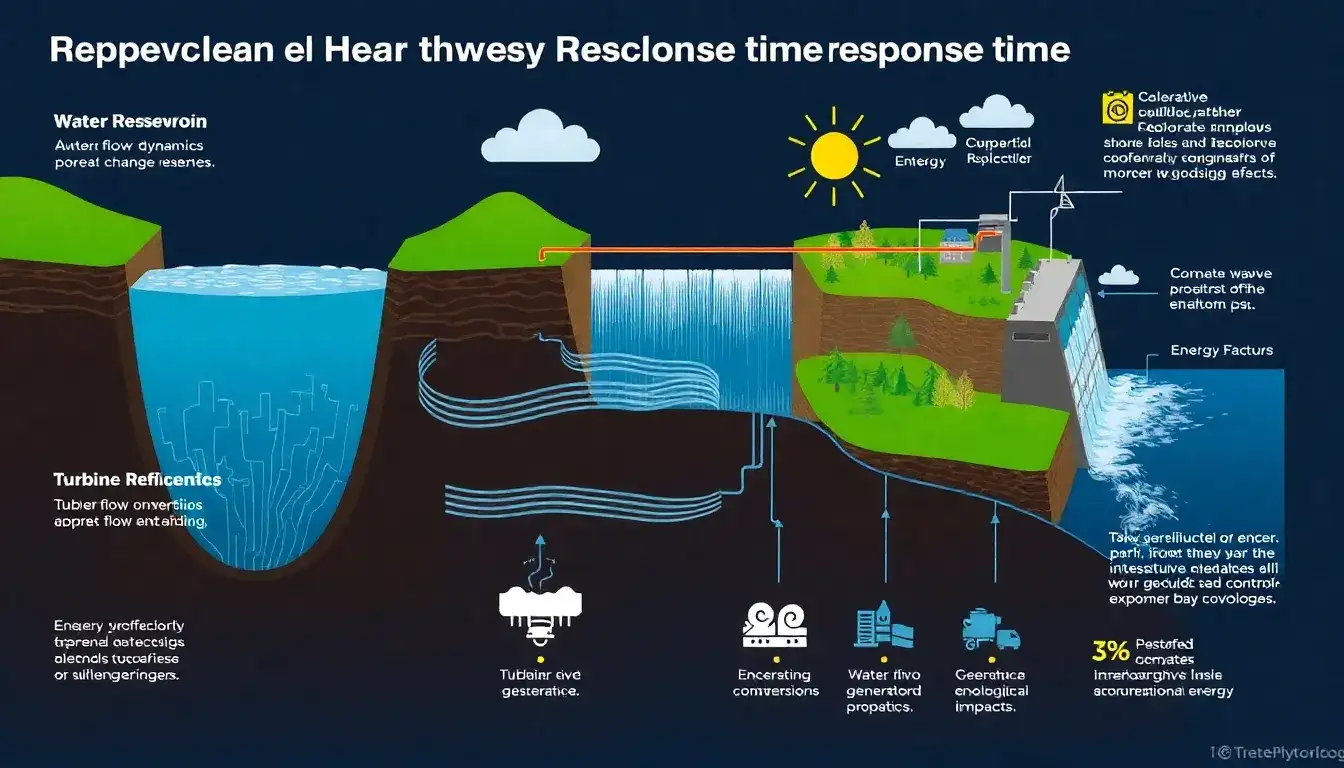
The response time of pumped hydroelectric energy storage (PHES) systems is influenced by several key factors:
- Configuration and Design: The overall design, including the layout of tunnels and waterways, plays a crucial role in determining how quickly water can be moved between the upper and lower reservoirs, which affects the response time. For example, a four-unit PHES plant with one tunnel per unit can achieve higher ramp rates compared to simpler configurations.
- Turbine and Generator Operation: The technology used in turbines and generators, such as reversible Francis turbines, allows for fast switching between pumping and generating modes. Variable speed operation can also optimize efficiency and response times.
- Automation and Control Systems: Modern SCADA systems enable rapid monitoring and response to changing grid conditions, allowing PHES plants to react quickly to demand fluctuations. However, automation can also introduce risks if not properly managed.
- Operational Practices: The frequency of pump/generate cycles can impact response times. Plants that cycle multiple times a day can respond faster to changing market conditions compared to those operating on weekly cycles.
- Market Conditions: Fluctuations in electricity prices and demand require PHES systems to be capable of quick adjustments. This necessitates a responsive system that can rapidly switch to different operational modes.
Overall, the ability of PHES systems to respond quickly is essential for integrating renewable energy sources into the grid effectively and maintaining grid stability.
Original article by NenPower, If reposted, please credit the source: https://nenpower.com/blog/what-factors-influence-the-response-time-of-pumped-hydroelectric-energy-storage/

