

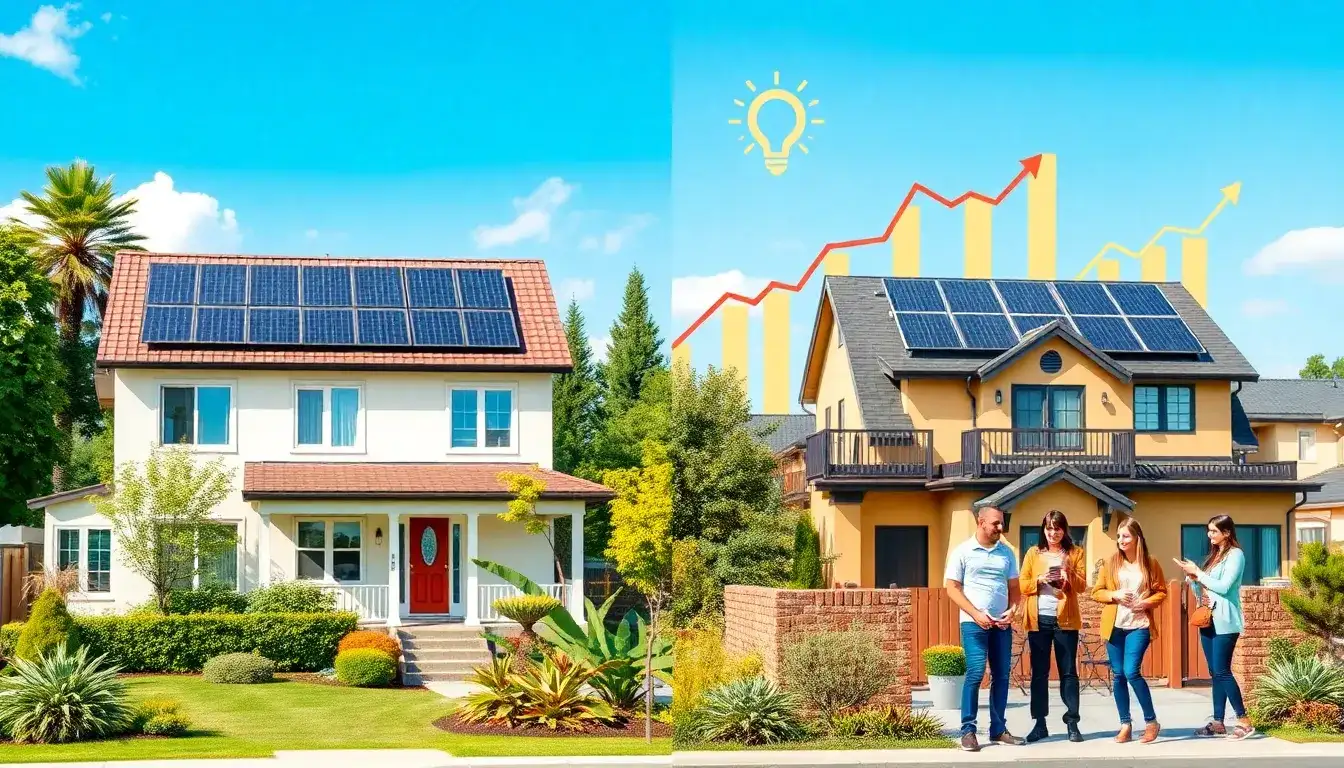
The factors that influence how much solar installations increase property value can be categorized into several key areas:
1. Installation Characteristics
- Age and Condition of the Solar System: Newer systems, especially those with modern technology and better efficiency, can add more value than older ones.
- Quality and Capacity of the System: High-efficiency panels and well-designed systems with high capacity tend to increase property value more significantly.
- Maintenance Records: Keeping detailed records of maintenance can show the system’s reliability and efficiency, enhancing its appeal to potential buyers.
2. Location and Market Factors
- Local Electricity Rates: High electricity rates in an area make solar panels more valuable for reducing utility bills.
- Solar Incentives and Policies: Regions with generous incentives, such as tax credits or net metering policies, can increase the value added by solar installations.
- Regional Climate and Sun Exposure: Areas with plenty of sunlight allow solar systems to generate more power, enhancing their value.
3. Real Estate Market Conditions
- Market Demand: In competitive markets with high demand and low inventory, solar installations can command a higher premium.
- Local Real Estate Trends: The popularity of eco-friendly features in the local market influences how much solar installations increase property value.
4. Financial Benefits and Sustainability
- Energy Savings: The more a solar system reduces utility bills, the more it can increase property value due to long-term financial benefits.
- Environmental Sustainability: As more buyers prioritize environmental consciousness, solar installations become a desirable feature, enhancing marketability.
By understanding these factors, homeowners can better assess how solar installations can impact their property’s value and make informed investment decisions.
Original article by NenPower, If reposted, please credit the source: https://nenpower.com/blog/what-factors-influence-the-property-value-increase-from-solar-installations/

