

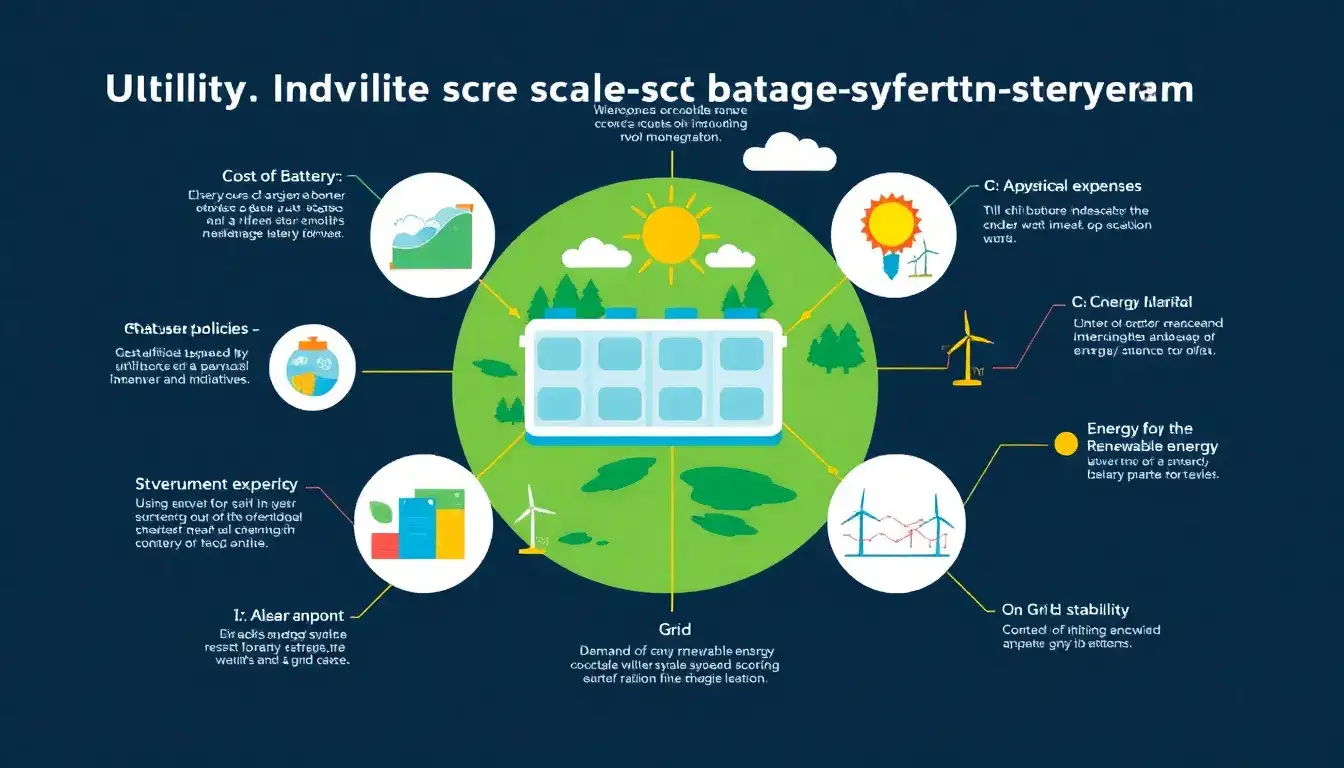
The profitability of utility-scale battery storage systems is influenced by several key factors:
Factors Influencing Profitability
- Battery Location
- The location of battery storage systems significantly impacts profitability. Most batteries are co-located with renewable energy sources like solar or wind farms to optimize energy storage and utilization.
- Dispatch Optimization
- Effective dispatch of stored energy during peak demand periods or when wholesale prices are high is crucial for maximizing revenue. Advanced analytics and forecasting tools can help optimize dispatch and increase profitability.
- Regulatory Framework and Market Conditions
- Regulatory support, policies, and market conditions can significantly influence profitability. Favorable policies and stable market conditions can enhance profitability by providing a clear and predictable revenue stream.
- Energy Arbitrage
- The ability to buy energy at low prices and sell it at high prices, often referred to as energy arbitrage, is a key revenue stream for battery storage operators.
- Cost Efficiency and Technological Advancements
- The cost-effectiveness of battery technology, such as reductions in lithium-ion battery costs, can improve profitability. Advances in storage technology can lead to better efficiency, longer lifetimes, and reduced operational costs.
- Integration with Renewable Energy Sources
- Utility-scale battery storage systems are particularly valuable when integrated with solar and wind energy, as they help stabilize the grid and manage variability in power supply.
- Market Volatility and Price Signals
- Ability to respond to market price signals and capitalize on price volatility can increase profitability. This requires strategic operation based on historical data and market analysis.
Original article by NenPower, If reposted, please credit the source: https://nenpower.com/blog/what-factors-influence-the-profitability-of-utility-scale-battery-storage-systems/

